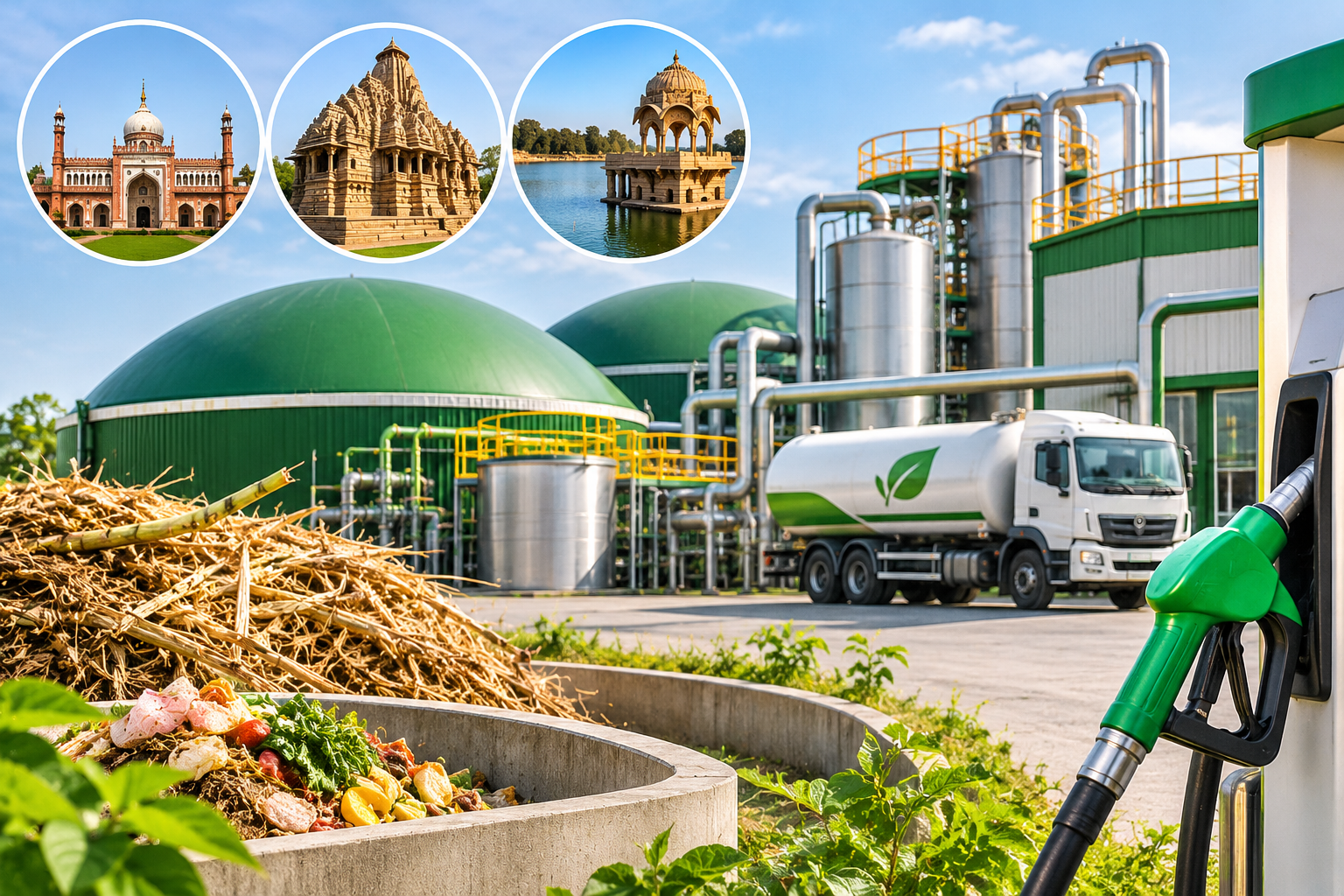
The renewable energy company plans to establish five compressed biogas plants with a combined capacity of 110 tonnes per day, expanding its clean-energy portfolio beyond solar power and battery storage.
TrueRE Oriana Power Ltd plans to invest ₹750 crore to establish five compressed biogas (CBG) plants across Uttar Pradesh, Madhya Pradesh and Gujarat, marking a significant expansion of the company’s renewable-energy operations into bioenergy.
The proposed facilities will have a combined production capacity of 110 tonnes of CBG per day and are expected to become operational within the next two years, according to the company.
The projects have been registered and the company has secured approvals under the government's GOBARdhan initiative, providing an important regulatory foundation for the planned expansion.
Expansion Beyond Solar and Battery Storage
TrueRE Oriana Power has traditionally focused on renewable-energy segments such as solar power and battery storage. The planned CBG investments represent a strategic move into alternative fuels and expand the company's presence across multiple clean-energy technologies.
Compressed biogas is produced by processing organic waste and biomass through anaerobic digestion. The resulting fuel can be used as an alternative to conventional compressed natural gas in several applications.
For India, expanding domestic CBG production could help convert agricultural and organic waste into commercially useful energy while reducing dependence on conventional fossil fuels.
Five Plants Planned Across Three States
The five proposed plants will be spread across Uttar Pradesh, Madhya Pradesh and Gujarat.
Together, the facilities are expected to produce 110 tonnes of compressed biogas per day once fully operational. The company expects the projects to be completed within approximately two years.
The geographic diversification could allow the company to access different sources of agricultural and organic feedstock while building a wider operational footprint in India's emerging bioenergy market.
GOBARdhan Initiative Supports Bioenergy Expansion
The projects have been registered under the government's GOBARdhan initiative, which promotes the conversion of organic waste into useful resources such as biogas, compressed biogas and organic manure.
Such initiatives are aimed at strengthening India's waste-management ecosystem while creating additional sources of clean energy.
For CBG producers, access to consistent feedstock and efficient processing infrastructure will remain important factors in determining the commercial viability of individual projects.
Supporting India’s Energy Transition
India is seeking to diversify its energy mix and reduce its dependence on imported fossil fuels. Bioenergy can play a role in this transition alongside solar, wind, battery storage and other renewable technologies.
Domestic CBG production can potentially provide multiple benefits, including better utilisation of agricultural waste, additional income opportunities across the rural economy and reduced reliance on conventional natural gas and imported fuels.
The sector could also contribute to India's broader efforts to reduce carbon emissions and strengthen domestic energy security.
Investment Creates Long-Term Growth Opportunity
The ₹750 crore investment represents a substantial commitment to TrueRE Oriana Power's diversification strategy.
If the plants are completed on schedule and achieve the targeted production levels, the company could establish a meaningful presence in India's growing CBG ecosystem.
However, the success of the projects will depend on factors including construction timelines, feedstock availability, operating efficiency, financing costs, offtake arrangements and the regulatory environment.
Market Outlook
TrueRE Oriana Power's proposed ₹750 crore investment highlights the growing opportunity in India's alternative-fuel and bioenergy sector. The planned 110-tonne-per-day combined capacity could strengthen the company's clean-energy portfolio while giving it exposure to a segment supported by India's focus on waste-to-energy and reduced fossil-fuel dependence.
For investors, the key factors to monitor will be project execution, commissioning timelines, capital expenditure, financing, feedstock availability and eventual revenue contribution from the CBG plants.
Successful execution could strengthen the company's long-term diversification story, but investors should also assess the capital intensity and execution risks associated with building and operating multiple bioenergy facilities.