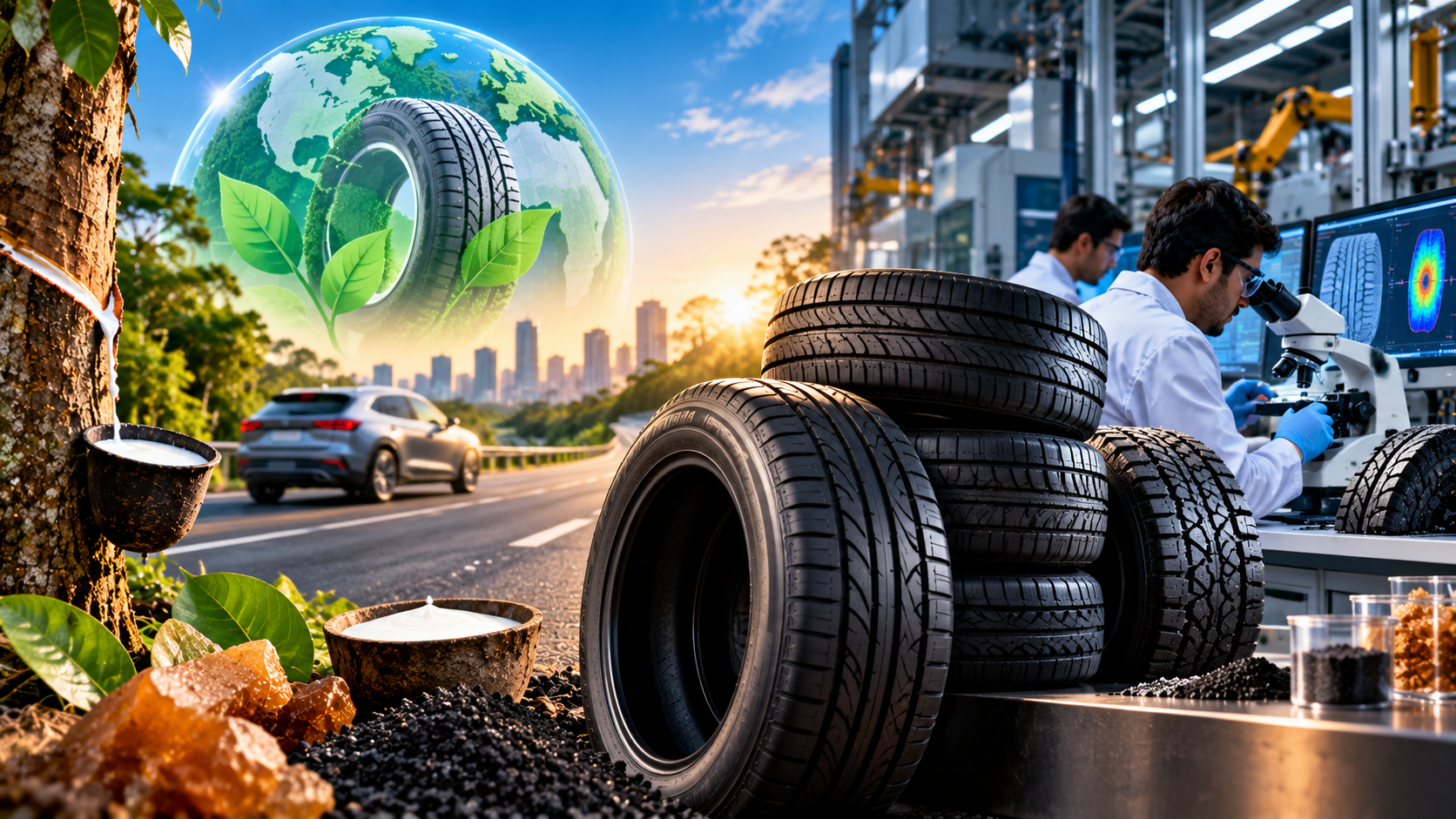
Proposed regulations from April 2031 are expected to accelerate research, product development and compliance investments as tyre makers seek clarity on abrasion limits, testing protocols and costs amid rising raw-material prices
India's tyre industry is preparing for a significant regulatory shift as the government moves towards introducing proposed Bharat Stage-VII (BS-VII) tyre-abrasion norms from April 2031. Manufacturers are confident that they can adapt to the upcoming requirements, but they want greater clarity on permissible abrasion limits and testing procedures before committing to the full scale of investment required for compliance.
The draft framework issued by the Ministry of Road Transport and Highways (MoRTH) seeks to address particulate matter generated when tyres gradually wear down during use. While vehicle-emission regulations have traditionally focused on exhaust emissions, tyre and road wear particles are receiving greater attention because of their potential environmental and air-quality implications.
The proposed norms could influence tyre design, material selection, manufacturing processes and research and development priorities over the coming years. For an industry with estimated annual turnover of around ₹1 trillion, the transition represents both a compliance challenge and an opportunity to develop more durable, technologically advanced products.
However, manufacturers must balance these requirements with existing business priorities, including capacity expansion, premium-product development and the impact of rising natural rubber and other input costs on profitability.
BS-VII Abrasion Norms: What Is Changing?
Tyre abrasion refers to the gradual loss of material from a tyre as it comes into contact with the road during driving. This wear can release small particles into the surrounding environment, making tyre abrasion an area of interest for regulators seeking to reduce non-exhaust particulate emissions.
The proposed BS-VII framework aims to bring tyre-abrasion performance within a broader regulatory approach to vehicle-related emissions. The draft regulations indicate a move towards greater scrutiny of the environmental impact of tyre wear alongside other pollution-control measures.
However, the permissible abrasion limits and detailed testing protocols have yet to be notified, according to the information available on the proposal.
These details will be essential for manufacturers. The limits will determine the performance thresholds tyres must meet, while the testing procedures will establish how compliance is measured and verified.
Until the final requirements become clear, companies may find it difficult to calculate the precise cost of compliance, determine the extent of product redesign needed and establish detailed investment timelines.
Why Tyre Manufacturers Are Seeking Clarity
Although manufacturers have expressed confidence in their ability to comply with the proposed norms, uncertainty over testing standards remains a major concern.
Tyre abrasion can be influenced by several factors, including rubber compounds, tread design, tyre construction, vehicle weight, road surfaces, driving conditions and maintenance practices. A consistent testing framework will therefore be important to ensure that products are evaluated fairly and that results can be compared across manufacturers.
Industry participants need clarity on the measurement methodology, testing conditions, acceptable abrasion levels and the process for demonstrating compliance. The final rules will also help companies determine whether existing tyre designs can be modified or whether new product platforms and materials will be necessary.
Clear and predictable standards would allow manufacturers to plan research budgets, laboratory capabilities, supplier development and product-validation programmes well before the proposed implementation date.
For regulators, the challenge will be to establish requirements that deliver meaningful environmental benefits while remaining technically measurable and practical to implement across different tyre categories.
Research and Development Spending Could Increase
The proposed regulations are expected to encourage tyre manufacturers to invest in research and development, particularly in rubber compounds and tyre designs that can reduce material loss without compromising safety or performance.
Manufacturers may need to evaluate alternative formulations, reinforcement materials, tread patterns and construction techniques. Any redesign will need to balance abrasion resistance with grip, braking performance, rolling resistance, durability and driving comfort.
These objectives can sometimes involve trade-offs. A compound designed to improve one performance characteristic may affect another, making extensive testing and optimisation necessary.
The development process can also involve longer validation cycles because tyres must perform reliably under different loads, temperatures and road conditions. Manufacturers may therefore begin preliminary research before the final rules are issued, although large-scale investment decisions will depend on the details of the notified standards.
Companies with established testing facilities, technical expertise and strong relationships with research institutions and material suppliers could be better positioned to manage the transition. Smaller manufacturers may face greater pressure if compliance requires substantial additional expenditure.
Rising Raw-Material Costs Add to Industry Pressure
The regulatory transition comes at a time when tyre manufacturers are already dealing with higher input costs. Natural rubber and other raw materials represent important components of tyre production expenses, and price increases can affect operating margins when companies cannot pass the additional costs on to customers.
The industry is also investing in manufacturing capacity and moving towards premium products. These initiatives can support long-term growth, but they require capital and careful allocation of resources.
Additional expenditure on abrasion-related research, testing equipment and product redesign could increase the financial burden over the coming years. The overall impact will depend on the final standards, the pace of implementation and the amount of modification required across existing product portfolios.
Manufacturers may attempt to offset these costs through operational efficiencies, improved product mix, better procurement and productivity improvements. However, the ability to recover compliance-related expenses through higher selling prices will depend on competition and customer demand.
This creates a balancing act for the sector: companies must prepare for stricter environmental requirements without allowing higher production and development costs to undermine competitiveness.
Premium Tyres and Technology Could Gain Importance
The proposed norms may accelerate the industry's shift towards more technologically sophisticated tyres. Manufacturers are already developing premium products to serve changing consumer preferences, evolving vehicle designs and demand for improved performance.
The transition could encourage companies to place greater emphasis on material science, durability and lifecycle performance. Manufacturers that develop effective abrasion-resistant solutions while preserving safety and driving characteristics may gain a competitive advantage.
Electric vehicles could also make tyre engineering increasingly important because vehicle weight, torque delivery and operating characteristics can influence tyre wear. However, the specific implications for regulatory compliance will depend on the final testing methodology and the categories covered by the rules.
The proposed standards may also strengthen the importance of collaboration among tyre manufacturers, rubber suppliers, testing laboratories and vehicle makers. Shared technical understanding could help shorten development cycles and improve readiness before the implementation deadline.
Nevertheless, the commercial benefits will depend on whether manufacturers can develop compliant products at viable costs and whether customers are willing to pay for the resulting technology improvements.
Environmental Benefits Will Depend on Effective Implementation
Reducing tyre-wear particles is an important objective because particulate emissions can originate from sources beyond vehicle exhaust systems. Tyre wear is influenced by vehicle usage, road conditions and product characteristics, making measurement and regulation technically complex.
A well-designed abrasion standard could encourage manufacturers to consider environmental performance earlier in the product-development process. It could also improve consistency in how tyre durability and material loss are evaluated.
The effectiveness of the framework will depend on the scientific basis of the permissible limits, the reliability of testing procedures and the ability of enforcement systems to verify compliance.
A clear regulatory timetable would also help manufacturers avoid unnecessary duplication of testing and development work. If the final requirements differ significantly from early assumptions, companies could face additional costs to redesign products or repeat validation exercises.
What Investors Should Watch
For investors tracking India's tyre sector, the proposed BS-VII abrasion norms introduce a long-term regulatory factor that could influence capital expenditure, product development and competitive positioning.
Key indicators to monitor include:
-
Final regulatory notification: The permissible abrasion limits, testing methodology and scope of the rules.
-
Research and development expenditure: Whether manufacturers increase spending on compounds, product design and testing infrastructure.
-
Raw-material prices: Movements in natural rubber and other key inputs that influence production costs.
-
Capital expenditure: Planned investments in manufacturing, laboratory facilities and compliance capabilities.
-
Pricing power: The extent to which manufacturers can recover additional development and compliance costs.
-
Product innovation: The ability to introduce tyres that satisfy environmental requirements without compromising safety or performance.
The impact will not necessarily be uniform across the industry. Manufacturers with stronger technical capabilities and financial resources may be able to absorb the transition more efficiently, while companies operating with tighter margins could face greater pressure.
The proposed implementation date also gives the industry time to prepare. The pace of investment will depend on when the final standards are announced and how much product modification is required.
Market Outlook
The proposed BS-VII tyre-abrasion norms represent a long-term change in India's tyre-manufacturing landscape. Although manufacturers are confident of meeting the proposed April 2031 timeline, clarity on testing protocols and permissible limits will be essential for estimating compliance costs and planning investments.
In the near term, rising natural rubber and other input costs remain important pressures on margins. Over the longer term, the regulations could encourage greater investment in research, material innovation and environmentally focused product development.
For the industry, early preparation may reduce the risk of last-minute compliance spending, but investment decisions will need to be aligned with the final regulatory framework. For investors, the key factors will be each manufacturer's technological readiness, financial flexibility, pricing power and ability to protect margins while developing compliant products.
The proposed norms should therefore be viewed as both a regulatory obligation and a potential catalyst for innovation. The ultimate business impact will become clearer once the government specifies the testing rules and manufacturers disclose how they intend to meet them.