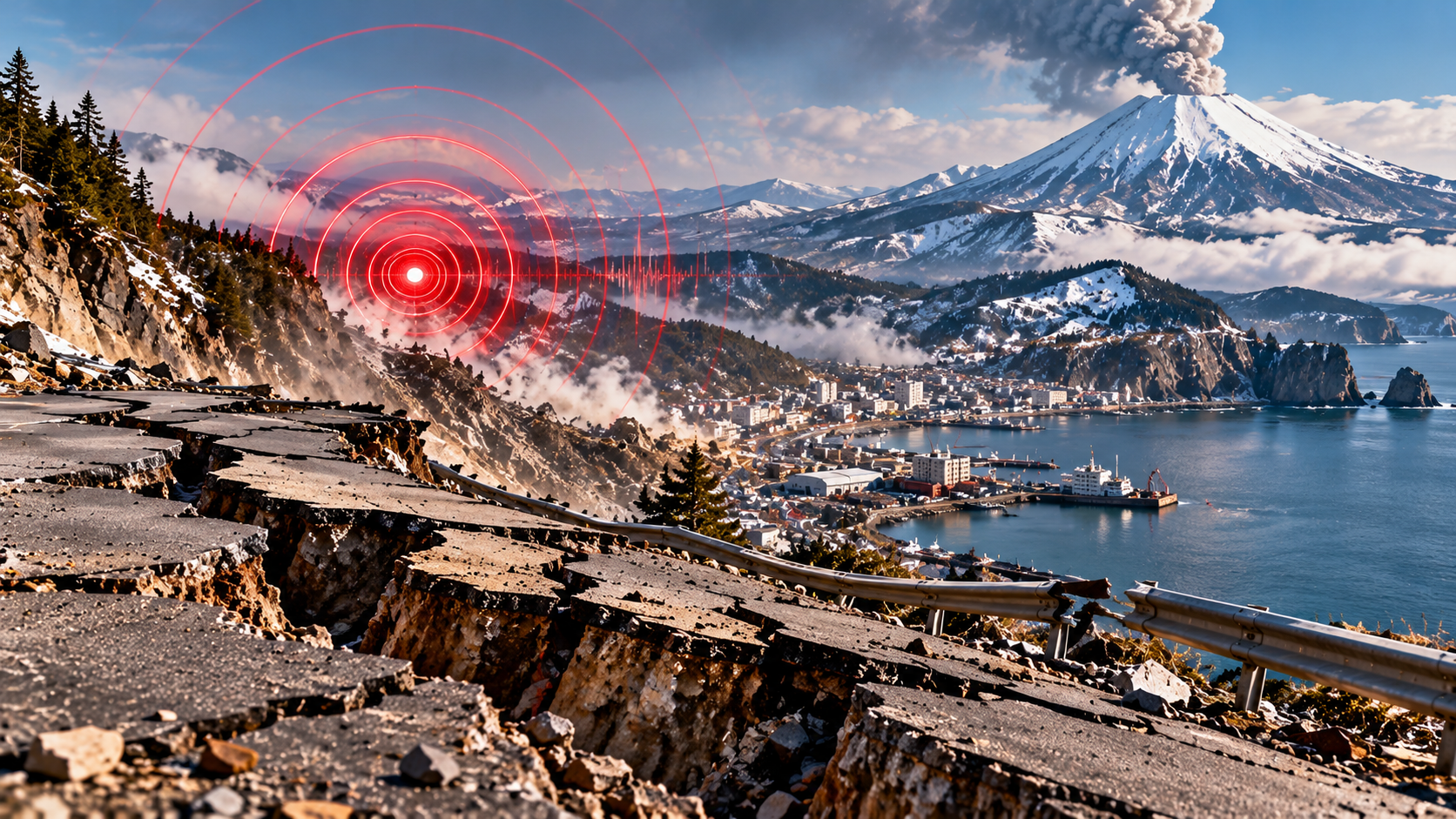
Powerful earthquake recorded at a depth of around 152 km, with its epicentre approximately 123 km southwest of Vilyuchinsk; US authorities report no tsunami warning, advisory or threat
A powerful earthquake measuring magnitude 7.0 struck Russia’s Kamchatka Peninsula on Friday, October 16, 2026, according to seismic monitoring agencies. The earthquake prompted attention from international monitoring organisations, although the US National Oceanic and Atmospheric Administration (NOAA) reported no tsunami warning, advisory, watch or threat following the event.
According to India’s National Centre for Seismology (NCS), the earthquake occurred at approximately 9:05 AM IST at a depth of 152 kilometres. Its epicentre was located at latitude 52.068° North and longitude 157.164° East, approximately 123 kilometres southwest of Vilyuchinsk in Russia’s Far East.
The European-Mediterranean Seismological Centre (EMSC) also reported the earthquake, with its preliminary assessment placing the magnitude at 7.0. Differences in preliminary measurements emerged across monitoring agencies, highlighting how seismic estimates can be revised as additional data becomes available.
Seismic Agencies Report Slight Differences in Measurements
The earthquake was recorded by multiple monitoring organisations, including the NCS, EMSC and NOAA. While the agencies broadly agreed on the scale of the event, their initial estimates varied slightly.
The NCS reported a magnitude of 7.0 and a depth of 152 kilometres. The EMSC’s detailed data separately recorded a magnitude of 6.9 and a depth of approximately 130 kilometres, while NOAA reported a magnitude of 7.0 at a depth of around 148 kilometres.
Such differences are not unusual in the immediate aftermath of an earthquake. Monitoring agencies use different seismic networks, data sources and calculation methods, and initial estimates may be updated as further readings are analysed.
The EMSC confirmed the event through seismic data in a post on X. Further assessments are generally needed to establish the earthquake’s precise characteristics and determine whether any significant damage or secondary effects have occurred.
Why the Earthquake’s Depth Matters
The earthquake was classified as a deep event, with its reported depth exceeding 100 kilometres. Earthquakes are commonly categorised by their depth, with events occurring between approximately 70 and 300 kilometres below the surface classified as intermediate-depth earthquakes.
Depth can influence how seismic energy reaches the surface. In many cases, deep earthquakes produce less intense shaking at the surface near the epicentre than a similarly powerful shallow earthquake, although the actual impact depends on several factors, including magnitude, local geology, distance from populated areas and the characteristics of the seismic waves.
A magnitude 7.0 earthquake is considered a major seismic event and can cause substantial damage under unfavourable conditions. However, magnitude alone does not establish the extent of destruction. Information about ground shaking, infrastructure exposure and local conditions is needed to assess the consequences.
The available report did not provide confirmed details of casualties, structural damage or widespread disruption following the Kamchatka earthquake.
No Tsunami Threat Reported
Despite the earthquake’s magnitude, NOAA stated that there was no tsunami warning, advisory, watch or threat following the event.
Tsunami risk depends on more than the magnitude of an earthquake. The depth of the event, its location, the type of fault movement and the extent of any displacement of the seabed are important factors in determining whether a tsunami could be generated.
Earthquakes beneath or near the ocean can sometimes trigger tsunami waves when they cause significant vertical movement of the seafloor. However, not every large earthquake produces a tsunami.
In this case, NOAA’s assessment indicated that no tsunami threat had been identified. Monitoring agencies can update their assessments if new information becomes available, so official alerts remain the most reliable source for any subsequent developments.
Kamchatka Lies in an Active Seismic Region
The Kamchatka Peninsula, located in Russia’s Far East along the northwestern Pacific, is one of the world’s seismically active regions. It forms part of the Pacific Ring of Fire, a broad zone characterised by frequent earthquakes, volcanic activity and the movement of tectonic plates.
The region’s seismic activity is closely linked to the interaction of the Pacific Plate with the surrounding tectonic system. Subduction, in which one tectonic plate moves beneath another, contributes to the accumulation and release of stress that can generate powerful earthquakes.
Kamchatka is also known for its volcanic landscape, making seismic monitoring particularly important for local authorities and scientific organisations. Earthquakes in this region are closely observed because they can occur at varying depths and may, under certain conditions, affect coastal communities or trigger secondary hazards.
However, the region’s high level of seismic activity does not by itself indicate that every earthquake will lead to further major events.
What Happens After a Major Earthquake?
Following a significant earthquake, monitoring agencies typically analyse additional seismic readings to refine the event’s magnitude, depth and location. Authorities may also review reports of ground shaking, infrastructure damage and other potential consequences.
Depending on the earthquake’s characteristics, scientific agencies may assess the possibility of aftershocks and other secondary hazards. Aftershocks can occur following a major earthquake as stress within the surrounding rock system adjusts, although their timing and strength cannot be predicted precisely.
Residents in affected areas are generally advised to follow instructions from local emergency services and official monitoring agencies. Coastal communities should rely on formal tsunami alerts rather than making assumptions based solely on earthquake magnitude or online reports.
As of the information available in the initial report, further details regarding the earthquake’s local impact remained awaited.
Global Significance of the Event
The Kamchatka earthquake underscores the importance of international seismic monitoring and rapid communication between scientific agencies. Earthquakes can occur with little warning, and timely assessments help authorities determine whether evacuation measures, tsunami alerts or other emergency responses are necessary.
Although this event did not trigger a tsunami threat according to NOAA, its magnitude reinforces the need for preparedness in seismically active regions. Monitoring systems, public awareness, resilient infrastructure and clear emergency communication remain essential for reducing risks associated with major earthquakes.
Further verified information from local authorities and seismic agencies will be needed to establish the full impact of the event.