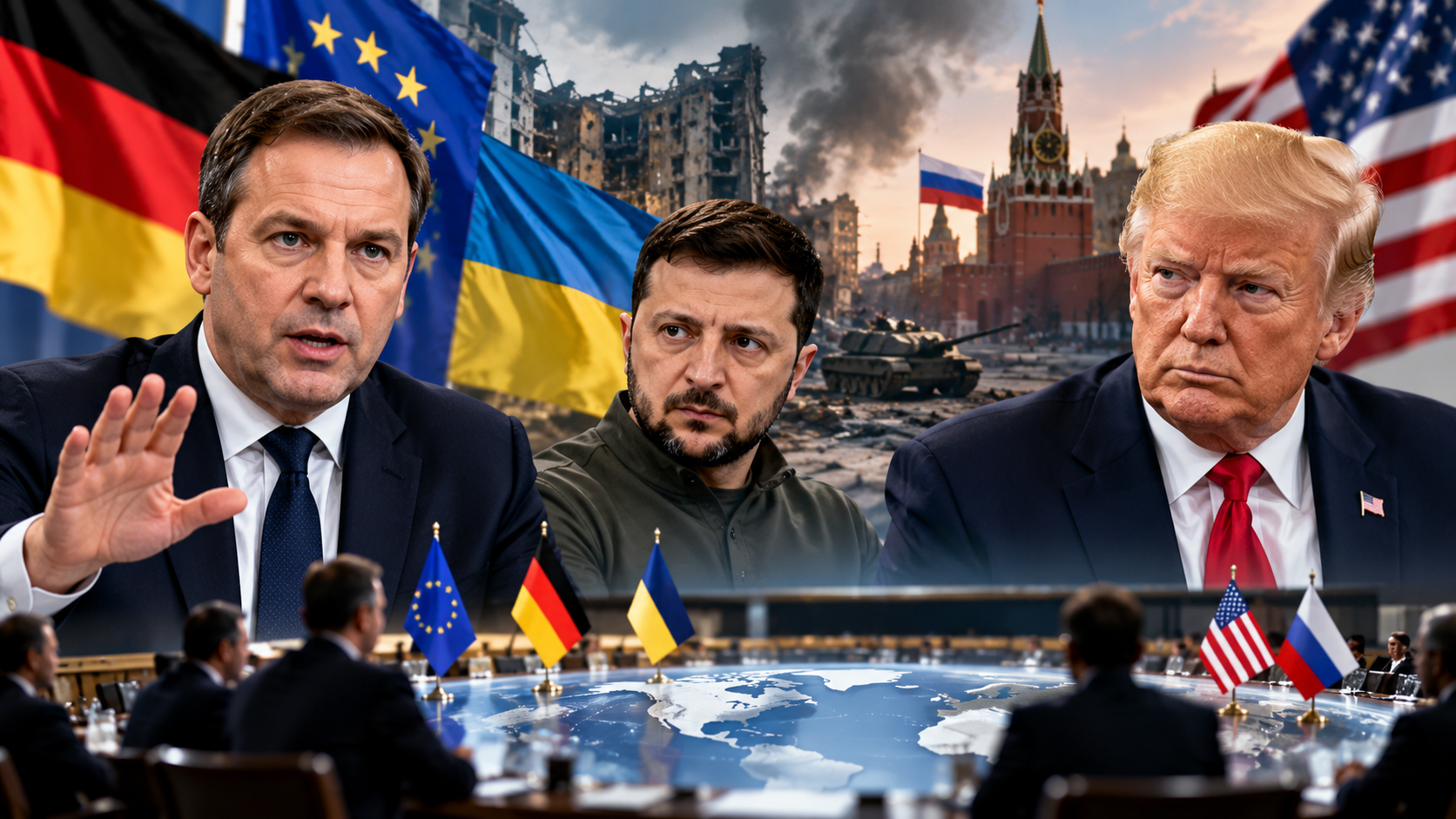
Vice Chancellor Lars Klingbeil Warns Against Restoring Moscow’s Global Standing Without Accountability; Berlin Says Any Peace Negotiations Must Include Kyiv and President Volodymyr Zelenskyy
Germany has criticised US efforts to bring Russia back into international diplomatic and economic engagement, warning that negotiations with Moscow must not come at Ukraine’s expense. German Vice Chancellor and Finance Minister Lars Klingbeil reiterated Berlin’s support for Kyiv, arguing that any discussions concerning the war must include Ukraine rather than being conducted over the heads of its leadership.
Speaking to reporters in Bangkok on Thursday, October 15, 2026, after a meeting of Group of 20 finance officials, Klingbeil expressed concern about what he described as attempts by Washington to restore Russia’s position on the global stage. He said Germany and its European partners would not simply accept Russia’s return as a normal participant in international forums while the conflict remained unresolved.
His remarks highlight continuing differences between the United States and European governments over how to approach Russia, the war in Ukraine and the possibility of easing economic restrictions imposed on Moscow.
Germany Rejects Russia’s Return to Normal International Engagement
Klingbeil said he was following the efforts to re-engage Russia with considerable concern. He made clear that Germany and other European countries were unwilling to treat Moscow's international participation as a routine matter without addressing the consequences of its invasion of Ukraine.
The German official argued that Russia must be held accountable for the war, which he described as a violation of international law. He maintained that Moscow must end the conflict and said European governments would continue to communicate that position in international forums.
His comments followed discussions among G20 finance officials in Bangkok, where, according to Klingbeil, Russia's finance minister was present. The two officials did not speak during the meeting.
Klingbeil also referred to an earlier G20 gathering in Asheville, North Carolina, where he said he had directly criticised Russia's position. His remarks underline the continuing disagreement over Russia's role in international institutions and the conditions under which diplomatic engagement should proceed.
Trump’s Approach Raises Questions Over Sanctions and Energy Supplies
The dispute follows US President Donald Trump's stated efforts to work with Russian President Vladimir Putin on releasing Russian diesel supplies into global markets. According to the report, Trump has also called on Ukrainian President Volodymyr Zelenskyy to halt attacks on Russian oil refineries.
The approach appears aimed, in part, at easing fuel-market pressures. However, efforts to increase Russian energy supplies and modify sanctions could create tensions with European governments that have supported restrictions on Moscow following its invasion of Ukraine.
Energy policy has become an important dimension of the conflict because oil and refined petroleum products influence global inflation, transportation costs and government revenues. Changes in restrictions on Russian energy exports could affect international supply expectations and the pricing of crude oil and refined products.
Any policy changes would depend on the details of the measures, their implementation and the response of other governments and market participants. The reported diplomatic discussions should not be interpreted as confirmation that all existing sanctions have been removed or that a comprehensive agreement has been reached.
Germany Says Ukraine Must Be Part of Every Peace Negotiation
A central point of Klingbeil's criticism was that negotiations concerning Ukraine must not exclude the country itself or its president.
The German vice chancellor said dialogue with Moscow could be useful, but stressed that such discussions must not be conducted at Ukraine's expense or without the participation of Zelenskyy.
This position reflects a broader European concern that a settlement negotiated primarily between Washington and Moscow could leave Kyiv with limited influence over decisions affecting its territory, security and future political arrangements.
Ukraine's participation would be particularly important in discussions involving ceasefire terms, territorial questions, security guarantees and the conditions for ending hostilities. Any durable agreement would also face the challenge of securing compliance and establishing mechanisms to address future violations.
Diplomatic engagement can create opportunities to reduce tensions, but the outcome depends on whether the parties can agree on the central political and security issues underlying the conflict.
G20 Meetings Become a Forum for Wider Geopolitical Differences
The G20 brings together major advanced and emerging economies to discuss global economic stability, financial cooperation and other international challenges. Although finance ministers' meetings are primarily focused on economic issues, the participation of Russian officials and discussions surrounding sanctions can give them a wider geopolitical significance.
The United States holds the G20 presidency in 2026, according to the report. US Treasury Secretary Scott Bessent did not travel to the Bangkok meeting.
Klingbeil's comments suggest that disagreements over Russia's international standing remain a significant issue even in forums focused on economic coordination. European governments have sought to maintain pressure on Moscow while also navigating the economic effects of energy-market volatility and geopolitical uncertainty.
The challenge for the G20 is to preserve channels for international dialogue without obscuring the sharp differences among participating governments over the war and the appropriate response to it.
What the Dispute Could Mean for Global Energy Markets
The diplomatic disagreement could have implications for energy markets if it leads to changes in sanctions policy or expectations regarding Russian fuel exports.
Russia remains an important participant in global energy markets, and restrictions on its exports can influence trade routes, supply availability and pricing. Any move to ease restrictions could alter expectations about the availability of crude oil or refined products, although the actual impact would depend on the scope of the measures and market conditions.
For India, changes in global energy prices are particularly relevant because the country imports a substantial share of its crude oil requirements. A sustained reduction in international oil prices could ease pressure on the import bill, inflation and fuel-sensitive industries. Conversely, renewed geopolitical tensions or disruptions to supply could increase costs.
Investors should distinguish between political statements and confirmed policy changes. Energy prices will continue to depend on actual supply flows, demand, shipping conditions, sanctions enforcement and developments in the wider conflict.
Key Issues to Watch
The next phase of the diplomatic debate will depend on several developments:
-
US sanctions policy: Whether Washington formally changes restrictions on Russian energy supplies or other economic activities.
-
European response: Whether Germany and other European governments maintain their current approach or agree to adjustments under specific conditions.
-
Ukraine’s participation: Whether Kyiv is included in any negotiations and how its security concerns are addressed.
-
Russian position: Whether Moscow signals a willingness to meet conditions that could support a diplomatic settlement.
-
Energy-market reaction: Whether changes in policy translate into higher exports, altered trade flows or sustained movements in oil and fuel prices.
These factors will help determine whether the latest exchanges remain diplomatic disagreements or lead to a material shift in international policy.
Outlook
Germany's criticism of US efforts to restore Russia's international standing highlights the continuing divide among Western governments over how to address the war in Ukraine. Klingbeil has stressed that dialogue is possible, but insists that Russia's return to normal international engagement cannot be separated from the conflict and that Ukraine must be represented in any negotiations affecting its future.
For global markets, the immediate implications will depend less on political rhetoric alone and more on whether the statements lead to concrete changes in sanctions, energy exports or diplomatic negotiations.
The key takeaway: Berlin is signalling that any renewed engagement with Moscow must account for the war in Ukraine and include Kyiv in decisions affecting its future. Whether Washington's approach leads to a diplomatic breakthrough or deeper divisions among Western allies remains uncertain.