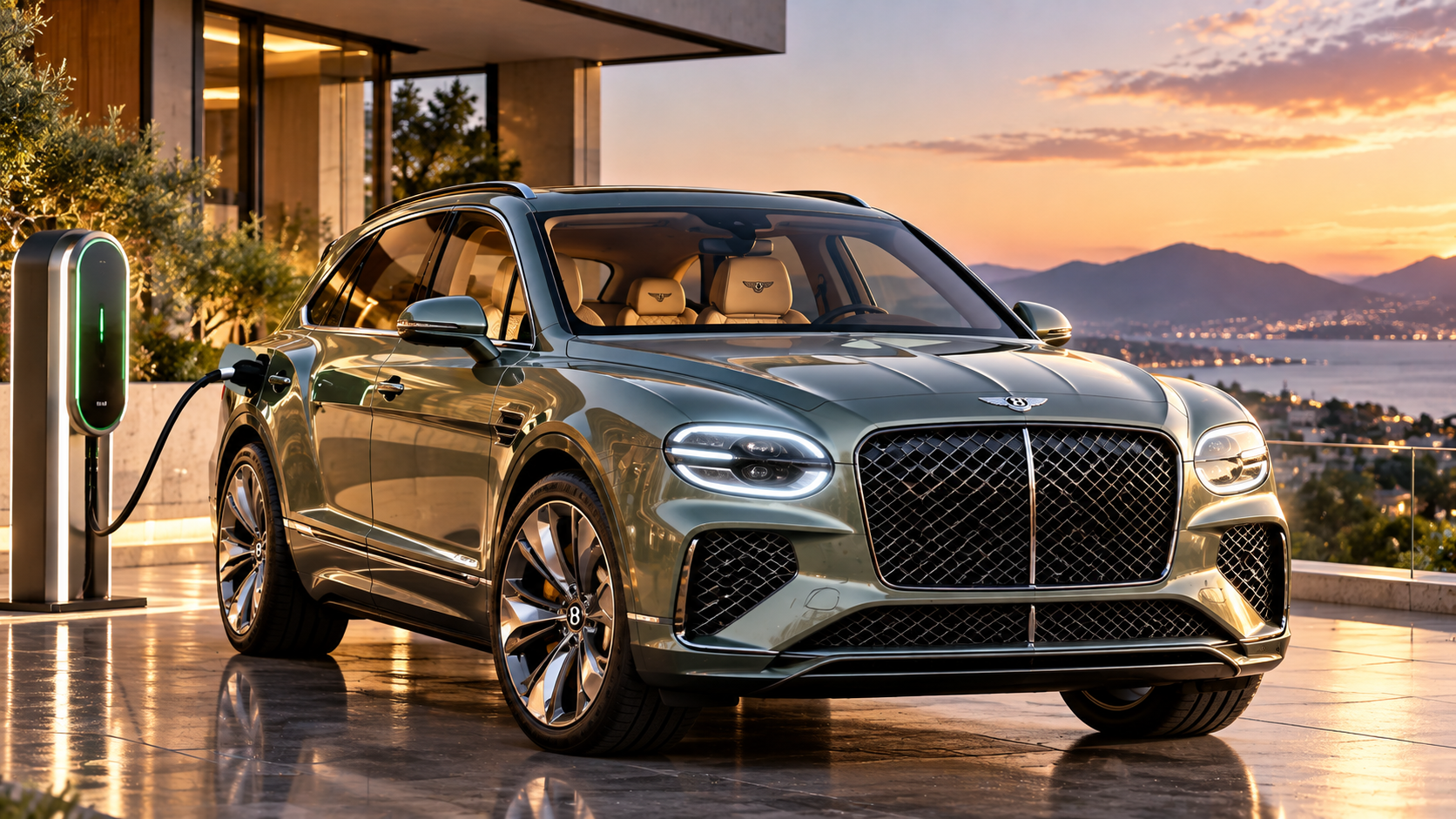
€173,000 electric SUV becomes Bentley’s entry model as Volkswagen-owned luxury marque takes a measured approach to electrification and invests in its Crewe manufacturing base
Bentley Motors has unveiled its first fully electric vehicle, the Torcal, marking a major milestone in the British luxury automaker’s transition towards electric mobility.
Priced from around €173,000 in the UK market, the Torcal becomes Bentley’s most affordable model and adds a fourth model line to the company’s portfolio. Bentley is positioning the luxury SUV as a vehicle that can attract younger customers and potentially bring first-time buyers into the brand.
The launch comes at a complicated time for the luxury electric-vehicle market. While demand for premium EVs remains significant, sales growth has been uneven across markets, prompting luxury manufacturers to balance electrification ambitions with customer demand and profitability.
Bentley’s approach is therefore focused not simply on converting its existing models to electric power, but on creating a vehicle that retains the craftsmanship, comfort and distinctive character associated with the brand.
Torcal Marks Bentley’s Electric Beginning
The Torcal represents Bentley’s first production battery-electric vehicle and is the first major step in the company’s next phase of electrification.
Bentley says the model introduces a new, more progressive design direction while retaining elements of its traditional luxury identity. The company has described the Torcal as a new expression of luxury for the electric era, combining advanced EV technology with handcrafted materials and passenger-focused features.
The SUV is being produced at Bentley’s historic Crewe facility in England, reinforcing the company’s strategy of combining new electric technology with its established manufacturing and craftsmanship capabilities.
Performance Remains Central to the Bentley Formula
Although the Torcal is an EV, Bentley has not positioned efficiency as its only selling point. Performance remains a central part of the vehicle's identity.
The standard Torcal uses two electric motors and develops up to 821 PS, with maximum torque of 1,155 Nm. Bentley quotes 0-100 km/h acceleration of 3.4 seconds and a maximum speed of 250 km/h.
The vehicle uses a 113.2 kWh battery and offers a maximum claimed range of around 600 km under the manufacturer's testing specifications.
The performance-oriented Torcal S takes the figures further, with Bentley quoting up to 888 PS and 1,350 Nm of torque, making it the most powerful production Bentley according to the company.
Fast Charging Addresses a Key EV Concern
Charging performance is another important feature of Bentley’s first EV.
The Torcal can charge from 10% to 80% in approximately 16 minutes using compatible high-power DC charging infrastructure. Bentley also says the vehicle can add more than 350 km of range in 10 minutes under suitable charging conditions.
For luxury-car buyers, fast charging could be particularly important because the target customer is likely to expect an EV experience that does not significantly compromise convenience compared with conventional petrol-powered vehicles.
The combination of long claimed range and rapid charging is therefore intended to make the Torcal suitable for both urban use and longer journeys.
Luxury Materials Become a Major Differentiator
Bentley is using craftsmanship and interior materials to differentiate the Torcal from other premium electric SUVs.
The company has developed a Merino-wool automotive fabric in collaboration with British textile manufacturer Fox Brothers. Other cabin options include elaborate wood and recycled-material finishes designed to reinforce the handcrafted character of the vehicle.
Bentley is also offering comfort-focused seats with heating, ventilation, adjustment and massage functions, while the cabin includes multiple ambience and comfort settings.
The focus on materials is significant because luxury automakers face a challenge in the EV era: electric powertrains can make acceleration and performance easier to deliver across brands, potentially reducing some of the traditional mechanical differentiation between manufacturers.
Bentley is therefore attempting to compete through craftsmanship, comfort, design and personalisation as much as through electric performance.
Bentley Wants to Attract a Younger Customer Base
The Torcal is also part of Bentley’s strategy to broaden its customer base.
The company expects electric propulsion to appeal to consumers who may not have traditionally considered a Bentley. Younger luxury buyers, in particular, could be more receptive to EV technology and digital features.
A lower entry price compared with Bentley’s other models could further support this strategy.
However, the Torcal remains positioned firmly in the ultra-luxury segment, meaning its target customer is still very different from the mass-market EV buyer.
A More Cautious Electrification Strategy
Bentley’s first EV arrives as the company takes a more measured approach to its electrification timeline.
The automaker had previously outlined a strategy under which it would move towards an all-electric product portfolio. Bentley’s current Beyond100+ strategy extends the transition timeline to 2035 while maintaining its commitment to electrification.
The shift reflects the wider challenges facing luxury automakers.
EV demand has not developed uniformly across markets, and premium manufacturers have had to balance customer preferences, infrastructure availability, battery costs and regulatory requirements.
Bentley’s strategy therefore combines battery-electric models with plug-in hybrid vehicles as it gradually moves customers towards full electrification.
Torcal Shares Technology Across the Volkswagen Group
The Torcal benefits from Volkswagen Group technology and engineering resources.
The model shares its underlying architecture with the electric Porsche Cayenne, according to the company's management, allowing Bentley to leverage technology developed elsewhere within the Volkswagen Group while adding its own design, craftsmanship and luxury positioning.
This approach is important from a financial perspective because developing an entirely new EV platform independently can require very large investments.
Group-level technology sharing can potentially reduce duplication of engineering costs while allowing individual brands to differentiate vehicles through design, performance, interiors and customer experience.
Crewe Receives a £350 Million Investment
The Torcal launch is also connected to a significant investment programme at Bentley’s Crewe manufacturing site.
The company is investing around €350 million in the facility as it prepares the plant for the next phase of production.
Bentley has been developing its “Dream Factory” concept at Crewe, aimed at creating a more digital, flexible and sustainable manufacturing environment for its next generation of vehicles. The company has said the site is being transformed to support electrification while retaining its emphasis on high-value craftsmanship.
The investment provides an important boost to Bentley’s UK manufacturing operations at a time when the British automotive industry is facing higher costs and significant changes associated with the transition to EV production.
Luxury EV Market Faces Growing Competition
Bentley is entering an increasingly competitive premium EV market.
Traditional European luxury brands are launching electric SUVs and performance models, while Chinese manufacturers are moving further into premium vehicle categories.
For Bentley, the challenge is particularly complex because customers purchasing vehicles at this price point often place considerable value on brand heritage, design and exclusivity.
The company therefore needs to demonstrate that electrification can enhance rather than dilute the Bentley ownership experience.
Profitability Will Be Closely Watched
The Torcal is also strategically important for Bentley’s financial performance.
Chief Executive Frank-Steffen Walliser has indicated that the company is targeting double-digit returns on sales despite challenging conditions across the automotive industry.
Developing a completely new electric model requires significant upfront investment. Bentley has indicated that the Torcal programme cost more than £1 billion to develop.
The ability to achieve sufficient production volumes while maintaining luxury pricing will therefore be critical to the model’s financial success.
Balancing Heritage With Electric Technology
One of Bentley’s biggest challenges is preserving its brand identity during the transition away from internal-combustion engines.
For decades, Bentley’s identity has been associated with large engines, high performance, handcrafted interiors and distinctive driving characteristics.
The Torcal replaces the traditional engine experience with instant electric torque, advanced suspension systems and digitally controlled cabin features.
Bentley has even developed artificial sound experiences designed to provide an emotional driving experience for customers who may miss the character of a conventional high-performance engine.
The company is effectively trying to redefine what a Bentley experience means rather than simply replacing a petrol powertrain with a battery.
The Bigger Strategy Behind Torcal
The Torcal is more than a new model launch for Bentley. It is a test of whether an established ultra-luxury brand can successfully transition to electric mobility without weakening its exclusivity or profitability.
The company plans to introduce additional electrified models over the coming years as part of its longer-term product strategy. Bentley has previously outlined plans for a new PHEV or BEV model every year over the next decade under its Beyond100+ strategy.
The Torcal therefore provides the first real-world test of this strategy.
Its reception among existing Bentley customers, younger luxury buyers and new EV customers will influence how aggressively the company can expand its electric portfolio.
Market Outlook
Bentley’s Torcal marks a significant transition for one of the world’s established luxury automotive brands. With a starting price of around €173,000, strong electric performance, a claimed range of up to 600 km and rapid charging capability, the SUV combines EV technology with Bentley’s traditional focus on craftsmanship and comfort.
The larger question for Bentley is whether the Torcal can expand the brand’s customer base while generating the margins required to justify its substantial development and manufacturing investment.
The luxury EV market remains competitive and demand is developing unevenly across regions. Bentley’s strategy of combining electric vehicles with plug-in hybrids gives it additional flexibility as consumer preferences evolve.
For the Volkswagen Group, the Torcal also represents another opportunity to use its luxury brands to generate higher-value revenue while sharing technology and development resources across the group.
The vehicle’s market reception, production volumes, customer mix and profitability will therefore be important indicators of whether Bentley’s cautious electric transition can deliver the growth and returns expected from its new flagship EV strategy.