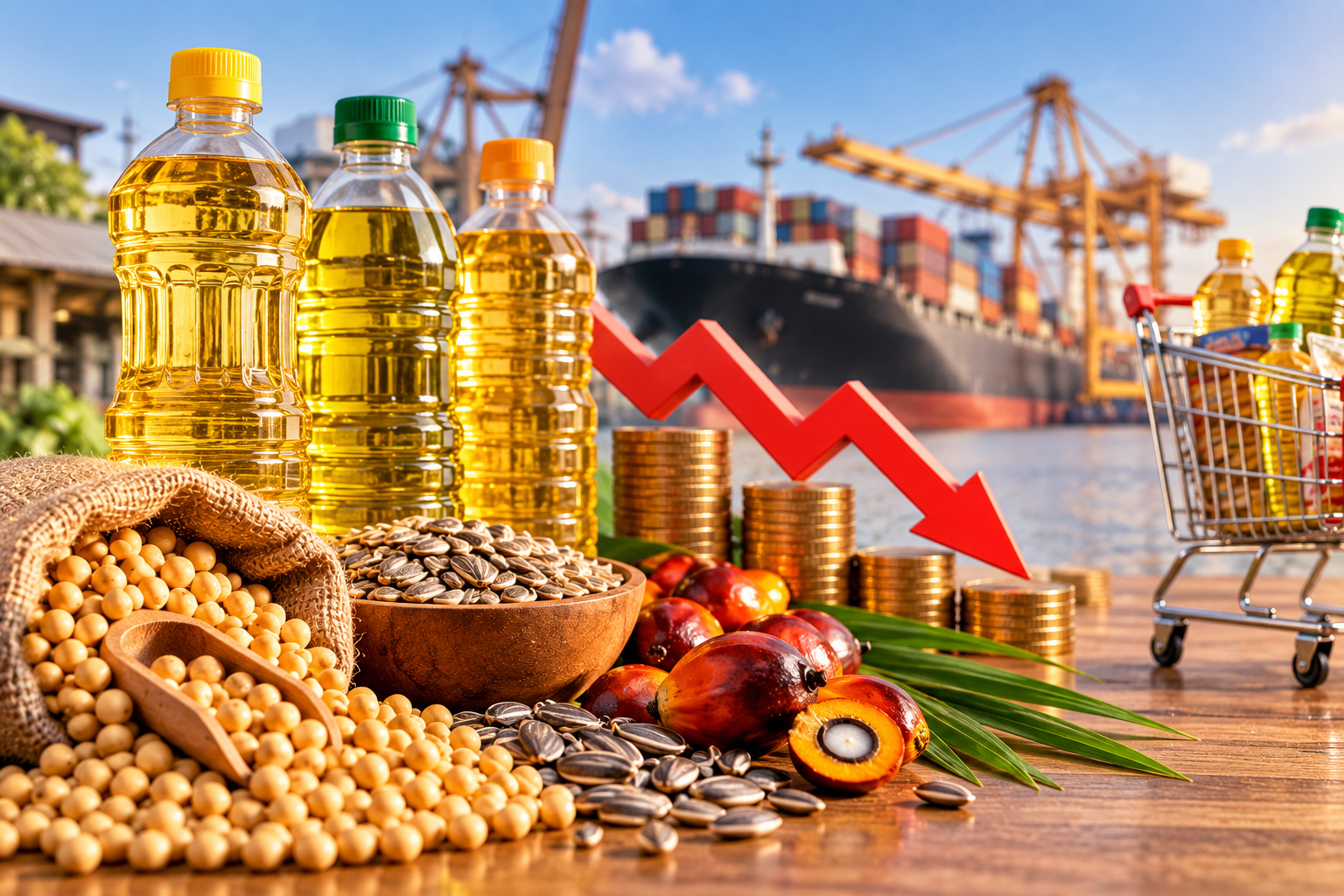
Government cuts duties on crude and refined palm, soybean and sunflower oils as industry expects lower landed costs, improved availability and greater relief for consumers during the high-demand festive period
Retail prices of cooking oils could ease in the coming weeks after the government reduced customs duties on key edible-oil imports, according to the Indian Vegetable Oil Producers' Association (IVPA).
The reduction comes ahead of the festive season, when demand for edible oils typically rises across households as well as the sweets, snacks, food-service and hotel, restaurant and catering (HORECA) industries.
The government has lowered import duties on crude and refined varieties of sunflower, soybean and palm oils. Industry representatives expect the move to reduce the landed cost of imported edible oils and potentially provide some relief to consumers, although the final impact on retail prices will depend on international commodity prices, freight rates, currency movements and domestic inventories.
Government Reduces Import Duties on Major Edible Oils
The government has reduced the basic customs duty (BCD) on crude sunflower oil from 10 per cent to zero. The duty on refined sunflower oil has also been reduced from 32.5 per cent to 22.5 per cent.
For crude soybean oil and crude palm oil, the BCD has been cut from 10 per cent to 5 per cent.
The duty on refined soybean oil and refined palm oil has been reduced from 32.5 per cent to 27.5 per cent.
The changes are aimed at improving the economics of imports and helping domestic supplies remain adequate at a time when demand is expected to strengthen.
Industry Expects Lower Landed Costs
Sudhakar Desai, president of the Indian Vegetable Oil Producers' Association, said the duty reduction comes at an important time for the edible-oil sector.
Lower import duties can directly reduce the tax component included in the landed cost of imported crude and refined oils. This can create room for lower wholesale and retail prices, provided global prices and other cost components remain favourable.
However, the benefit is not necessarily expected to reach consumers immediately or in full.
International benchmark prices, shipping expenses, exchange rates and inventory costs can all influence the price at which edible oil eventually reaches consumers.
India Remains Heavily Dependent on Imports
The policy change is particularly significant because India relies heavily on overseas supplies to meet domestic edible-oil demand.
Around 60 per cent of India's total edible-oil requirement is met through imports. This makes domestic prices sensitive to global commodity markets and international supply disruptions.
Palm oil is primarily sourced from Malaysia and Indonesia, while soybean oil is imported largely from Argentina and Brazil.
As a result, any significant movement in global vegetable-oil prices, freight rates, currency markets or production conditions in exporting countries can quickly influence Indian prices.
Sunflower Oil Gets the Steepest Duty Reduction
Among the major oils covered by the latest decision, sunflower oil has received the most significant duty relief.
The BCD on crude sunflower oil has been completely removed, while the duty on refined sunflower oil has been reduced by 10 percentage points.
The industry expects this to make sunflower oil relatively more competitive against other cooking oils.
The impact could be particularly relevant in southern India, where sunflower oil has traditionally enjoyed strong consumer demand.
Greater availability of competitively priced sunflower oil could also encourage some consumers and food businesses to shift their purchases away from other oils.
Festive Demand Could Provide a Major Test
The timing of the duty reduction is important because India's edible-oil market typically experiences higher consumption during the festive period.
Household demand increases as consumers prepare traditional foods and sweets, while commercial demand rises from sweet manufacturers, snack producers, restaurants, caterers and other food-service businesses.
The HORECA segment can also contribute significantly to demand during periods of increased travel, celebrations and social gatherings.
Ensuring adequate supplies during this period will therefore be a key priority for the industry.
Palm Oil Could Face Demand Pressure
The change in relative pricing could also influence the composition of India's edible-oil consumption.
According to IVPA, greater import flexibility for sunflower and soybean oil could shift some demand away from palm oil.
Palm oil prices are expected to remain sensitive to international supply conditions, particularly developments in Indonesia and Malaysia.
The implementation of higher biodiesel blending mandates in major palm-oil-producing countries could further tighten the balance between food and fuel demand.
This could make palm oil comparatively expensive and increase the attractiveness of alternative oils for Indian buyers.
Import Bill Expected to Rise
India's dependence on imported edible oils also has implications for the country's overall import bill.
According to the Solvent Extractors' Association of India (SEA), the country's edible-oil import bill is estimated to rise around 9 per cent to ₹1.75 trillion during the current marketing year ending October.
The increase reflects higher import volumes as well as the impact of rupee depreciation.
A weaker rupee raises the domestic cost of imported commodities because Indian buyers need to spend more rupees to purchase the same quantity of oil in international markets.
Therefore, the latest duty reduction could provide some offset to currency-related cost pressures.
Imports Have Already Increased
India's vegetable-oil imports have remained strong during the current oil year.
Between November and August of the 2025-26 oil year, total vegetable-oil imports increased around 4 per cent to 138.8 lakh tonnes, compared with 133.37 lakh tonnes during the corresponding period of the previous year.
Vegetable oil imports include both edible and non-edible oils.
The increase highlights the continuing role of imports in meeting domestic demand and maintaining availability in the Indian market.
International Prices Remain a Key Variable
The benefit of the duty reduction will ultimately depend on what happens in global edible-oil markets.
A decline in international soybean, palm or sunflower oil prices could amplify the benefit of lower Indian import duties. Conversely, a sharp increase in global prices could absorb much of the duty-related savings.
Freight costs are another important variable.
Longer shipping routes, higher fuel prices, geopolitical tensions or disruptions in major maritime corridors can increase transportation costs and raise the landed price of imported edible oils.
Rupee Movement Could Influence Consumer Prices
Currency movements will also remain important.
Because India imports a large share of its edible-oil requirements, depreciation of the rupee can increase the domestic cost of imports even when international commodity prices remain stable.
On the other hand, a stronger rupee can reduce the rupee cost of imported oils.
This means that the impact of the customs-duty reduction should be assessed alongside developments in the foreign-exchange market rather than in isolation.
What It Means for Consumers and the Food Industry
For consumers, the immediate implication is the possibility of lower or more stable cooking-oil prices as the benefit of reduced import duties moves through the supply chain.
The extent of the reduction will vary across oil categories and regions.
Food manufacturers, sweet makers, restaurants and other commercial users could also benefit from lower input costs if the duty reduction translates into lower wholesale prices.
However, businesses are likely to continue monitoring international commodity prices, freight expenses and currency movements before making long-term procurement decisions.
Market Outlook
The reduction in import duties on palm, soybean and sunflower oils is expected to improve the landed economics of imports and could provide some relief to Indian consumers during the upcoming festive season.
The most visible impact may come in sunflower oil, where the duty reduction has been particularly significant. Increased availability of soybean and sunflower oil could also alter the demand mix within India's edible-oil market.
However, the final impact on retail prices will depend on several factors, including global vegetable-oil prices, freight rates, the rupee's movement, domestic inventories and the pace at which lower import costs are passed through the supply chain.
With India still dependent on imports for around 60 per cent of its edible-oil requirements, global supply conditions will remain a critical factor for domestic prices. The upcoming festive season will provide an important test of whether the duty reduction translates into meaningful relief for households and the food-service industry.