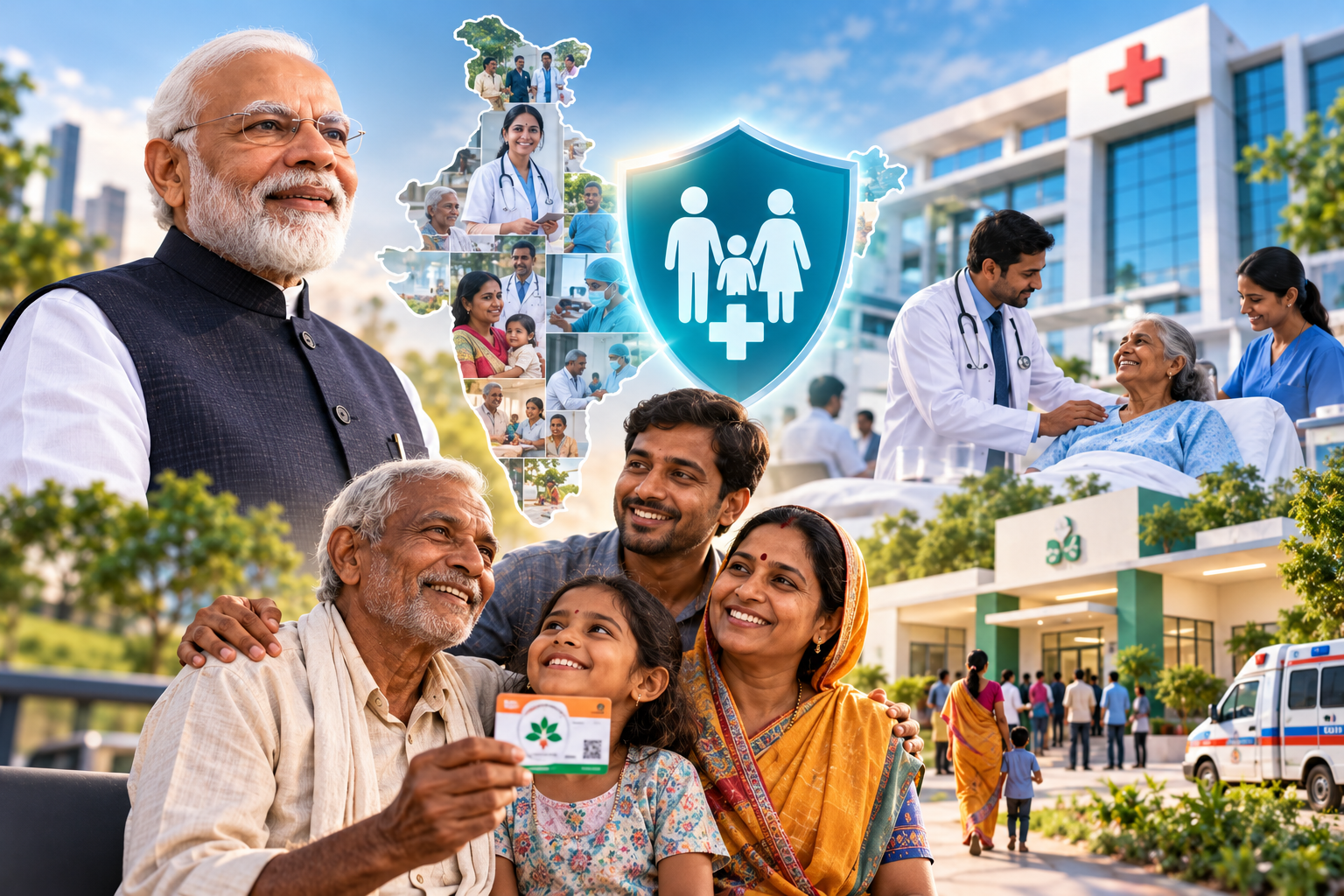
More than 600 million people now have access to annual health cover of up to ₹5 lakh, while the scheme has funded over 13 crore hospital admissions worth ₹2 lakh crore
Prime Minister Narendra Modi on Wednesday highlighted the scale of Ayushman Bharat as the flagship healthcare programme completed eight years, saying the initiative has expanded access to affordable healthcare and helped reduce the financial burden of medical treatment on households.
Launched on September 23, 2018, Ayushman Bharat Pradhan Mantri Jan Arogya Yojana (AB-PMJAY) provides cashless hospitalisation coverage of up to ₹5 lakh per family per year for secondary and tertiary care to eligible beneficiaries.
The government says the programme has now become one of the world's largest publicly funded healthcare initiatives, with its coverage complemented by primary healthcare centres, digital health infrastructure and other public-health programmes.
Ayushman Bharat: Eight Years of Expansion
In a post marking the eighth anniversary of Ayushman Bharat, Prime Minister Narendra Modi said the programme was launched with the objective of ensuring that Indians could access quality and affordable healthcare.
He highlighted the expansion of health coverage and said the scheme has resulted in significant savings on medical expenses for beneficiaries, particularly poorer and middle-income households.
The government has also expanded the programme beyond its original beneficiary base. In 2024, AB-PMJAY was extended to all citizens aged 70 years and above, irrespective of their socio-economic status, bringing an estimated six crore senior citizens into the ambit of the scheme.
More Than 48 Crore Ayushman Cards Issued
According to the latest government data, more than 48.51 crore people had Ayushman cards as of September 21, 2026. The government estimates that this represents around 33% of India's population.
As of August 31, AB-PMJAY had funded approximately 13.25 crore hospital admissions worth ₹2.03 lakh crore through a network of more than 38,000 empanelled public and private hospitals.
The figures indicate the increasing scale of publicly funded healthcare in India and the growing role of cashless treatment in reducing the immediate financial burden associated with major medical procedures.
₹2.03 Lakh Crore Worth of Hospital Treatment Funded
The financial scale of the programme has increased significantly over the years.
Government data shows that treatment worth approximately ₹2.03 lakh crore had been covered through AB-PMJAY by August 31, 2026. The scheme had funded around 13.25 crore hospital admissions during this period.
The government has described the reduction in out-of-pocket expenditure as one of the key outcomes of the programme.
Separately, National Health Accounts data cited by the government shows that out-of-pocket expenditure as a proportion of total health expenditure declined from 62.6% in 2014-15 to 43.4% in 2022-23. The government attributes part of the broader decline to increased public investment and publicly financed healthcare schemes such as AB-PMJAY.
Ayushman Arogya Mandirs Strengthen Primary Healthcare
Ayushman Bharat is broader than the hospitalisation insurance component.
Ayushman Arogya Mandirs are intended to strengthen primary healthcare by providing a wider range of preventive, promotive and basic healthcare services closer to communities.
The government said these centres have recorded more than 5 billion visits, highlighting the scale of India's primary healthcare network.
This creates a two-level healthcare framework in which primary healthcare facilities can address routine and preventive needs while AB-PMJAY provides financial protection for eligible beneficiaries requiring secondary and tertiary hospitalisation.
National Portability Expands Access
One of the important features of AB-PMJAY is nationwide portability.
Eligible beneficiaries can receive cashless treatment at empanelled hospitals outside their home state, an arrangement that can be particularly relevant for migrant workers and families travelling for employment or specialised treatment.
As of June 30, 2026, more than 29 lakh interstate portability hospital admissions worth over ₹8,383 crore had been authorised under the programme.
The digital platform supporting the scheme allows hospitals to verify beneficiaries and facilitate admission, claims processing and settlement across state boundaries.
Senior Citizens Become a Major New Beneficiary Group
The expansion of AB-PMJAY to citizens aged 70 years and above has significantly widened the programme's reach.
The government estimates that around six crore senior citizens across approximately 4.5 crore families can benefit from the expansion, irrespective of their socio-economic status.
As of September 21, more than 1.36 crore senior citizens had obtained Ayushman Vay Vandana cards, according to government data.
The expansion is significant because healthcare requirements generally increase with age, potentially making financial protection against hospitalisation particularly important for elderly households.
Digital Health Infrastructure Adds Another Layer
Ayushman Bharat's architecture also includes the Ayushman Bharat Digital Mission, which seeks to create a more connected digital health ecosystem.
The objective is to facilitate the use of digital health identities and improve the ability to connect patients, healthcare providers and health information across the healthcare system.
Alongside AB-PMJAY and the Digital Health Mission, the government is implementing the Pradhan Mantri Ayushman Bharat Health Infrastructure Mission to strengthen physical healthcare infrastructure.
Impact on India's Healthcare Ecosystem
The expansion of publicly funded health insurance has implications beyond individual households.
For hospitals, particularly those participating in government-funded programmes, a larger beneficiary base can increase the potential pool of patients eligible for cashless treatment.
For healthcare infrastructure providers, diagnostics companies, medical-device manufacturers and pharmaceutical businesses, the expansion of healthcare access can contribute to long-term demand growth.
However, the financial sustainability of publicly funded healthcare programmes will also depend on treatment costs, claims management, hospital participation, reimbursement mechanisms and the ability to maintain service quality as utilisation increases.
Challenges Remain Despite Expanding Coverage
While the scale of AB-PMJAY has increased significantly, coverage through an insurance or assurance programme does not by itself guarantee equal access to healthcare across every region.
Availability of hospitals, specialist doctors, diagnostics, medicines and healthcare infrastructure remains important to ensuring that beneficiaries can actually use the benefits.
The government has therefore positioned AB-PMJAY alongside primary healthcare expansion and infrastructure-development programmes rather than treating hospital insurance as the only component of universal healthcare.
Market Outlook
The eighth anniversary of Ayushman Bharat highlights the increasing scale of India's publicly funded healthcare ecosystem. With more than 48 crore Ayushman cards issued, over 13 crore hospital admissions funded and treatment worth about ₹2.03 lakh crore covered through August 31, the programme has become an important component of India's healthcare financing framework.
For the healthcare industry, the continued expansion of coverage, primary-care infrastructure and digital health systems could support long-term demand for hospitals, diagnostics, medical devices and healthcare services.
The next phase will depend on how effectively the government and participating states expand access, maintain the financial sustainability of the programme and ensure that increased coverage translates into timely, affordable and quality healthcare for beneficiaries.