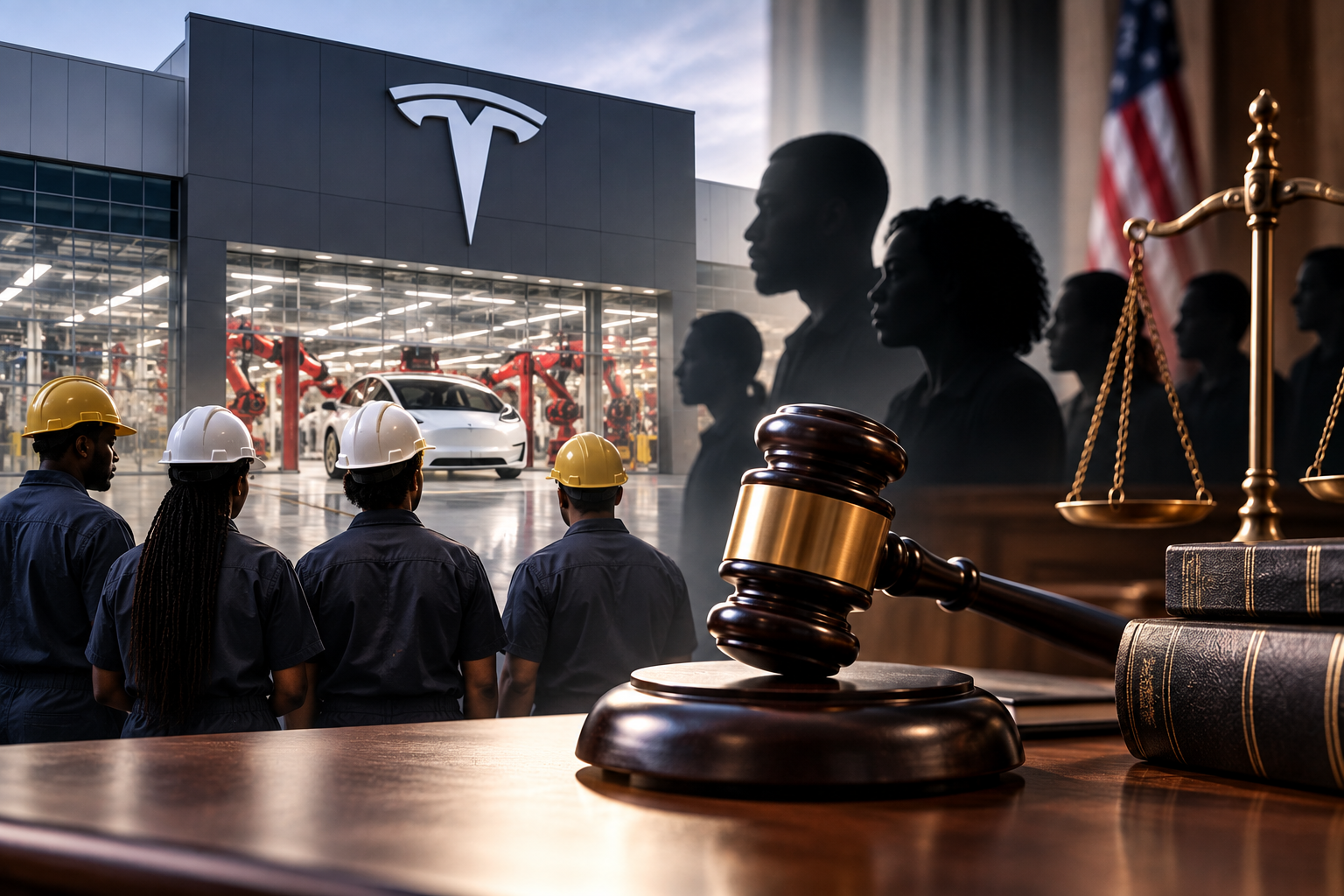
California Civil Rights Department alleges racial harassment, unequal pay and limited promotion opportunities at Tesla’s Fremont plant as high-stakes bench trial gets underway
Tesla is facing a major legal challenge in California as a state civil rights lawsuit alleging widespread racial discrimination against Black workers at its Fremont assembly plant goes to trial.
The case, brought by the California Civil Rights Department (CRD), accuses Tesla of allowing pervasive racial harassment and discrimination in the workplace, including allegations involving racial slurs, racist graffiti, job assignments, compensation, discipline and promotion opportunities.
The trial is being heard in Alameda County Superior Court before Judge Peter Borkon and is scheduled to continue through October 30, according to Reuters. Unlike a jury trial, the case is a bench trial, meaning the judge will determine whether Tesla is liable under the relevant California civil rights laws.
California Agency’s Allegations
The CRD originally filed the lawsuit in February 2022 following an investigation that the agency said lasted nearly three years. Its amended complaint alleges that Black and African American workers experienced pervasive racial harassment and were disadvantaged in areas including job assignments, compensation, discipline, promotion and termination.
The agency also alleges that Tesla failed to adequately prevent or correct discriminatory conduct despite complaints from workers.
According to the CRD's case materials, the allegations include the use of racial slurs and racist writing or graffiti in workplace areas, as well as claims that Black workers were disproportionately placed in lower-paying or less desirable positions.
The allegations remain matters for the court to determine at trial.
Claims Extend Beyond Workplace Harassment
The lawsuit is broader than allegations involving individual incidents of misconduct. The CRD alleges that discriminatory practices affected several aspects of employment, including compensation and advancement.
The department's amended complaint alleges that Black workers were assigned to contract or other lower-paid positions, received fewer opportunities for bonuses or equity and were denied promotions and advancement opportunities more frequently than non-Black employees.
The agency is also pursuing claims concerning retaliation against workers who complained about alleged discrimination and harassment.
Tesla Has Denied Wrongdoing
Tesla has denied the allegations and has said that it does not tolerate discrimination in its workplaces. The company has also stated that employees found to have engaged in misconduct have been fired.
The court's role in the current proceeding is to determine liability based on evidence presented by both sides rather than simply accepting either party's allegations.
In May 2026, the California Civil Rights Department said an Alameda County Superior Court order had rejected Tesla's latest attempt to have the case dismissed. The agency said the court found factual issues concerning the allegations that required resolution through trial.
No Jury in the Current Trial
One important feature of the case is that it is being conducted as a bench trial.
Judge Peter Borkon, rather than a jury, will evaluate the evidence and determine whether Tesla violated California's civil rights laws. This could make the presentation of documentary evidence, employment records, witness testimony and evidence concerning workplace practices particularly important during the proceedings.
The potential financial consequences are also significant. Reuters reported that California workplace discrimination law does not impose the same damages cap applicable under federal law, meaning a finding against Tesla could potentially result in substantial financial exposure.
Thousands of Workers and Broader Claims
The case has attracted significant attention because of the number of workers potentially affected and the broader allegations concerning Tesla's Fremont operation.
The CRD says its enforcement action was brought in the public interest and on behalf of Black and African American workers at Tesla. Its case materials describe allegations involving racial harassment, discrimination and retaliation.
The department's original announcement in 2022 said its investigation had received hundreds of worker complaints before the lawsuit was filed.
Tesla Faces Other Employment-Related Litigation
The California lawsuit is not the only legal challenge Tesla has faced over workplace discrimination allegations.
Reuters reported that the company is also facing a separate lawsuit from the US Equal Employment Opportunity Commission (EEOC) alleging racial harassment, in addition to numerous individual lawsuits brought by workers.
Tesla has previously reached settlements in some individual cases. One high-profile case involving a former Tesla worker resulted in a jury award of $137 million, although the amount was subsequently reduced by a judge, according to Reuters.
Why the Case Matters for Corporate Governance
Beyond the immediate legal exposure, the trial could draw attention to how large employers manage workplace complaints, discrimination investigations and internal compliance systems.
For multinational companies, workplace policies increasingly form part of broader corporate governance and reputational-risk assessments. A major finding against a company can potentially lead to financial costs, changes in workplace practices, additional litigation and increased regulatory scrutiny.
For Tesla, the proceedings also come amid continuing scrutiny of its operations and employment practices across the United States.
Potential Financial and Business Impact
The immediate financial impact will depend on the court's findings and any remedies ultimately ordered. If Tesla is found liable, potential costs could include damages and other forms of relief, depending on the claims established and the court's orders.
There could also be indirect costs related to compliance measures, employee relations, legal expenses and management attention.
For investors, the case is therefore relevant not only as a legal matter but also as part of the broader risk profile of a global manufacturer employing large workforces across multiple jurisdictions.
Market Outlook
The Tesla discrimination trial represents a significant legal and corporate-governance development for the electric vehicle manufacturer. The outcome will depend on evidence presented during the bench trial and the court's interpretation of California's civil rights laws.
For investors, the key factors to monitor will be the court's findings on the alleged workplace practices, potential financial remedies, any required changes to Tesla's employment policies and the implications for other pending discrimination cases.
The case also highlights a broader issue for large corporations: workplace compliance, employee grievance mechanisms and anti-discrimination controls can create material legal and financial risks when regulators or courts determine that those systems failed to adequately address alleged misconduct.