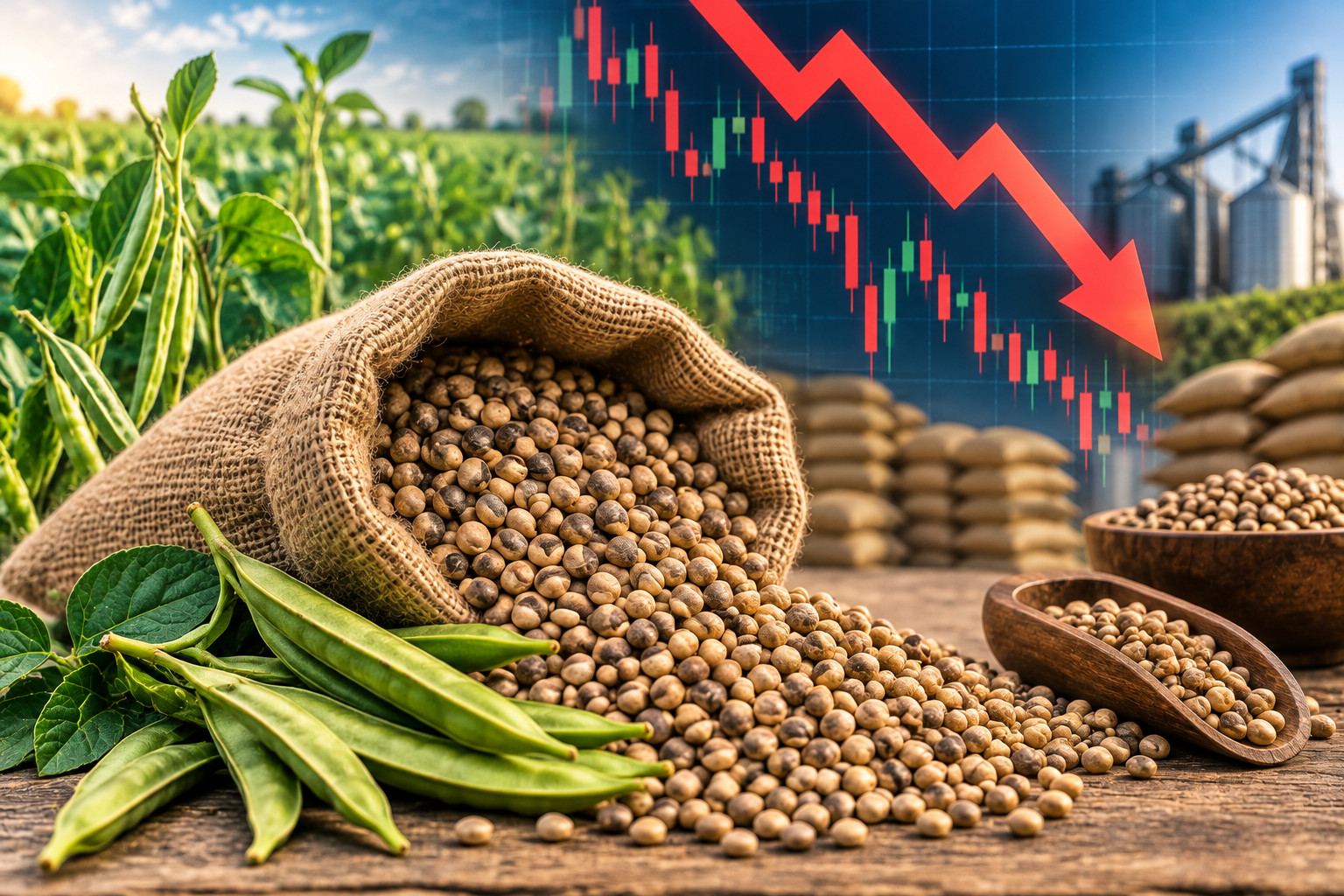
Rising arrivals from key growing regions weigh on guar seed prices, while traders monitor fresh supply, export demand and weather conditions for further direction
Guar seed prices declined in futures trading on Monday as increasing supplies from growing regions weighed on market sentiment. The October contract on the National Commodity and Derivatives Exchange (NCDEX) fell ₹17, or 0.25 per cent, to ₹6,881 per quintal.
The contract was trading with an open interest of 68,045 lots, indicating continued participation from traders even as prices remained under pressure.
Increasing supplies pressure prices
Market participants attributed the decline primarily to higher supplies arriving from major guar-growing areas. As fresh crop availability increases, buyers have greater access to physical supplies, reducing the immediate pressure to bid prices higher.
Guar seed prices are particularly sensitive to changes in arrivals because the commodity has a significant dependence on agricultural supply conditions. During periods of increased market arrivals, traders generally assess the pace of procurement, stock availability and the willingness of processors and exporters to absorb fresh supplies.
The latest decline therefore reflects the near-term impact of supply availability on futures prices.
Export demand remains an important factor
Apart from domestic arrivals, export demand remains an important variable for the guar market.
Guar gum, processed from guar seed, is widely used in industrial applications, including oil and gas exploration, food processing, pharmaceuticals and other industries. Changes in international demand can therefore influence the economics of guar seed procurement and processing.
For traders, stronger export enquiries can provide support to guar seed prices by improving demand for processing, while subdued overseas demand can make the market more dependent on domestic supply conditions.
October futures remain in focus
The October guar seed futures contract is currently the key near-term reference point, with prices at ₹6,881 per quintal after Monday's decline.
The open interest of 68,045 lots suggests that market participants continue to hold positions in the contract. Future price movements will depend on whether fresh arrivals continue to increase and how quickly processors and other buyers absorb the available crop.
A sustained increase in supplies could keep prices under pressure, particularly if demand does not rise at the same pace. Conversely, any improvement in buying interest could help the market stabilise.
Weather and crop conditions remain important
Weather conditions across major guar-producing regions will continue to be monitored by market participants.
Guar is predominantly cultivated in arid and semi-arid regions, making rainfall distribution and crop conditions important variables for production expectations. Once the harvest reaches the market, however, the focus shifts from crop development to the pace of arrivals and the availability of stocks.
Any significant change in weather expectations can therefore influence trader sentiment even before it affects physical supplies.
Futures market signals
The decline in the October contract reflects a cautious approach among futures traders as physical supplies increase.
Open interest is an important indicator for understanding participation in the futures market, although it should be considered alongside price movement, trading volumes, physical arrivals and demand trends rather than viewed in isolation.
For commodity traders, the key question will be whether the current supply-driven weakness develops into a sustained trend or whether prices find support as buying interest improves.
Why guar seed matters to the commodity market
Guar seed is an important agricultural commodity in India's commodity ecosystem because it serves as the raw material for guar gum production.
The processed product has applications across multiple industries, making the commodity sensitive to both agricultural and industrial demand. This gives guar seed a different price dynamic compared with commodities driven primarily by domestic food consumption.
Global oil and gas activity can also influence demand for guar gum because of its use in hydraulic fracturing and other industrial processes. Consequently, international energy-sector activity can indirectly become a factor for Indian guar seed markets.
Market Outlook
Guar seed futures remain under pressure as rising supplies from growing regions increase availability in the physical market. The October NCDEX contract's decline to ₹6,881 per quintal reflects the immediate impact of these supply conditions.
In the near term, traders are likely to focus on the pace of fresh arrivals, procurement activity, export demand and developments in guar gum markets. Weather conditions and global industrial demand will remain additional factors that could influence sentiment.
If arrivals remain elevated while buying interest stays moderate, prices could continue to face pressure. A slowdown in supplies or an improvement in domestic and export demand, however, could provide support to the market.
For investors and commodity traders, the interaction between physical supply and demand will remain the key determinant of the next major price move in guar seed futures.