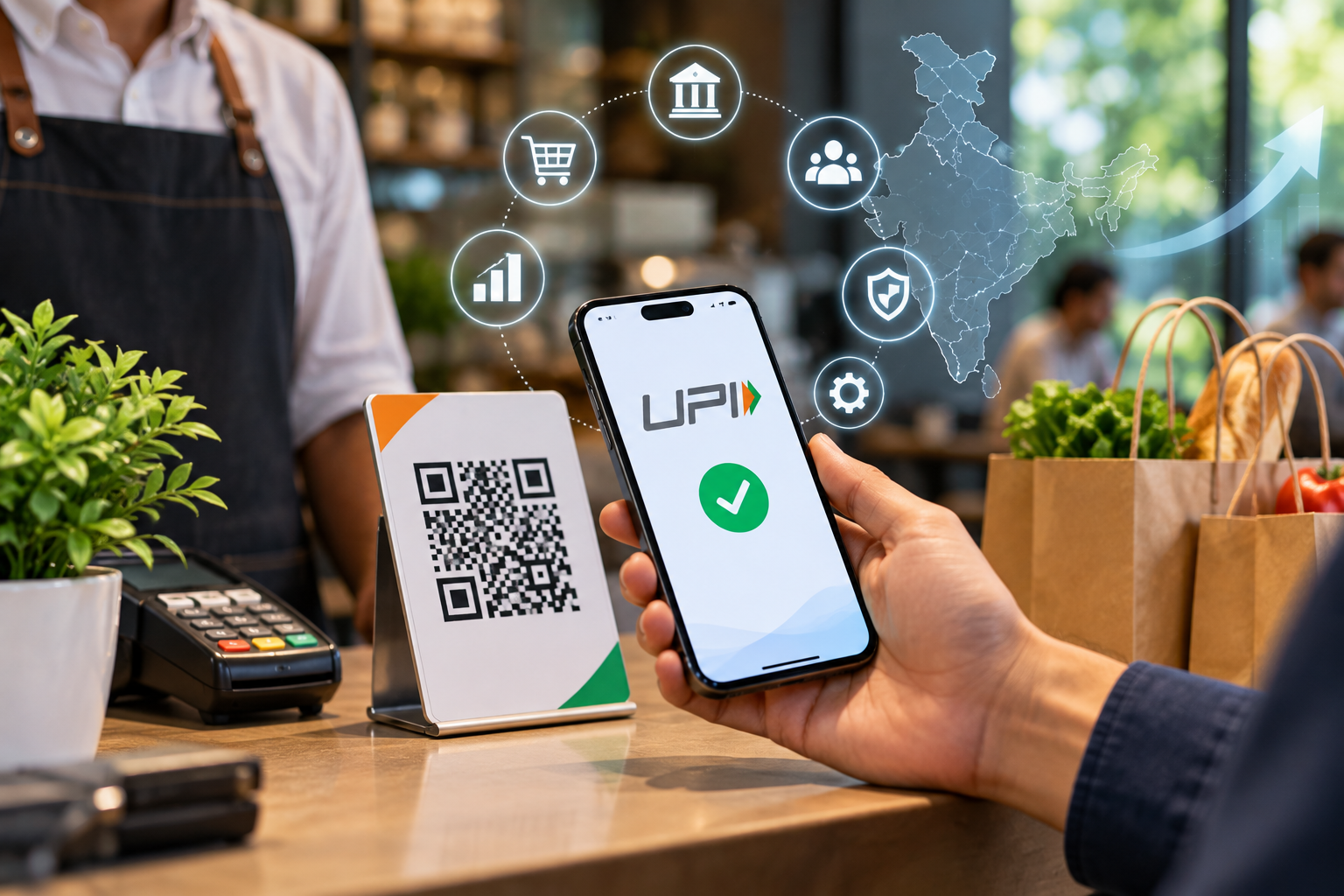
High-Value Merchant Payments to Attract Calibrated Charges from October 15
The new merchant discount rate (MDR) framework for high-value Unified Payments Interface (UPI) merchant transactions will support investment in payment technology and infrastructure, while encouraging wider acceptance of digital payments across India, the Associated Chambers of Commerce and Industry of India (Assocham) said.
The revised framework is aimed at strengthening the long-term sustainability of the digital payments ecosystem by creating a revenue mechanism for banks, payment service providers and other participants involved in processing UPI transactions.
Under the new structure, eligible person-to-merchant (P2M) UPI payments above ₹2,000 will attract an MDR of 0.4 per cent from October 15. However, consumers will not be directly charged for making regular UPI payments.
Assocham Welcomes New MDR Structure
Nirmal K Minda, president of Assocham, said the introduction of a calibrated MDR structure for large-value UPI merchant transactions was an important step towards ensuring the long-term sustainability of India’s digital payments ecosystem.
According to Minda, the framework will support continued investment in technology, infrastructure and payment acceptance networks. These investments are expected to help UPI expand further and serve consumers and businesses across the country.
The industry body also believes that the new structure could provide a more sustainable financial model for payment ecosystem participants without affecting the convenience of routine digital transactions for consumers.
Framework May Improve Payment Infrastructure
The new MDR mechanism will allow charges to be distributed among different participants in the payments ecosystem. This may include banks, payment service providers and other entities involved in transaction processing and merchant acceptance.
A more predictable revenue stream could encourage investment in:
-
Payment processing infrastructure
-
Digital fraud prevention and cybersecurity
-
Merchant onboarding and support systems
-
Payment acceptance devices and networks
-
Technology upgrades and transaction reliability
-
Innovation in digital payment products
The industry expects these investments to support the expansion of UPI in smaller cities, towns and underserved markets where payment acceptance infrastructure is still developing.
UPI Payments Below ₹2,000 to Remain Free
The revised MDR framework will apply only to eligible high-value merchant transactions. Person-to-merchant UPI payments up to ₹2,000 will continue to remain free.
Person-to-person transactions, such as transferring money to family members, friends or other individuals, will also remain free for both the sender and recipient.
This means consumers will continue to use UPI for everyday activities such as grocery purchases, utility payments, small retail transactions and money transfers without paying a transaction fee.
NPCI has also clarified that UPI application providers will not be permitted to levy platform fees or additional charges on UPI payments.
How the New UPI MDR Will Work
From October 15, eligible P2M UPI payments above ₹2,000 will attract an MDR of 0.4 per cent.
The applicable charges would work as follows:
-
A ₹3,000 payment would attract an MDR of ₹12
-
A ₹50,000 payment would attract an MDR of ₹200
-
Payments of ₹75,000 and above would have a maximum MDR of ₹300
The framework includes special treatment for selected essential sectors. Transactions related to railways, telecom and fuel will attract a flat fee of ₹5 for eligible payments.
Capital-market transactions will have a lower MDR of 0.02 per cent, which is intended to support digital payments in the financial-services sector while keeping transaction costs relatively low.
No Direct Charge for Consumers
The MDR is a fee applicable within the merchant payment ecosystem and does not mean that consumers will be charged for using UPI.
The framework is designed to create a mechanism through which payment ecosystem participants can recover part of the cost of processing high-value merchant transactions. The exact commercial impact on merchants may depend on arrangements between merchants, acquiring banks and payment service providers.
For consumers, routine UPI payments and person-to-person transfers are expected to continue without additional charges.
Potential Impact on Merchants
The new structure may have different effects across merchant categories.
Large retailers, e-commerce platforms and businesses handling high-value digital payments may face higher transaction-related costs. These businesses may need to review their payment arrangements and evaluate the impact on margins.
At the same time, the revenue generated through MDR could improve the quality, reliability and reach of payment acceptance services. This may benefit merchants by improving transaction success rates, reducing downtime and expanding access to digital payment infrastructure.
The impact on small merchants is expected to be more limited because eligible transactions up to ₹2,000 will remain free.
Implications for Banks and Fintech Companies
The new MDR framework could create an additional revenue opportunity for banks, fintech companies and payment service providers involved in processing eligible UPI merchant transactions.
A sustainable revenue model may help these companies invest in payment technology, merchant acquisition, cybersecurity and customer support. It could also encourage innovation in payment products and services.
However, the final benefit for individual companies will depend on transaction volumes, market share, operating costs and the manner in which MDR revenue is distributed among ecosystem participants.
UPI Expansion and Financial Inclusion
UPI has become a key component of India’s digital payments infrastructure, supporting transactions across retail, services, e-commerce and financial markets.
The new MDR framework could support further expansion by encouraging payment providers to improve acceptance networks in smaller towns, rural areas and emerging business centres.
Greater digital payment acceptance may also help formalise business transactions, improve payment records and provide merchants with better access to digital financial services.
Challenges and Concerns
Although the framework is expected to support investment, its implementation may create challenges for certain merchants and payment providers.
Businesses with a high proportion of large-value UPI transactions may experience an increase in payment costs. Some merchants could review their payment methods or encourage customers to use alternative channels.
There may also be concerns regarding the distribution of MDR revenue, transparency in commercial arrangements and the ability of smaller payment providers to compete with larger platforms.
The success of the framework will depend on effective implementation, clear communication and continued monitoring of its impact on merchants, consumers and payment ecosystem participants.
Market Outlook
The new UPI MDR framework is expected to create a more sustainable financial foundation for India’s digital payments ecosystem. By allowing charges on eligible high-value merchant transactions, the framework could support investment in technology, infrastructure, cybersecurity and payment acceptance networks.
For consumers, regular UPI payments up to ₹2,000 and person-to-person transfers will remain free. The key impact will be on the commercial arrangements between merchants, banks and payment service providers.
The long-term outcome will depend on whether the new revenue model improves payment infrastructure and innovation without discouraging merchants from accepting digital payments.