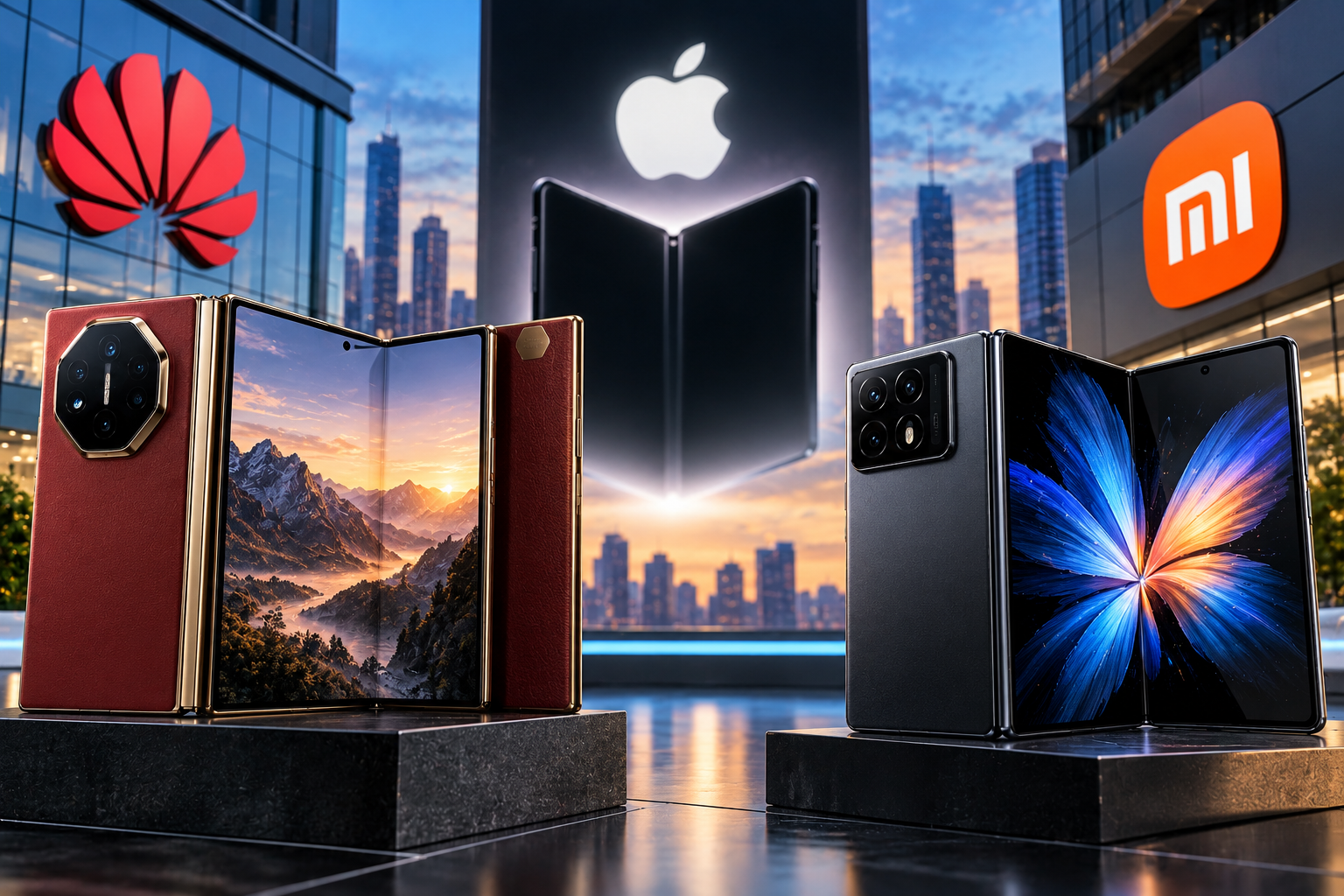
Mate XT 2 and Xiaomi 18 Fold Raise Competition in China’s High-End Smartphone Market
Technology News: Huawei Technologies and Xiaomi are stepping up competition in China’s premium smartphone market with new foldable devices, just days before Apple is expected to enter the category with its first foldable iPhone.
Huawei is set to unveil the Mate XT 2, the successor to its ultra-premium trifold smartphone, while Xiaomi is preparing to introduce the Xiaomi 18 Fold. The launches highlight how Chinese smartphone manufacturers are using advanced designs, proprietary processors and domestic components to strengthen their position in the premium segment.
Huawei Mate XT 2 Brings Trifold Design to the Fore
Huawei’s latest device is expected to build on the company’s trifold smartphone platform, which combines the portability of a regular smartphone with the larger display of a tablet.
The Mate XT 2 features two folding mechanisms, making it more complex than conventional foldable smartphones that use a single hinge. The design allows the device to transition between different screen configurations while maintaining a smartphone form factor when folded.
The new handset will also be the first to feature Huawei’s LogicFolding chip design philosophy, as the company seeks to develop new approaches to performance and device engineering.
The launch comes as Huawei continues to compete in China’s premium smartphone market despite challenges related to component availability and rising costs.
Xiaomi 18 Fold Focuses on Domestic Technology
Xiaomi is also expected to unveil its latest foldable smartphone, the Xiaomi 18 Fold, later on Monday.
The device will feature memory supplied by CXMT, a Chinese semiconductor manufacturer, along with Xiaomi’s self-developed Xring O3 processor. The use of domestic components highlights the company’s efforts to reduce reliance on overseas suppliers and strengthen its technology ecosystem.
The handset is expected to feature a passport-like design, similar to the form factor widely associated with Apple’s anticipated foldable iPhone.
Xiaomi’s move into more advanced foldable designs reflects the company’s broader strategy of shifting towards premium products and improving its average selling price.
Apple’s Entry Could Reshape the Foldable Market
Apple’s expected entry into the foldable smartphone category is increasing competition in a segment that Chinese manufacturers and Samsung have been developing for several years.
The first foldable iPhone is expected to be positioned as a premium device, with a projected price of more than $2,000. Its launch could bring foldable smartphones to a much wider consumer audience, particularly among existing iPhone users.
Analysts expect Apple’s large installed base of premium-device users to give it a strong starting position in the market.
Counterpoint analyst Ivan Lam said Apple’s foldable iPhone could sell well and rapidly gain market share, while also encouraging broader adoption of foldable devices across competing brands.
Chinese Manufacturers Target Premium Buyers
The timing of the Huawei and Xiaomi launches is significant. By unveiling their devices shortly before Apple’s expected product event, the companies have an opportunity to attract consumer attention before the iPhone maker enters the category.
For Chinese smartphone brands, the premium segment offers a potential route to offset weakness in lower-priced devices.
Foldables generally command higher prices than conventional smartphones, allowing manufacturers to improve their average selling prices and reduce their dependence on budget models.
However, premium devices also require substantial investment in research, engineering and component sourcing.
Smartphone Market Faces Broader Challenges
The foldable launches come against a difficult backdrop for the global smartphone industry. Counterpoint data cited in the report indicates that smartphone shipments could decline 14 per cent this year, marking the industry’s worst contraction on record.
Chinese smartphone manufacturers are particularly exposed to the slowdown because of their significant presence in the budget segment, where consumers are more sensitive to price increases.
Rising component costs, especially for memory, are adding further pressure on manufacturers’ margins.
Huawei and Xiaomi Face Profitability Pressure
The shift towards premium smartphones is taking place even as both companies face financial challenges.
Xiaomi’s profit has declined for three consecutive quarters, partly as the company works to reduce shipments of unprofitable low-end devices.
Huawei has continued to record shipment growth, but its profit also declined in the first half of the year. The company has reportedly increased component inventories to manage rising memory costs.
Huawei, Xiaomi and Honor have also introduced fresh price increases, according to local media reports.
The developments underline the challenge facing smartphone manufacturers: premium products can support revenue growth, but higher component costs and intense competition can limit profitability.
Foldables Offer a Growth Opportunity
Foldable smartphones remain a relatively small part of the overall smartphone market, but they have become an important growth opportunity for manufacturers seeking to differentiate their products.
The segment offers several advantages:
-
Higher selling prices compared with conventional smartphones
-
Larger displays in compact form factors
-
Premium positioning and stronger brand differentiation
-
Opportunities for proprietary technology in hinges, displays and processors
-
Potential for higher margins, provided production costs remain under control
The success of these devices will depend on consumer willingness to pay, durability, battery performance and the availability of applications that make larger foldable screens useful.
Apple Could Become a Major Foldable Player
Apple’s expected entry could significantly alter the competitive landscape.
According to projections cited in the report, Apple could capture around one-quarter of the global foldable smartphone market this year and potentially reach a 41 per cent market share next year.
Such a shift would increase pressure on existing manufacturers to improve their designs, pricing and software experiences.
For Huawei and Xiaomi, launching ahead of Apple provides an opportunity to establish their latest devices in the market before the arrival of a major new competitor.
Market Outlook
The foldable smartphone market is entering a more competitive phase as Huawei and Xiaomi introduce advanced premium devices ahead of Apple’s expected entry. The Mate XT 2’s trifold design and Xiaomi’s focus on domestic components demonstrate the industry’s push towards innovation and greater control over technology supply chains.
However, the broader smartphone market remains under pressure from declining shipments, rising component costs and weaker demand for budget devices. The success of premium foldables will depend on whether manufacturers can convert technological innovation into sustainable sales and profitability.
Technology stocks and smartphone-related companies may remain in focus as investors assess the impact of Apple’s entry, premium-device demand and the pace of foldable adoption.