Amit Shah Says Return Marks New Milestone in India's Zero-Tolerance Approach to Narcotics
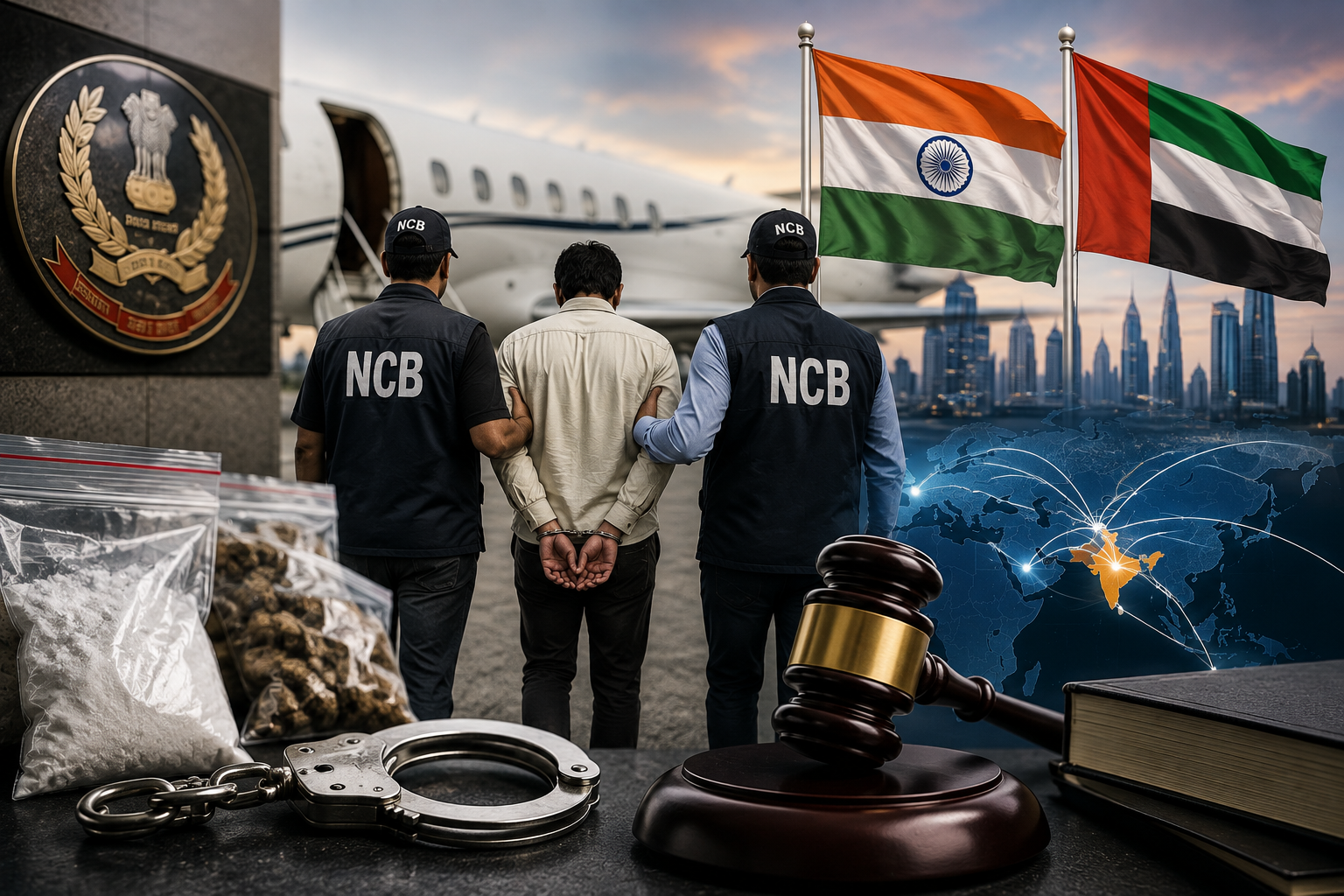
The Narcotics Control Bureau (NCB) has secured the return of alleged international drug syndicate kingpin Virender Singh Basoya from the United Arab Emirates (UAE), Union Home Minister Amit Shah said on Friday.
The development is being viewed as a significant step in India's continuing efforts to track down alleged drug traffickers operating from overseas and dismantle international narcotics networks.
Shah said Indian agencies are pursuing individuals involved in drug trafficking regardless of where they attempt to hide, reiterating the government's stated zero-tolerance policy towards narcotics.
Amit Shah Praises NCB's Action
In a post on X, Amit Shah said the government is relentlessly tracking drug traffickers who are hiding abroad and working to dismantle the ecosystem supporting their operations.
The Home Minister described the NCB's action in securing Basoya's return from the UAE as a "new milestone" in India's fight against narcotics.
Shah said the operation demonstrates the reach of Indian law-enforcement agencies and their ability to pursue alleged drug traffickers beyond India's borders.
Government Says Drug Traffickers Cannot Escape Indian Law
Shah emphasised that geographical boundaries would not provide a safe haven to individuals allegedly involved in international drug trafficking.
According to the Home Minister, Indian agencies are adopting a "top-to-bottom and bottom-to-top" approach to tracing criminal networks. The strategy is aimed at identifying the alleged masterminds behind drug syndicates as well as the individuals and infrastructure supporting their operations.
He said the latest action demonstrates that alleged drug traffickers cannot permanently evade Indian law by moving overseas.
Basoya Allegedly Linked to International Drug Network
Virender Singh Basoya has been described by the Home Minister as an alleged international drug syndicate kingpin.
His return from the UAE is significant because suspected international narcotics networks often operate across multiple jurisdictions, making investigations and enforcement more complex.
The movement of individuals, drugs and financial proceeds across borders can require coordination between multiple law-enforcement agencies and governments.
The NCB's action is therefore expected to assist Indian authorities in further investigating the alleged network and identifying other individuals who may have been associated with it.
Focus Shifts From Drug Seizures to Entire Ecosystem
India's anti-narcotics strategy has increasingly focused on dismantling entire drug-trafficking ecosystems rather than concentrating solely on individual drug seizures.
This approach involves identifying the alleged suppliers, financiers, distributors, facilitators and organisers operating within a network.
Law-enforcement agencies also examine financial trails and logistical arrangements to identify the broader infrastructure that allegedly enables narcotics trafficking.
The government's emphasis on a top-to-bottom and bottom-to-top investigation reflects this wider approach.
International Cooperation Crucial in Fugitive Cases
Tracking and bringing back an individual located overseas requires cooperation between Indian agencies and authorities in the foreign jurisdiction.
The UAE has been an important jurisdiction in India's efforts to pursue individuals wanted in connection with criminal investigations.
The latest development involving Basoya highlights the role of international law-enforcement cooperation in tackling organised crime and cross-border narcotics trafficking.
Such cooperation can involve information sharing, identification of suspects, legal procedures and coordination between agencies before an individual can be brought back to India.
Zero-Tolerance Policy Against Narcotics
The Centre has repeatedly maintained that combating drug trafficking is a major priority and has adopted a zero-tolerance approach towards narcotics.
The strategy encompasses prevention, enforcement, investigation and disruption of drug networks.
Authorities have also increasingly focused on the financial and organisational structures behind narcotics operations, with the objective of making it more difficult for trafficking networks to continue functioning after individual arrests or seizures.
The return of an alleged international syndicate kingpin from overseas is consistent with this broader enforcement strategy.
Why the Development Matters
The NCB's action has significance beyond the return of an individual accused.
First, it demonstrates the increasing emphasis on pursuing alleged drug-trafficking networks across international borders. Second, it underlines the importance of cooperation with foreign authorities in bringing alleged fugitives back to India. Third, it could potentially provide investigators with additional leads into the structure and functioning of the alleged syndicate.
For Indian enforcement agencies, pursuing alleged masterminds and dismantling the financial and logistical infrastructure of narcotics networks remains a key component of the wider anti-drug campaign.
Investigation Likely to Provide Further Leads
With Basoya now returned from the UAE, Indian agencies are expected to continue investigating the allegations and the broader network associated with the case.
Further investigation could focus on the alleged links between individuals, suppliers, financiers and other facilitators within the suspected international drug network.
The authorities' ability to trace and pursue alleged operators located outside India could also strengthen future efforts against cross-border narcotics trafficking.
Centre Reaffirms Commitment to Crack Down on Drug Networks
The latest development reinforces the government's message that alleged drug traffickers operating from overseas will remain on the radar of Indian enforcement agencies.
Amit Shah's comments underline the Centre's emphasis on dismantling the entire narcotics ecosystem, rather than restricting enforcement efforts to individual seizures.
The return of Virender Singh Basoya from the UAE is consequently being positioned by the government as another step in its broader campaign to identify, pursue and disrupt international drug-trafficking networks.
The allegations against Basoya remain subject to investigation and due legal process.