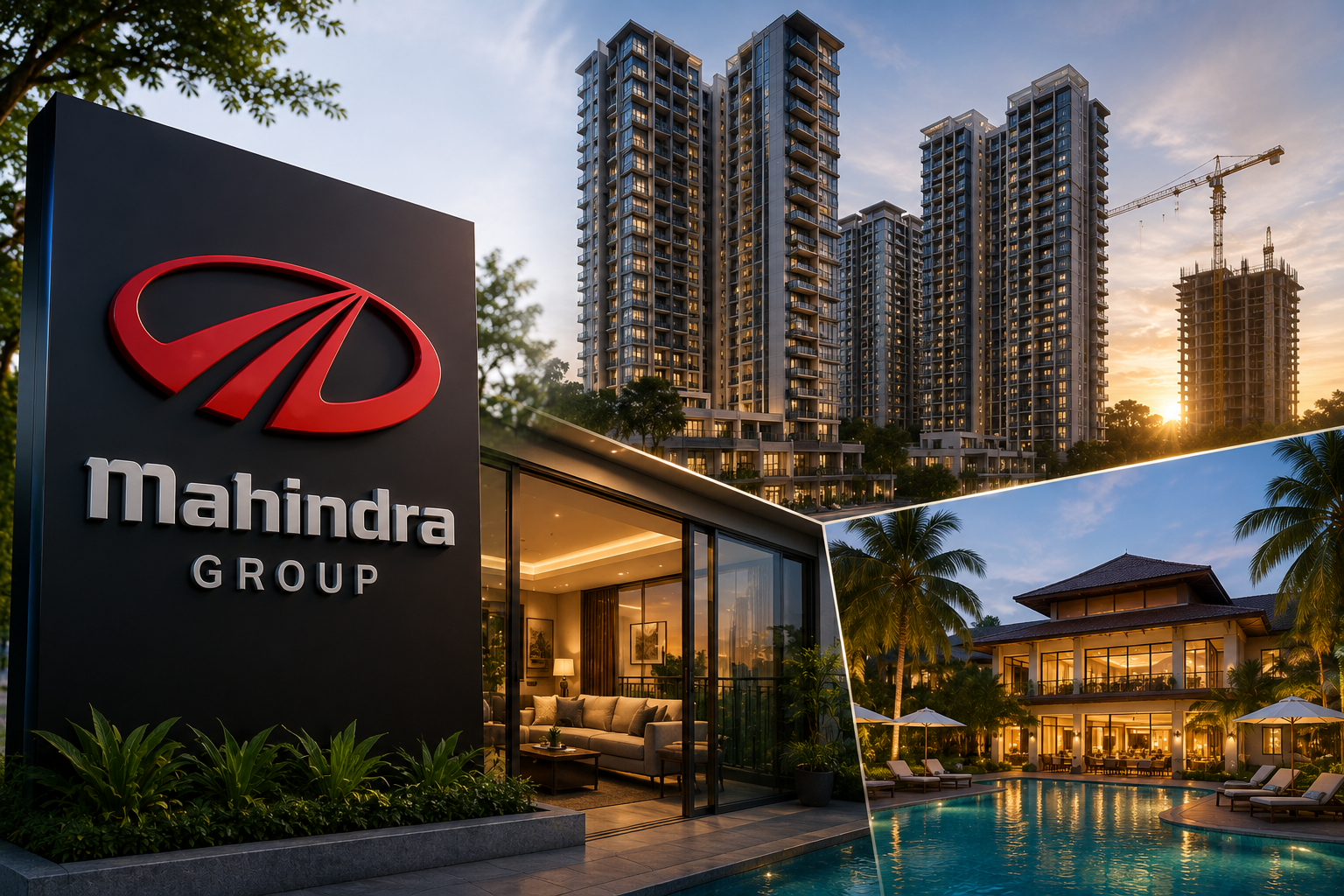
Mahindra Lifespaces and Mahindra Holidays emerge as key growth gems as the group looks to accelerate expansion, unlock synergies and build stronger businesses beyond automobiles and technology
The Mahindra Group is increasing its strategic focus on real estate and hospitality, identifying Mahindra Lifespaces Developers and Mahindra Holidays & Resorts as important "growth gems" with significant potential to scale up over the coming years.
The group said both businesses have demonstrated strong momentum over the past five years and are now entering a phase where greater strategic attention could help accelerate growth.
The move is part of Mahindra Group's broader strategy of nurturing businesses that can become meaningful contributors to future growth. Several businesses identified as growth gems have already exceeded the group's initial expectations, according to the company.
The latest restructuring brings the real estate and hospitality businesses under a dedicated strategic focus, with the group also looking to identify potential operational and business synergies between the two.
Mahindra Sees Large Opportunity in Real Estate and Hospitality
Mahindra Group CEO and Managing Director Anish Shah said both the Holidays and Lifespaces businesses have significant potential.
The group is now evaluating how capabilities across the two businesses can be leveraged to strengthen their growth trajectory.
The strategic focus is significant because real estate and hospitality are both capital-intensive industries where scale, brand strength, customer relationships and efficient execution can create substantial competitive advantages.
Mahindra's established brand and diversified business ecosystem could provide a strong platform for the two companies as they expand.
Mahindra Lifespaces: Residential Business Has Grown Fivefold
Mahindra Lifespaces has emerged as one of the group's strongest growth stories.
Residential pre-sales have increased around fivefold since FY20, rising from approximately ₹700 crore to ₹3,500 crore.
This growth reflects the strong recovery in India's residential property market as well as Mahindra Lifespaces' increasing presence in major urban markets.
The company's growth has also been supported by increasing consumer preference for branded developers with established track records.
GDV Jumps From ₹8,000 Crore to ₹50,000 Crore
One of the biggest changes in Mahindra Lifespaces' growth profile has been the expansion of its development pipeline.
Over the past three years, the company's gross development value, or GDV, has increased from around ₹8,000 crore to ₹50,000 crore.
A larger GDV pipeline provides the company with significantly greater potential for future launches and sales.
The group believes this expansion positions the residential business to deliver substantial growth over the current decade.
However, the ability to monetise the pipeline efficiently will remain crucial.
Why India's Residential Market Remains Attractive
India's residential real estate market continues to benefit from several structural factors.
Rising Household Incomes
Higher disposable incomes are supporting demand for better-quality homes and premium residential projects.
Urbanisation
Migration towards major cities and expanding urban centres is creating long-term demand for housing.
Premiumisation
Consumers are increasingly looking for larger homes, better amenities and improved community infrastructure.
Organised Developers
Branded developers continue to gain market share as homebuyers place greater emphasis on construction quality, delivery track record and transparency.
Infrastructure Development
Metro networks, highways and other infrastructure projects are opening new residential corridors.
These trends provide a favourable backdrop for established developers such as Mahindra Lifespaces.
Industrial Business Turns Around
Mahindra Lifespaces' industrial business has also undergone a major transformation.
The segment has moved from losses to generating approximately ₹300 crore of profit in the last fiscal year.
The turnaround provides the company with a second growth engine alongside residential development.
The industrial business gives Mahindra exposure to India's manufacturing and logistics expansion, which could become increasingly important as global companies diversify supply chains and increase investments in India.
India's Manufacturing Push Could Boost Industrial Real Estate
The government's focus on domestic manufacturing, infrastructure development and supply-chain localisation is creating demand for industrial parks and integrated development zones.
Sectors such as:
-
Automobiles
-
Electronics
-
Engineering
-
Renewable energy
-
Pharmaceuticals
-
Logistics
-
Consumer goods
are increasing their manufacturing presence in India.
This can create long-term demand for industrial land and ready-to-use manufacturing infrastructure.
Mahindra Lifespaces' industrial portfolio could benefit from this trend.
Mahindra Holidays: A Second Growth Story
Mahindra Holidays has also expanded significantly over the past few years.
The business now has more than 3 lakh vacation-ownership members and has added more than 1,700 rooms.
The company's traditional vacation-ownership model provides an established customer base, but Mahindra is now attempting to build a broader leisure-hospitality platform.
This represents a major shift in its growth strategy.
From Vacation Ownership to Leisure Hospitality
Mahindra Holidays is expanding beyond its traditional membership model into the wider hospitality industry.
The company aims to become a leading player in India's leisure-hospitality segment.
This strategy could allow it to participate in the growing demand for resorts, premium vacations and experiential travel.
The launch of Mahindra Signature Resorts represents an important step in this transition.
Luxury Hospitality Opens a New Market
The entry into luxury hospitality could provide Mahindra Holidays with access to a higher-spending customer segment.
India's luxury travel market has been expanding as affluent households increase spending on experiences.
Demand is being supported by:
-
Rising disposable incomes
-
Premium domestic tourism
-
Destination weddings
-
Wellness travel
-
Business travel
-
International tourism
-
Experience-led vacations
Luxury resorts can potentially generate higher room rates and improve revenue per customer, although they also require careful capital allocation.
India's Tourism Market Provides Structural Support
Domestic tourism remains one of the biggest opportunities for India's hospitality industry.
A growing middle and upper-middle class is travelling more frequently and exploring new destinations.
At the same time, India's improving infrastructure is making previously difficult-to-access destinations more attractive.
Air connectivity, highways and railway expansion are improving travel access across the country.
This creates an expanding addressable market for leisure-hospitality companies.
Mahindra's Membership Base Could Provide an Advantage
One of Mahindra Holidays' biggest assets is its large existing customer base.
More than 3 lakh vacation-ownership members provide a potential ecosystem for new hospitality products.
If the company successfully converts existing members into customers for additional resort and luxury offerings, it could improve customer lifetime value.
The challenge will be ensuring that new products complement rather than dilute the existing vacation-ownership proposition.
New Leadership Structure for the Combined Sector
Mahindra Group is also aligning leadership with its new strategic focus.
Amit Sinha, currently Managing Director and CEO of Mahindra Lifespaces, is expected to take on the role of CEO — Holidays and Lifespaces sector from a future date.
He will assume the new role after a successor is appointed at Mahindra Lifespaces.
The group said leadership and reporting structures would be aligned as the new sector structure is implemented.
The leadership change indicates that Mahindra intends to give the combined vertical greater strategic attention rather than treating the two businesses as separate growth initiatives.
Potential Synergies Between Real Estate and Hospitality
One of the most interesting aspects of the restructuring is the possibility of operational synergies.
Real estate and hospitality can overlap in several areas.
Potential opportunities include:
-
Integrated residential and hospitality developments
-
Resort-linked real estate
-
Destination communities
-
Leisure-focused residential projects
-
Land development
-
Hospitality infrastructure
-
Customer cross-selling
-
Shared technology and marketing capabilities
The extent to which these synergies translate into financial benefits will depend on future projects and execution.
Real Estate Could Complement Hospitality Expansion
Mahindra Lifespaces' expertise in land development and urban planning could potentially support hospitality expansion.
At the same time, Mahindra Holidays' understanding of travel consumers could help the group identify attractive locations for leisure-oriented developments.
This combination could become particularly relevant in emerging tourism destinations where residential, hospitality and leisure infrastructure can be developed together.
Mahindra's Brand Could Become a Competitive Advantage
Brand trust is increasingly important in both real estate and hospitality.
Homebuyers are looking for developers with strong delivery records and financial credibility.
Similarly, hotel and resort customers are increasingly seeking trusted brands, particularly in the premium and luxury segments.
Mahindra's established brand could therefore provide an advantage as both businesses expand.
Growth Strategy Also Diversifies Mahindra Group
Mahindra Group is traditionally associated with automobiles, farm equipment and technology services.
Increasing the contribution of real estate and hospitality can diversify the group's earnings base.
This could reduce dependence on individual business cycles.
For example, automobile demand can be influenced by interest rates, commodity costs and consumer sentiment, while real estate and hospitality have different demand drivers.
A broader portfolio can therefore provide greater resilience across economic cycles.
Real Estate Growth Requires Strong Cash Discipline
Despite the attractive opportunity, residential real estate is a capital-intensive business.
Mahindra Lifespaces will need to balance growth ambitions with cash generation and return on capital.
The key challenge is converting the ₹50,000-crore GDV pipeline into actual project launches, sales and collections.
Factors such as land costs, construction inflation, approvals and project timelines can affect profitability.
Strong cash-flow management will therefore be essential.
Hospitality Expansion Also Carries Execution Risk
The hospitality business faces its own set of challenges.
Building and operating resorts requires substantial investment, while occupancy and room rates can fluctuate depending on seasonality and economic conditions.
The luxury segment is also highly competitive.
Mahindra Holidays will need to maintain service quality and brand differentiation while expanding its room inventory.
Competition Is Rising Across Both Sectors
Competition in India's residential market has intensified as large developers expand their portfolios.
Developers are increasingly launching premium projects in major cities and competing for high-income buyers.
The hospitality industry is similarly attracting investment from domestic and international hotel operators.
Mahindra will therefore need to differentiate its offerings through location, brand, product quality and customer experience.
What Investors Should Track in Mahindra Lifespaces
The next phase of growth should be assessed through operating metrics rather than only headline GDV.
Important indicators include:
-
Residential pre-sales
-
New project launches
-
Collections
-
Cash generation
-
GDV additions
-
Project execution
-
Inventory levels
-
Industrial segment profitability
-
Return on capital
-
Debt levels
A sustained increase in pre-sales accompanied by strong collections would indicate that the expanded pipeline is translating into actual business growth.
What Investors Should Track in Mahindra Holidays
For Mahindra Holidays, investors should monitor:
-
Membership additions
-
Customer retention
-
Room inventory
-
Occupancy
-
Average room rates
-
Resort additions
-
Revenue per member
-
Hospitality revenue
-
EBITDA margins
-
Capital expenditure
-
Cash generation
The successful scaling of Mahindra Signature Resorts will be an important monitorable as the company expands into luxury hospitality.
Could the Two Businesses Become Larger Group Contributors?
The strategic restructuring suggests that Mahindra sees the potential for both businesses to become substantially larger contributors to the group's overall growth.
Mahindra Lifespaces already has a significantly larger development pipeline than it did a few years ago.
Mahindra Holidays, meanwhile, has a large customer base and is expanding into a much broader hospitality opportunity.
If execution remains strong, both businesses could potentially move from being smaller group businesses to more meaningful contributors over the coming years.
The Bigger India Opportunity
The strategic focus comes at a time when both sectors are benefiting from long-term changes in India's economy.
Real estate is being supported by:
-
Urbanisation
-
Rising incomes
-
Household formation
-
Premiumisation
-
Infrastructure investment
Hospitality is being supported by:
-
Domestic tourism
-
Rising travel frequency
-
Premiumisation
-
Experience-led consumption
-
Luxury spending
-
Improving connectivity
These trends are unlikely to disappear quickly and could provide a multi-year growth runway.
Key Catalysts Ahead
Several developments could strengthen the growth outlook.
Faster Residential Launches
A higher pace of project launches could accelerate monetisation of the GDV pipeline.
Strong Housing Demand
Continued demand for premium housing could support pricing and volumes.
Industrial Expansion
Manufacturing investments could increase demand for industrial infrastructure.
Luxury Resort Expansion
Successful execution of Mahindra Signature Resorts could create a new hospitality growth engine.
Cross-Selling
The existing Mahindra Holidays membership base could provide additional customers for new hospitality products.
Operational Synergies
Greater coordination between Lifespaces and Holidays could improve efficiency and unlock new development opportunities.
Key Risks
The growth strategy also faces several risks.
Real Estate Cycle
A slowdown in housing demand could affect project launches and pre-sales.
Construction Costs
Higher material and labour costs could pressure project margins.
Approvals
Delays in regulatory approvals could postpone project execution.
Capital Intensity
Rapid expansion in both businesses could increase funding requirements.
Hospitality Competition
The premium and luxury hotel market is attracting several established operators.
Execution
The success of the strategy will ultimately depend on management's ability to scale both businesses while maintaining returns.
Market Outlook
Mahindra Group's decision to place Mahindra Lifespaces and Mahindra Holidays under a stronger strategic focus reflects the group's confidence that real estate and hospitality can become important long-term growth engines.
Mahindra Lifespaces has already demonstrated significant operating momentum. Residential pre-sales have increased fivefold since FY20, while GDV has expanded from ₹8,000 crore to ₹50,000 crore over three years. The industrial business has also moved from losses to around ₹300 crore of profit, strengthening the overall business profile.
Mahindra Holidays brings a different but complementary opportunity. Its 3 lakh-plus membership base, more than 1,700 additional rooms and entry into luxury hospitality through Mahindra Signature Resorts provide multiple avenues for growth as India's travel and experience economy expands.
The new structure could become particularly valuable if the group succeeds in combining the capabilities of real estate development, hospitality and customer relationships. Potential opportunities around integrated destinations, resort-linked developments and cross-selling could create additional sources of value.
However, the next phase will be judged by execution. Investors will need to watch whether Mahindra Lifespaces can convert its large GDV pipeline into strong pre-sales and cash flows, and whether Mahindra Holidays can scale its hospitality business without compromising returns.
Overall, the structural backdrop remains favourable. Urbanisation, premium housing demand, manufacturing expansion, rising travel spending and India's growing luxury-consumption market provide a broad runway for both businesses.
The strategic shift therefore represents more than a simple organisational restructuring. If executed effectively, it could position real estate and hospitality as two increasingly important pillars of Mahindra Group's next phase of growth.