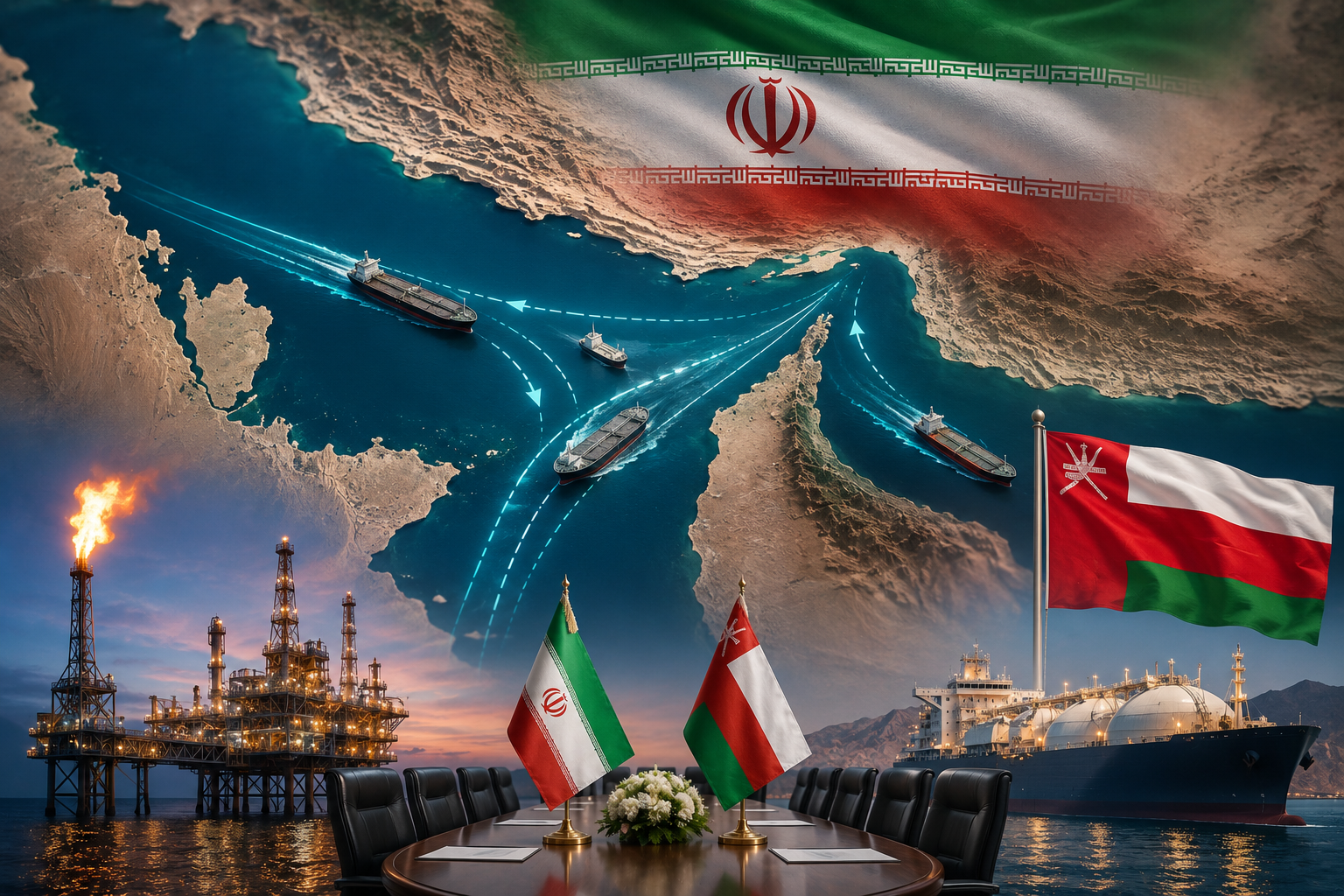
Tehran approves framework for the security and sustainable development of the Strait of Hormuz as negotiations with Oman focus on a new maritime traffic route
Iran's parliamentary National Security and Foreign Policy Commission has approved the broad framework of a strategic initiative aimed at strengthening security and promoting sustainable development in the Persian Gulf and the Strait of Hormuz.
The development comes as diplomatic efforts intensify over the future of the strategically important waterway. Iran and Oman are negotiating a legal and technical mechanism for managing maritime traffic, while Tehran continues to seek additional conditions before agreeing to a full reopening.
The Strait of Hormuz is one of the world's most important energy corridors, making the outcome of the negotiations significant for crude oil prices, shipping costs, inflation and financial markets.
Parliamentary Commission Approves Strategic Framework
The National Security and Foreign Policy Commission reviewed the proposed framework with representatives from relevant government organisations and institutions.
Commission spokesman Hassan Qashqavi said lawmakers considered written and oral feedback from the participating agencies before unanimously approving the general outline of the proposal.
The legislation, titled “Strategic Action for the Security and Sustainable Progress of the Strait of Hormuz and the Persian Gulf,” was submitted to Iran's parliament on July 13.
The approval represents an important step in Iran's efforts to establish a formal strategic framework for the security and management of the region.
Strait of Hormuz Remains at the Centre of Regional Tensions
The Strait of Hormuz connects the Persian Gulf with the Gulf of Oman and the wider Arabian Sea.
Its narrow geography makes it a critical maritime chokepoint for global energy supplies.
Any disruption to commercial shipping through the waterway can have consequences far beyond the Middle East, affecting crude prices, freight rates, marine insurance and the cost of energy imports.
For countries that rely heavily on imported oil, prolonged disruption could also increase inflationary pressures.
Iran and Oman Near Agreement on Maritime Traffic
Iranian Foreign Minister Abbas Araghchi has said negotiations with Oman over a legal mechanism for managing traffic through the Strait of Hormuz are “very close” to an agreement.
The talks are focused on establishing a new route for maritime traffic.
According to Araghchi, the traffic separation scheme previously used through the strait is no longer acceptable to Tehran.
Iran therefore wants a new traffic separation scheme to be established before normal shipping operations resume.
Why a New Traffic Separation Scheme Matters
A traffic separation scheme is designed to organise maritime movement and reduce the risk of collisions between vessels travelling in opposite directions.
For the Strait of Hormuz, such an arrangement would be particularly important because the waterway handles significant commercial traffic while operating within a geographically constrained area.
A new route would need to address navigation safety, vessel movement, monitoring procedures and the responsibilities of vessels passing through the waterway.
Reopening Is Still Subject to Additional Conditions
Although negotiations with Oman appear to be progressing, Iran has made clear that agreement on a maritime route does not automatically mean the Strait of Hormuz will fully reopen.
Araghchi said reopening the waterway would be subject to additional conditions, including compensation related to what Tehran describes as US violations of an earlier memorandum of understanding.
This means that the technical discussions with Oman and the broader political negotiations involving the United States remain closely connected.
US-Iran Talks Could Determine the Next Phase
The future of the Strait of Hormuz is closely linked to the wider relationship between Iran and the United States.
A US official recently indicated that progress had been made in discussions that could potentially lead to the reopening of the waterway and restoration of disrupted oil exports.
However, the two sides continue to differ over the conditions required for a broader settlement.
The reopening of the strait could therefore become an important component of wider diplomatic negotiations.
Oman’s Role Becomes Increasingly Important
Oman has a unique position in the current negotiations because of its geographical location and diplomatic relationship with both Iran and the United States.
Muscat has previously played a role in facilitating dialogue between Tehran and Washington.
Its involvement in establishing a new maritime traffic mechanism could provide a practical pathway for reducing tensions around the waterway.
A successful agreement could also strengthen Oman's role as a regional diplomatic intermediary.
Energy Markets Are Closely Watching Developments
The biggest immediate financial-market impact is likely to come through crude oil.
Any sustained improvement in the prospects for reopening the Strait of Hormuz could reduce concerns about supply disruptions and lower the geopolitical premium embedded in oil prices.
Conversely, a breakdown in negotiations could renew fears of prolonged disruption.
That could push crude prices higher and increase volatility across global markets.
Why Oil Prices Matter for India
India imports a large share of its crude oil requirements, making the country particularly sensitive to changes in international energy prices.
A prolonged increase in crude prices can raise India's import bill and increase demand for foreign currency.
This can place pressure on the rupee while also affecting inflation and corporate costs.
A stable and predictable shipping environment through Hormuz could therefore be positive for India's external sector.
Rupee Could Receive Support From Lower Oil Risk
The Indian rupee is sensitive to movements in crude prices because India needs substantial dollar payments for energy imports.
If the Strait of Hormuz situation improves and crude prices stabilise, the reduction in India's energy import burden could provide some support to the currency.
However, the rupee would also continue to respond to US dollar movements, foreign portfolio flows, interest-rate expectations and broader global risk sentiment.
Inflation Is Another Key Transmission Channel
Higher energy prices can affect the cost structure of the wider economy.
Fuel prices influence transportation and logistics, while crude derivatives are used in several industrial and consumer products.
A sustained increase in oil prices could therefore create broader inflationary pressure.
For India, stable crude prices would help reduce one source of external inflation risk.
Shipping Costs Could Decline if Normalisation Begins
The Strait of Hormuz issue also affects shipping companies.
When geopolitical risks rise, vessels can face higher insurance premiums and additional operational costs.
Shipping companies may also need to adjust routes or operating procedures.
A credible security and navigation framework could eventually reduce some of these additional costs if vessel operators regain confidence in the safety of the waterway.
Global Trade Could Benefit From Greater Stability
The importance of Hormuz extends beyond oil.
The wider Gulf region is connected to global supply chains involving energy products, petrochemicals, industrial materials and other commodities.
Improved maritime security could therefore reduce uncertainty for international businesses.
Lower transportation risk could also improve planning for companies dependent on Gulf-based supply chains.
Iran Seeks a More Formal Strategic Framework
The parliamentary initiative indicates that Tehran is looking beyond the immediate question of reopening the strait.
The proposed framework focuses on both security and sustainable development in the Persian Gulf and around Hormuz.
This suggests that Iran wants a more formal and long-term approach to the management of the strategically important region.
The legislation could potentially provide a domestic policy framework for future decisions involving maritime security and regional development.
Security and Economic Interests Are Interlinked
For Iran, the Strait of Hormuz has both strategic and economic importance.
The waterway sits alongside one of the world's most important oil-producing regions.
Any arrangement concerning its operation therefore has implications for regional security as well as international energy markets.
Iran's parliamentary initiative reflects this broader connection between security policy and economic interests.
Technical Challenges Could Delay Implementation
Even if political negotiations progress, establishing a new maritime traffic system could take time.
A new route would require technical assessments and coordination involving:
-
Navigation authorities
-
Maritime operators
-
Coastal states
-
International shipping companies
-
Security agencies
-
Port authorities
The process could therefore involve several stages before commercial traffic fully returns to normal.
Shipping Companies Need Predictability
For vessel operators, the most important requirement is certainty.
Companies need clear information about:
-
Approved shipping routes
-
Security procedures
-
Navigation rules
-
Insurance requirements
-
Vessel monitoring
-
Port access
-
Emergency arrangements
Without predictable rules, shipping companies may continue to factor elevated risk into their operations even after a political agreement.
Oil Supply Expectations Could Shift Quickly
Crude markets can respond rapidly to developments around major supply routes.
A credible agreement could result in a decline in the geopolitical premium as traders anticipate improved supply security.
However, the market response would depend on actual vessel movements and the degree to which oil exports return to normal.
Announcements alone may not be sufficient to create a lasting reduction in risk premiums.
Indian Refiners Could Benefit From Lower Volatility
Lower geopolitical risk could help Indian refiners manage crude procurement more efficiently.
Stable shipping routes could reduce uncertainty around freight, insurance and delivery schedules.
This could support better visibility for refining margins and working-capital requirements.
However, the actual benefit would depend on crude prices and the composition of India's import basket.
Airlines and Transport Companies Could Also Benefit
Energy prices have a broad impact on transportation.
Lower crude prices can reduce fuel-related costs for airlines and other transport operators.
If the Hormuz situation improves and global oil markets respond positively, sectors with high fuel exposure could benefit from lower operating costs.
The effect would depend on the magnitude and duration of any decline in crude prices.
Chemicals and Manufacturing Could See Indirect Benefits
Several manufacturing industries depend on petroleum-derived raw materials and energy.
Lower or more stable crude prices could reduce input-cost volatility for chemical producers and other industrial companies.
For the broader Indian economy, this could support corporate margins if lower energy costs are sustained.
What Happens If Talks Fail?
A failure to reach an agreement could have the opposite effect.
Markets could once again price in the possibility of prolonged disruption.
Potential consequences include:
-
Higher crude prices
-
Rising shipping costs
-
Higher insurance premiums
-
Greater currency volatility
-
Increased inflation expectations
-
Pressure on oil-importing economies
-
Higher market risk premiums
The severity would depend on the extent of the disruption and the availability of alternative supply routes.
Strait of Hormuz and Global Market Sentiment
Geopolitical stability around major energy corridors can have a significant influence on investor sentiment.
A reduction in geopolitical uncertainty could support risk assets, particularly in emerging markets.
On the other hand, a renewed escalation could lead investors towards defensive assets such as the US dollar, government bonds and gold.
Indian equities could also become sensitive to movements in crude prices and foreign institutional flows.
Key Indicators for Investors
Financial markets are likely to monitor several developments closely.
Iran-Oman Negotiations
Progress towards a formal maritime traffic agreement would be a positive signal.
US-Iran Dialogue
Broader diplomatic progress could determine whether the strait can reopen sustainably.
Vessel Movements
Actual restoration of commercial shipping would provide stronger evidence than political statements alone.
Crude Oil Prices
Brent crude will remain one of the clearest market indicators of geopolitical risk.
Shipping Costs
Freight and marine insurance rates can provide an indication of perceived maritime risk.
Indian Rupee
Currency movements could reflect changes in crude prices and foreign capital flows.
Indian Equity Markets
Oil-sensitive sectors and companies with high energy costs could respond to developments.
What Could Be Positive for Markets?
A constructive scenario would involve:
-
Finalisation of the Iran-Oman maritime mechanism
-
Agreement on a new traffic route
-
Reduction in geopolitical tensions
-
Resumption of commercial shipping
-
Lower crude-price risk premium
-
Stabilisation of freight and insurance costs
-
Improved confidence among global investors
Such developments could support broader risk sentiment.
What Could Keep Markets Under Pressure?
Risks would increase if:
-
Iran and Oman fail to finalise the maritime mechanism
-
US-Iran negotiations break down
-
Reopening conditions become more restrictive
-
Vessel traffic remains disrupted
-
Crude prices rise sharply
-
Shipping insurance costs remain elevated
-
Regional tensions escalate again
These developments could keep energy and equity markets volatile.
Why the Next Few Weeks Matter
The coming period could provide greater clarity on whether the current diplomatic progress can be converted into a practical reopening mechanism.
The parliamentary approval of the strategic framework is an important domestic development for Iran, but the market will focus more closely on the implementation of the maritime arrangement and broader diplomatic negotiations.
The distinction between a political announcement and actual normalisation of shipping will be crucial.
Market Outlook
The approval of Iran's strategic framework for the security and sustainable development of the Strait of Hormuz and the Persian Gulf adds an important political dimension to ongoing efforts to stabilise the region.
The most constructive development is the reported progress in negotiations between Iran and Oman over a new legal and technical mechanism for managing maritime traffic. If an agreement is reached and commercial vessels begin returning to a predictable route, the geopolitical risk premium in crude oil could gradually decline.
However, the reopening of the waterway remains conditional. Iran has indicated that broader issues involving the United States must also be addressed. This means that investors should not interpret the latest parliamentary development as confirmation that normal shipping has already resumed.
For India, the outcome remains particularly important. Lower crude volatility could support the rupee, reduce import-cost pressure and ease external inflation risks, while a renewed disruption could have the opposite effect.
The most important market indicators will be Brent crude, shipping costs, vessel movements through Hormuz, the rupee and foreign institutional flows into Indian equities.
The near-term market outlook therefore remains sensitive to headlines. A credible Iran-Oman agreement followed by actual restoration of commercial traffic would be a clear positive for global risk sentiment, while stalled negotiations or renewed restrictions could keep crude prices and financial-market volatility elevated.