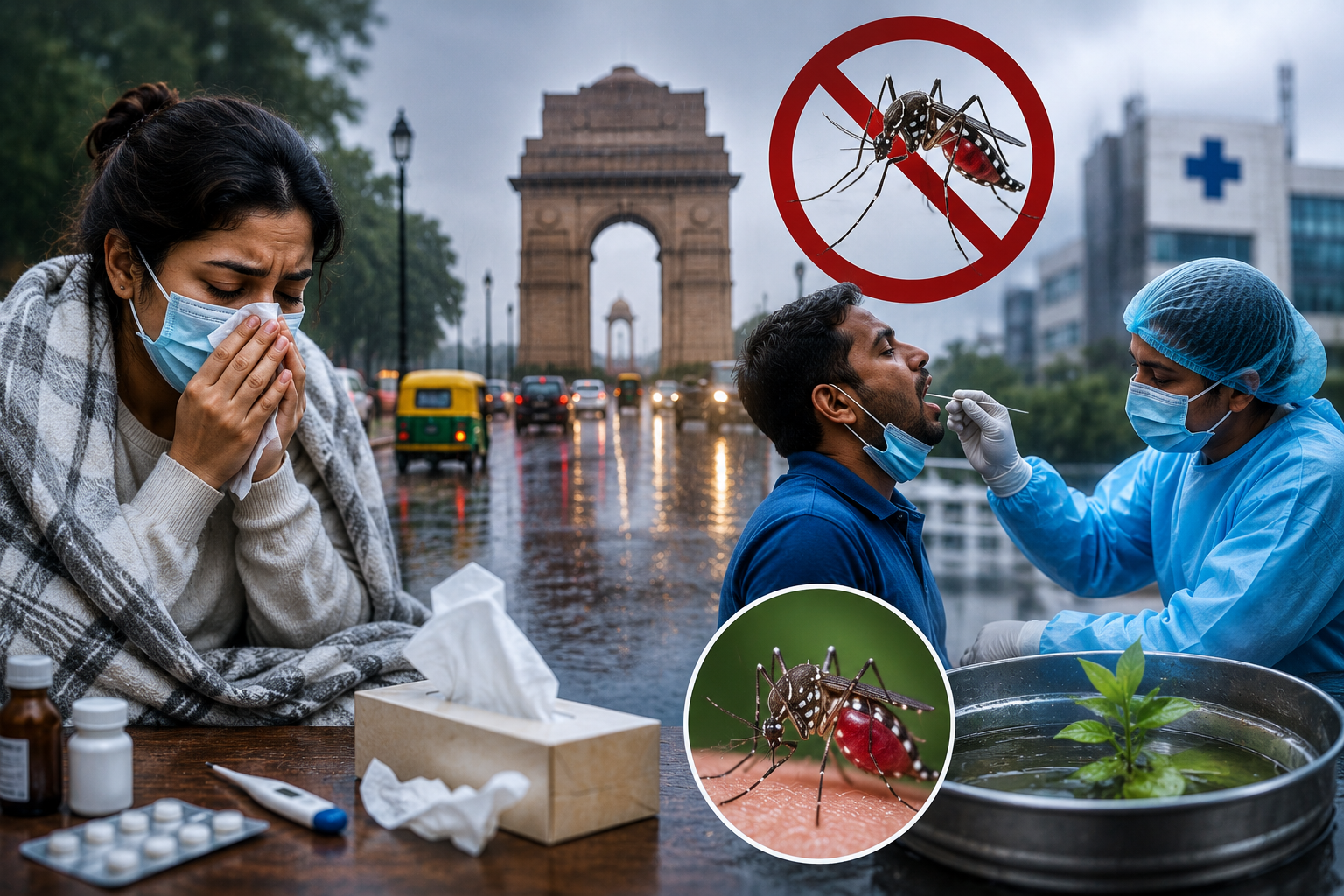
H1N1 Cases Cross 1,300 While Dengue Infections Rise Above 1,370; Health Department Says Hospitals Are Fully Prepared to Handle Seasonal Increase
Delhi has witnessed a significant rise in seasonal infectious diseases during the ongoing monsoon, with cases of H1N1 (Swine Flu) and dengue increasing sharply compared to the same period last year. Despite the spike in infections, the Delhi government has confirmed that no deaths have been reported from either disease this season, underscoring the effectiveness of early diagnosis, prompt treatment, and strengthened healthcare preparedness.
According to data released by the Delhi Health Department, the national capital has reported 1,349 confirmed cases of H1N1 influenza and 1,379 dengue infections during the current monsoon season. Health officials have assured citizens that hospitals are fully equipped to manage the growing patient load and have appealed to residents to remain alert without creating unnecessary panic.
The increase comes during the peak monsoon period, when weather conditions often contribute to the spread of respiratory viruses and mosquito-borne diseases across urban areas.
Swine Flu Cases Rise Nearly Six Times Compared to Last Year
The most significant increase has been observed in H1N1 influenza, commonly known as swine flu.
Delhi has reported 1,349 confirmed H1N1 cases this season, compared with 229 cases recorded during the corresponding period last year.
The sharp increase has drawn the attention of health authorities, although officials have emphasized that the majority of patients have recovered successfully after receiving timely medical care.
According to doctors, seasonal fluctuations, increased humidity, changing weather patterns, and greater circulation of influenza viruses during the monsoon often contribute to higher infection rates.
Importantly, despite the substantial increase in reported cases, no H1N1-related deaths have been recorded in Delhi this year.
Dengue Cases Continue to Climb During Monsoon
Alongside the rise in swine flu, dengue infections have also continued to increase across the national capital.
Delhi has recorded 1,379 dengue cases so far during the current season.
Health officials noted that nearly 200 patients diagnosed with dengue are residents of neighbouring states who sought treatment in Delhi hospitals.
The monsoon season creates ideal breeding conditions for Aedes mosquitoes, which transmit the dengue virus, making August and September traditionally the peak months for infections.
Municipal authorities have intensified anti-mosquito campaigns across vulnerable areas in an effort to reduce breeding sites and limit further transmission.
Government Assures Hospitals Are Fully Prepared
Delhi Health Minister Pankaj Singh has assured the public that the healthcare system is fully prepared to deal with the seasonal rise in infectious diseases.
According to the Health Department:
-
Government hospitals have adequate bed availability.
-
Isolation facilities have been kept ready.
-
H1N1 testing is being carried out regularly.
-
Doctors and medical staff remain on high alert.
-
Disease surveillance has been strengthened across the city.
-
High-risk areas are being monitored continuously.
Officials emphasized that early diagnosis and prompt treatment have played an important role in preventing fatalities despite the increasing number of cases.
The Health Department has instructed all hospitals to remain vigilant and respond quickly to patients exhibiting symptoms.
Citizens Urged Not to Panic
While acknowledging the increase in infections, the Delhi government has appealed to residents to avoid panic.
Health authorities stressed that:
-
Most patients recover with proper treatment.
-
Hospitals have adequate medical infrastructure.
-
Surveillance systems are functioning effectively.
-
Continuous monitoring of disease hotspots is underway.
Residents experiencing persistent fever, cough, breathing difficulties, or dengue-like symptoms have been advised to seek immediate medical consultation rather than relying on self-medication.
Early treatment significantly reduces the risk of severe complications in both H1N1 and dengue infections.
Understanding H1N1 (Swine Flu)
H1N1, commonly known as swine flu, is a strain of the Influenza A virus.
The virus gained global attention during the 2009 influenza pandemic, which affected millions of people worldwide.
Today, H1N1 continues to circulate as one of the seasonal influenza viruses and usually becomes more active during the monsoon and winter months.
The virus primarily spreads through:
-
Respiratory droplets from coughing or sneezing
-
Close contact with infected individuals
-
Touching contaminated surfaces followed by touching the eyes, nose, or mouth
People with weakened immunity, elderly citizens, young children, pregnant women, and individuals with chronic illnesses face a relatively higher risk of severe infection.
Common Symptoms of H1N1
Doctors advise people to remain alert for symptoms such as:
-
Fever
-
Persistent cough
-
Sore throat
-
Runny or blocked nose
-
Body aches
-
Muscle pain
-
Fatigue
-
Headache
-
Chills
-
Excessive sweating
Some patients, particularly children, may also experience:
-
Vomiting
-
Nausea
-
Diarrhoea
Symptoms generally appear one to four days after exposure to the virus.
Individuals experiencing breathing difficulty, persistent high fever, chest pain, or worsening symptoms should seek immediate medical attention.
Dengue Remains a Seasonal Health Challenge
Dengue continues to be one of the most widespread mosquito-borne diseases during India's monsoon season.
The disease spreads through the bite of infected Aedes aegypti mosquitoes, which breed in clean stagnant water.
Common breeding sites include:
-
Water coolers
-
Flower pots
-
Open containers
-
Rooftop tanks
-
Construction sites
-
Discarded tyres
Typical dengue symptoms include:
-
High fever
-
Severe headache
-
Joint and muscle pain
-
Skin rashes
-
Pain behind the eyes
-
Extreme fatigue
Severe dengue can lead to internal bleeding and requires immediate hospitalization.
Preventive Measures Remain the Best Defence
Health experts emphasize that prevention remains the most effective strategy against both swine flu and dengue.
To reduce the risk of H1N1:
-
Wash hands frequently with soap.
-
Wear a mask if experiencing flu-like symptoms.
-
Maintain respiratory hygiene.
-
Avoid close contact with infected individuals.
-
Stay home when unwell.
-
Cover the mouth while coughing or sneezing.
To prevent dengue:
-
Eliminate stagnant water around homes.
-
Clean water storage containers regularly.
-
Use mosquito repellents.
-
Wear full-sleeved clothing.
-
Install mosquito nets and window screens.
-
Participate in neighbourhood cleanliness drives.
Public awareness and community participation remain critical in controlling seasonal outbreaks.
Disease Surveillance Intensified Across Delhi
The Delhi government has strengthened its surveillance network to detect outbreaks at an early stage.
Current measures include:
-
Increased laboratory testing
-
Monitoring of high-risk localities
-
Anti-larval operations
-
Fogging in mosquito-prone areas
-
Daily reporting by hospitals
-
Coordination with municipal corporations
These efforts are aimed at preventing localized outbreaks from escalating into larger public health concerns.
Impact of Monsoon on Public Health
The monsoon season often leads to a seasonal increase in infectious diseases due to:
-
Waterlogging
-
Increased mosquito breeding
-
High humidity
-
Greater circulation of respiratory viruses
-
Contaminated water sources
Public health experts advise residents to maintain hygiene, consume safe drinking water, avoid stagnant water accumulation, and seek medical advice promptly if symptoms develop.
Early diagnosis continues to be one of the most important factors in reducing complications associated with seasonal illnesses.
Outlook
Delhi's sharp rise in H1N1 and dengue cases reflects the typical seasonal impact of the monsoon on public health. However, the absence of fatalities so far indicates that improved surveillance, early detection, stronger healthcare infrastructure, and timely medical intervention are helping authorities manage the situation effectively.
As rainfall continues across the region, health officials are expected to maintain heightened monitoring of disease hotspots while strengthening preventive measures to control further transmission. Public cooperation through proper hygiene, mosquito control, early medical consultation, and adherence to official health advisories will remain essential in minimizing the impact of seasonal diseases during the remainder of the monsoon.