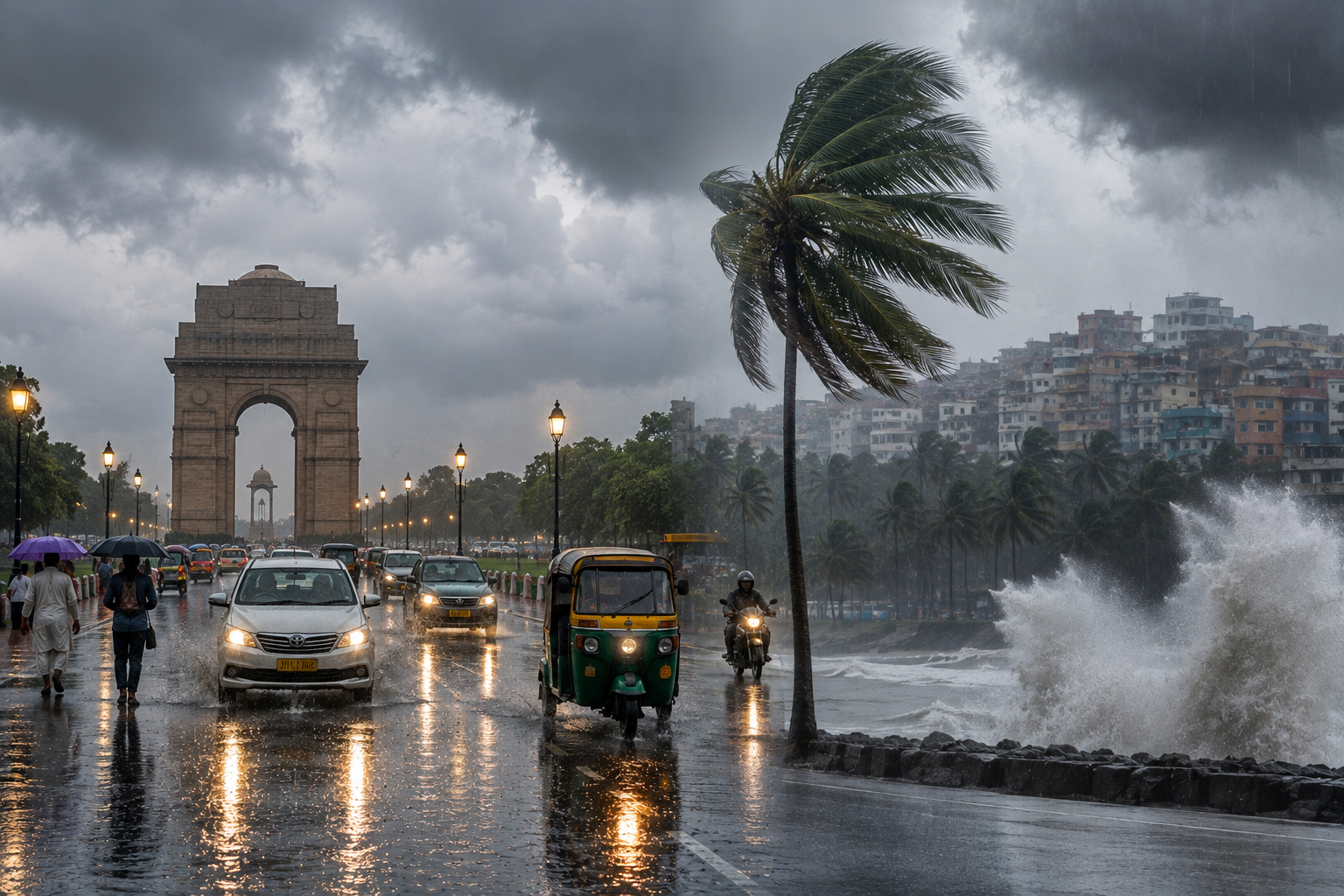
Red Alert for Parts of Delhi-NCR, Odisha Faces Extremely Heavy Rainfall as Southwest Monsoon Intensifies Across India
The southwest monsoon has once again intensified across large parts of India, bringing widespread rainfall and significantly improving weather conditions in the national capital after several days of oppressive heat and humidity. Early morning showers on Friday cooled temperatures across Delhi, while the India Meteorological Department (IMD) issued fresh alerts warning of heavy to very heavy rainfall, thunderstorms, lightning, and strong winds in multiple states.
According to the IMD, the current active monsoon phase is expected to persist over the next few days, increasing rainfall activity across northern, central, eastern, western, and southern India. While Delhi received welcome relief from high humidity, states such as Odisha, Karnataka, Kerala, Madhya Pradesh, and Rajasthan are expected to experience much heavier rainfall, raising concerns over flooding, waterlogging, and disruption of transport services.
Delhi Gets Relief After Humid Weather
Residents of Delhi experienced a welcome change in weather as light rain and overcast skies reduced temperatures across the city.
After several days of uncomfortable humidity and warm conditions, the rainfall helped improve outdoor conditions and brought down daytime temperatures.
The IMD has forecast generally cloudy skies throughout the day, with one or two spells of light to moderate rainfall expected across many parts of the city. Isolated areas may also receive heavy showers during the morning and afternoon before rainfall intensity gradually decreases towards the evening.
The weather department expects:
-
Maximum Temperature: 31°C–33°C
-
Minimum Temperature: 22°C–24°C
-
Surface Winds: 10–15 kmph
The cooler weather is expected to continue as active monsoon conditions remain favourable over northwestern India.
Red Alert Issued for Parts of Delhi-NCR
The India Meteorological Department has issued district-specific alerts across Delhi in view of the possibility of intense rainfall.
According to the latest nowcast:
-
East Delhi – Red Alert
-
South Delhi – Red Alert
-
West Delhi – Orange Alert
-
North Delhi – Yellow Alert
A Red Alert signifies the possibility of extremely intense rainfall that could result in:
-
Severe waterlogging
-
Flash flooding
-
Traffic congestion
-
Reduced visibility
-
Localized infrastructure disruptions
Authorities have advised residents to avoid unnecessary travel during periods of heavy rainfall and remain updated through official weather advisories.
Emergency teams have also been placed on standby to respond to any weather-related incidents.
Thunderstorms and Lightning Expected
Apart from heavy rainfall, the IMD has forecast thunderstorms accompanied by lightning across Delhi and surrounding regions.
Strong convective activity could produce gusty winds capable of damaging temporary structures, uprooting weak trees, and causing localized power outages.
Weather experts advise people to:
-
Avoid open spaces during thunderstorms
-
Stay away from electric poles and trees
-
Delay non-essential outdoor activities
-
Follow official weather warnings
Lightning remains one of the leading weather-related hazards during the monsoon season, making precautionary measures particularly important.
Odisha Under Threat of Extremely Heavy Rainfall
While Delhi is expected to receive intermittent rainfall, Odisha remains one of the states facing the highest weather risk.
The IMD has forecast extremely heavy rainfall at isolated places, raising the possibility of:
-
Flash floods
-
River overflow
-
Urban flooding
-
Landslides in vulnerable regions
-
Crop damage
-
Disruption to road and rail transport
State disaster management authorities have intensified monitoring efforts, particularly in districts vulnerable to flooding and water accumulation.
Emergency response teams remain prepared for any adverse developments.
Heavy Rainfall Forecast Across Multiple States
The strengthening southwest monsoon is expected to bring significant rainfall across several parts of the country.
The IMD has forecast heavy to very heavy rainfall over:
-
Coastal Karnataka
-
Interior Karnataka
-
Kerala
-
Madhya Pradesh
-
Rajasthan
Meanwhile, heavy rainfall is also likely over:
-
Andaman & Nicobar Islands
-
Arunachal Pradesh
-
Assam & Meghalaya
-
Bihar
-
Chhattisgarh
-
Delhi
-
Haryana
-
Himachal Pradesh
-
Jharkhand
-
Lakshadweep
-
Maharashtra
-
Tamil Nadu
-
Puducherry
-
Uttarakhand
-
West Bengal
The widespread rainfall is expected to improve reservoir levels, strengthen groundwater recharge, and support agricultural activity across many regions.
Strong Winds and Rough Sea Conditions
The weather department has also warned of strong surface winds across southern India.
Wind speeds between 30 kmph and 50 kmph are expected over:
-
Karnataka
-
Kerala
-
Telangana
-
Rayalaseema
-
Lakshadweep
In addition, squally winds reaching up to 65 kmph are likely over parts of the Arabian Sea and the Bay of Bengal.
The IMD has advised fishermen not to venture into the affected sea areas until weather conditions improve.
Maritime authorities continue to monitor coastal weather systems to ensure navigational safety.
Impact on Transportation and Urban Infrastructure
Heavy rainfall during the monsoon often creates operational challenges in major cities.
Authorities have warned that intense showers could lead to:
-
Waterlogging in low-lying areas
-
Traffic congestion
-
Flight delays
-
Railway disruptions
-
Reduced visibility
-
Temporary power outages
Municipal corporations have deployed drainage maintenance teams and emergency personnel to minimize the impact of heavy rainfall on urban infrastructure.
Commuters have been advised to plan their travel accordingly and allow additional time for road journeys.
Positive Outlook for Agriculture
The active monsoon phase is expected to provide considerable benefits for India's agricultural sector.
Timely rainfall during August is particularly important for Kharif crops, including:
-
Paddy
-
Cotton
-
Soybean
-
Pulses
-
Maize
-
Sugarcane
Adequate rainfall improves soil moisture, enhances crop growth, replenishes reservoirs, and supports irrigation needs.
However, excessive rainfall in some regions could also damage standing crops and delay agricultural operations, making balanced rainfall distribution crucial for overall farm productivity.
Monsoon Plays a Key Role in India's Economy
The southwest monsoon contributes significantly to India's economy by supporting agriculture, hydroelectric power generation, drinking water availability, and rural consumption.
A healthy monsoon generally leads to:
-
Better agricultural output
-
Improved rural incomes
-
Stable food supplies
-
Lower inflationary pressures
-
Stronger economic growth
Conversely, excessive rainfall or uneven distribution can disrupt supply chains, damage crops, and increase inflation in food commodities.
Therefore, weather developments continue to be closely monitored by policymakers, financial markets, and agricultural stakeholders.
Outlook
India has entered another active phase of the southwest monsoon, bringing much-needed relief from heat in northern regions while increasing rainfall intensity across large parts of the country. Delhi has benefited from cooler temperatures and improved weather conditions, but heavy rainfall warnings across several states underline the need for continued vigilance.
With Odisha facing the possibility of extremely heavy rainfall and multiple states expected to receive significant precipitation over the coming days, authorities remain on alert to manage potential flooding and infrastructure disruptions. As the monsoon progresses, rainfall patterns will continue to influence agriculture, water resources, transportation, and overall economic activity, making weather developments an important factor for both policymakers and citizens.