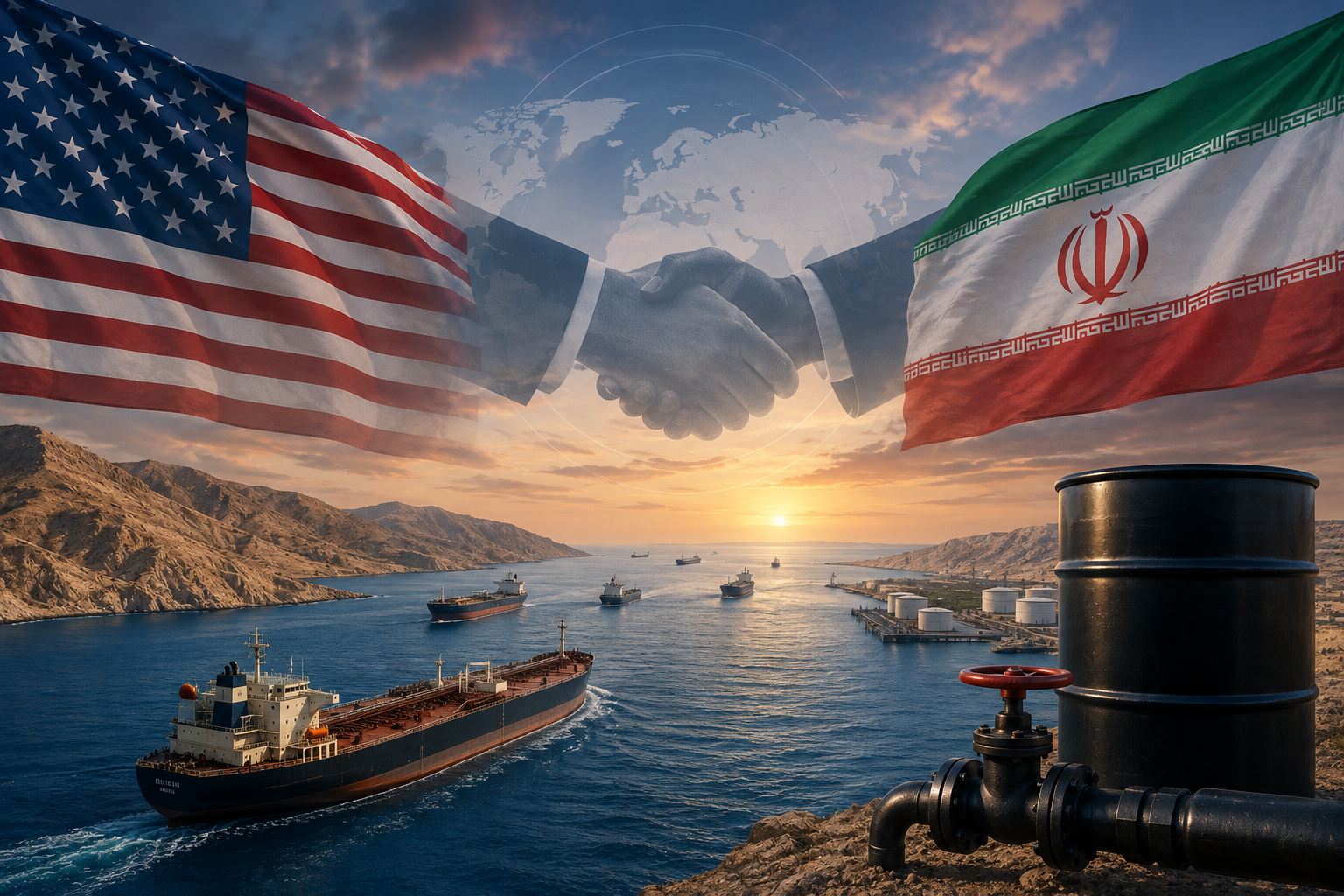
Negotiations to Restore Shipping Continue, but Disagreement Over Transit Control and Maritime Access Keeps Oil Markets on Edge
Negotiations between the United States and Iran to restore normal commercial shipping through the Strait of Hormuz have entered a decisive phase, with both sides signaling progress while acknowledging that key issues remain unresolved. At the heart of the discussions is the future governance of one of the world's most strategically important maritime chokepoints, through which nearly 20% of global oil supplies pass.
The outcome of these talks is expected to have far-reaching implications for global energy security, crude oil prices, international shipping, inflation, and financial markets. Investors are closely monitoring every development, as even minor changes in the security situation around the Strait of Hormuz can significantly influence commodity prices and broader market sentiment.
Strait of Hormuz: The Lifeline of Global Energy Trade
The Strait of Hormuz, located between Iran and Oman, connects the Persian Gulf with the Gulf of Oman and the Arabian Sea. It serves as the primary export route for crude oil and liquefied natural gas (LNG) from major energy-producing nations, including Saudi Arabia, Iraq, Kuwait, the United Arab Emirates, and Qatar.
Every day, millions of barrels of crude oil pass through this narrow waterway, making it one of the most critical trade routes in the global energy supply chain. Any disruption in shipping through the Strait immediately affects oil prices, freight costs, marine insurance premiums, and global supply chains.
Following months of heightened geopolitical tensions and military confrontations, shipping activity in the region has declined significantly, creating uncertainty for energy markets worldwide.
Control of the Waterway Remains the Biggest Obstacle
Although diplomatic negotiations have reportedly made progress, the central disagreement continues to revolve around who will control shipping access through the Strait of Hormuz.
The United States has maintained that international commercial vessels must continue to enjoy unrestricted access without paying transit fees or operating under Iranian control.
Iran, however, argues that the regional security landscape has fundamentally changed following the recent conflict and believes it should retain a greater role in managing maritime traffic passing through its territorial waters.
Tehran has reportedly insisted that the Strait should no longer function exactly as it did before the conflict, emphasizing its security concerns and strategic interests.
These conflicting positions remain the primary obstacle to reaching a comprehensive agreement.
Temporary Shipping Framework Under Discussion
Diplomatic sources suggest negotiators are considering an interim arrangement designed to restore commercial shipping while allowing both countries to claim progress.
Under one proposal being discussed, vessels entering the Persian Gulf could transit through a route monitored by Iranian authorities, while outbound vessels would exit through waters supervised by Oman.
The arrangement is viewed as a temporary confidence-building measure rather than a permanent settlement.
US officials have indicated that any agreement must preserve freedom of navigation and should not involve additional tolls, transit charges, or restrictions on international shipping.
Political Challenges for President Donald Trump
The negotiations also carry significant domestic political implications for US President Donald Trump.
Throughout the conflict, the administration has repeatedly stated that its military operations substantially weakened Iran's capabilities and ensured freedom of navigation in the Gulf.
Any agreement requiring meaningful concessions from Washington could become politically sensitive, particularly as the administration has consistently projected a position of strategic strength.
Political analysts believe that accepting an arrangement perceived as increasing Iran's influence over the Strait could expose the administration to criticism from both political opponents and sections of its own support base.
At the same time, prolonged instability in the region could increase fuel prices, adding economic pressure ahead of important political events in the United States.
Military Preparedness Comes Under Spotlight
The ongoing negotiations have also renewed attention on the readiness of the US military following months of sustained operations in the Middle East.
Recent reports have highlighted concerns regarding inventories of certain advanced missile systems and precision-guided munitions after prolonged military deployments.
President Trump has acknowledged that while the United States continues to possess substantial military capabilities, some categories of weapons are under greater demand and replenishment efforts are underway.
The administration has emphasized that production is being accelerated to strengthen inventories while maintaining operational readiness.
Meanwhile, discussions regarding additional defence spending continue in Washington as policymakers evaluate future strategic requirements.
Shipping Activity Shows Gradual Improvement
Commercial shipping through the Strait of Hormuz has shown signs of gradual recovery in recent weeks.
According to maritime tracking data, vessel movements have increased compared with the immediate aftermath of the conflict. However, traffic levels remain well below historical averages, indicating that many shipping companies continue to exercise caution.
Insurance premiums for vessels operating in the region also remain elevated due to persistent security risks.
Several shipping operators are waiting for greater clarity on the diplomatic negotiations before fully restoring normal operations.
Global Oil Prices Remain Highly Sensitive
Energy markets continue to react to every development emerging from the negotiations.
Even small changes in the perceived risk of disruption have influenced global crude oil prices, reflecting the strategic importance of uninterrupted energy supplies from the Gulf region.
A successful agreement could reduce geopolitical risk premiums, stabilize oil prices, and improve market confidence.
Conversely, failure to reach a settlement or renewed military tensions could tighten global energy supplies and trigger another spike in crude prices.
The outcome of the talks will therefore remain one of the most closely watched geopolitical events for commodity markets.
Implications for India
India, one of the world's largest crude oil importers, has a direct stake in ensuring uninterrupted shipping through the Strait of Hormuz.
A substantial portion of India's crude oil imports originates from Gulf nations that rely on this maritime corridor.
Any prolonged disruption could result in:
-
Higher crude oil import costs
-
Increased domestic fuel prices
-
Rising inflationary pressures
-
Higher freight and shipping expenses
-
Pressure on the current account deficit
-
Increased volatility in equity and currency markets
Conversely, a successful diplomatic resolution would help improve supply stability and reduce pressure on India's energy import bill.
Broader Economic Impact
Beyond the energy sector, developments in the Strait of Hormuz influence multiple industries globally.
Higher oil prices affect transportation, aviation, manufacturing, logistics, chemicals, fertilizers, and consumer goods by increasing production and operating costs.
Central banks also closely monitor energy prices because sustained increases in crude oil often contribute to higher inflation, influencing monetary policy decisions.
Financial markets generally respond positively to signs of geopolitical stability, while prolonged uncertainty tends to increase volatility across equities, commodities, and currencies.
Outlook
Negotiations over the Strait of Hormuz have reached a critical stage, but significant differences between the United States and Iran continue to delay a final agreement. While both sides appear interested in restoring commercial shipping, disagreements over transit rights, maritime control, and long-term security arrangements remain unresolved.
For global markets, the stakes extend well beyond diplomacy. The outcome of these negotiations will influence energy prices, inflation, trade flows, shipping costs, and investor sentiment across the world. Until a formal agreement is reached, developments in the Gulf region are likely to remain one of the key drivers of global commodity markets and financial volatility.