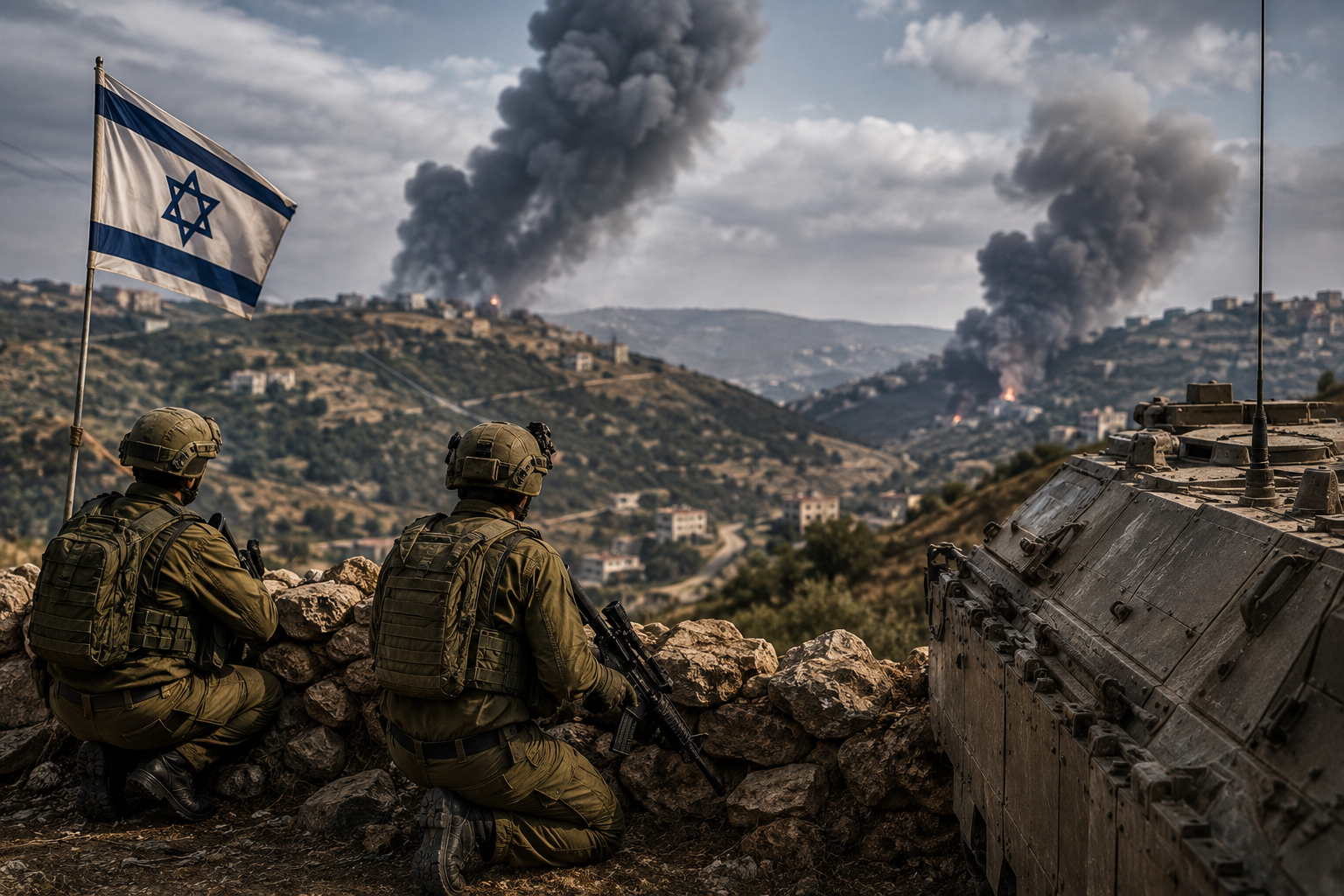
Fresh cross-border violence casts doubt on the durability of the June truce, while diplomatic efforts continue to prevent a wider regional conflict
The fragile ceasefire between Israel and Hezbollah has come under renewed strain after the Israeli military confirmed the deaths of two Israeli soldiers during combat operations in southern Lebanon. The incident marks the first reported Israeli military fatalities since the ceasefire agreement reached in June and has raised fresh concerns over the stability of the security situation along the Israel-Lebanon border.
The development comes at a time when negotiators from both countries are engaged in diplomatic discussions aimed at implementing the ceasefire agreement and preventing another full-scale conflict. However, the latest exchange of hostilities highlights the challenges of maintaining peace in one of the Middle East's most volatile regions.
Israeli Military Reports Casualties
According to the Israel Defense Forces (IDF), two soldiers were killed during combat operations in southern Lebanon. The military also confirmed that four additional soldiers sustained injuries, though no further operational details were immediately disclosed.
Israeli media had reported the fatalities a day before the official confirmation. Military authorities have not revealed the exact circumstances of the incident but stated that investigations into the operation are ongoing.
The deaths have intensified security concerns within Israel, where border operations have continued despite the ceasefire.
Fresh Airstrikes Follow Alleged Ceasefire Violations
Following the incident, the Israeli military launched a series of strikes targeting locations in southern Lebanon.
Israeli officials stated that the military action was a response to what they described as violations of the ceasefire agreement by Hezbollah. As part of the operation, the army issued an evacuation advisory to residents of Mansouri, urging civilians to leave the area before military activity intensified.
The evacuation warning was notable because it was the first of its kind issued by Israel in Lebanon in several weeks, suggesting heightened concerns over renewed hostilities.
Hezbollah Maintains Silence
At the time of reporting, Hezbollah had not released an official statement regarding the Israeli military's allegations or the latest exchange of fire.
The Iran-backed Lebanese militant group has so far refrained from publicly commenting on the incident, leaving uncertainty over whether it intends to respond militarily or continue observing the ceasefire framework.
The absence of an immediate reaction has provided some hope that the situation may not escalate into a broader confrontation, although tensions remain elevated.
Diplomatic Negotiations Continue in Rome
The latest violence coincided with ongoing diplomatic discussions in Rome, where representatives from Israel and Lebanon are working to implement the ceasefire agreement signed on June 26.
The agreement outlines several key commitments, including:
-
Gradual withdrawal of Israeli forces from occupied areas in southern Lebanon.
-
Deployment of the Lebanese Armed Forces to restore state control over the region.
-
Progress toward the disarmament of Hezbollah as part of a broader security framework.
-
Continued international monitoring to ensure compliance with the ceasefire terms.
Diplomatic observers believe these negotiations remain critical in preventing isolated incidents from developing into a larger military conflict.
Background: Months of Regional Escalation
The current conflict forms part of broader regional instability that has intensified over recent months.
Hostilities between Israel and Hezbollah escalated significantly after renewed cross-border rocket attacks earlier this year. Although a ceasefire was eventually reached, both sides have continued accusing each other of violating its terms.
Israeli forces have maintained a presence in certain areas of southern Lebanon, while occasional airstrikes and artillery exchanges have continued despite the formal truce.
The ongoing tensions reflect the complex security dynamics involving Israel, Hezbollah and wider geopolitical developments across the Middle East.
Humanitarian and Security Concerns Persist
Renewed military operations have once again placed civilians living along the border under pressure.
Evacuation advisories, continued shelling and periodic airstrikes have disrupted daily life in several communities, increasing concerns about humanitarian conditions if violence intensifies further.
International observers continue to urge restraint from all parties while encouraging diplomatic engagement to preserve the ceasefire.
Regional Implications
Analysts warn that any significant deterioration in the Israel-Hezbollah ceasefire could have consequences extending beyond Lebanon.
A prolonged conflict could increase geopolitical uncertainty across the Middle East, influence regional security arrangements and affect global energy markets. The situation is also being closely monitored by major world powers due to its potential to impact broader diplomatic efforts in the region.
For investors, geopolitical developments in the Middle East remain an important factor because of their influence on oil supply, shipping routes and overall market sentiment.
What Investors Should Watch
Financial markets typically react quickly to geopolitical developments involving the Middle East, particularly when they threaten energy infrastructure or transportation routes.
Key indicators investors may monitor include:
-
Movement in international crude oil prices.
-
Performance of safe-haven assets such as gold and the US dollar.
-
Global equity market volatility.
-
Shipping and freight costs linked to regional security.
-
Statements from international governments and diplomatic agencies regarding the ceasefire.
While isolated military incidents may not immediately disrupt global markets, sustained escalation could lead to increased volatility across multiple asset classes.
Market Outlook
The latest clashes between Israel and Hezbollah are unlikely to have an immediate direct impact on Indian equities. However, investors should closely monitor developments as prolonged instability in the Middle East could push Brent crude oil prices higher, increasing India's import bill and inflationary pressures. Sectors such as aviation, paints, chemicals and logistics could face higher input costs if oil prices remain elevated, while upstream energy companies may benefit from stronger crude prices. Gold could also attract increased safe-haven demand. Overall, Indian markets are expected to remain primarily driven by corporate earnings, monetary policy and domestic macroeconomic indicators, unless the geopolitical situation escalates significantly.