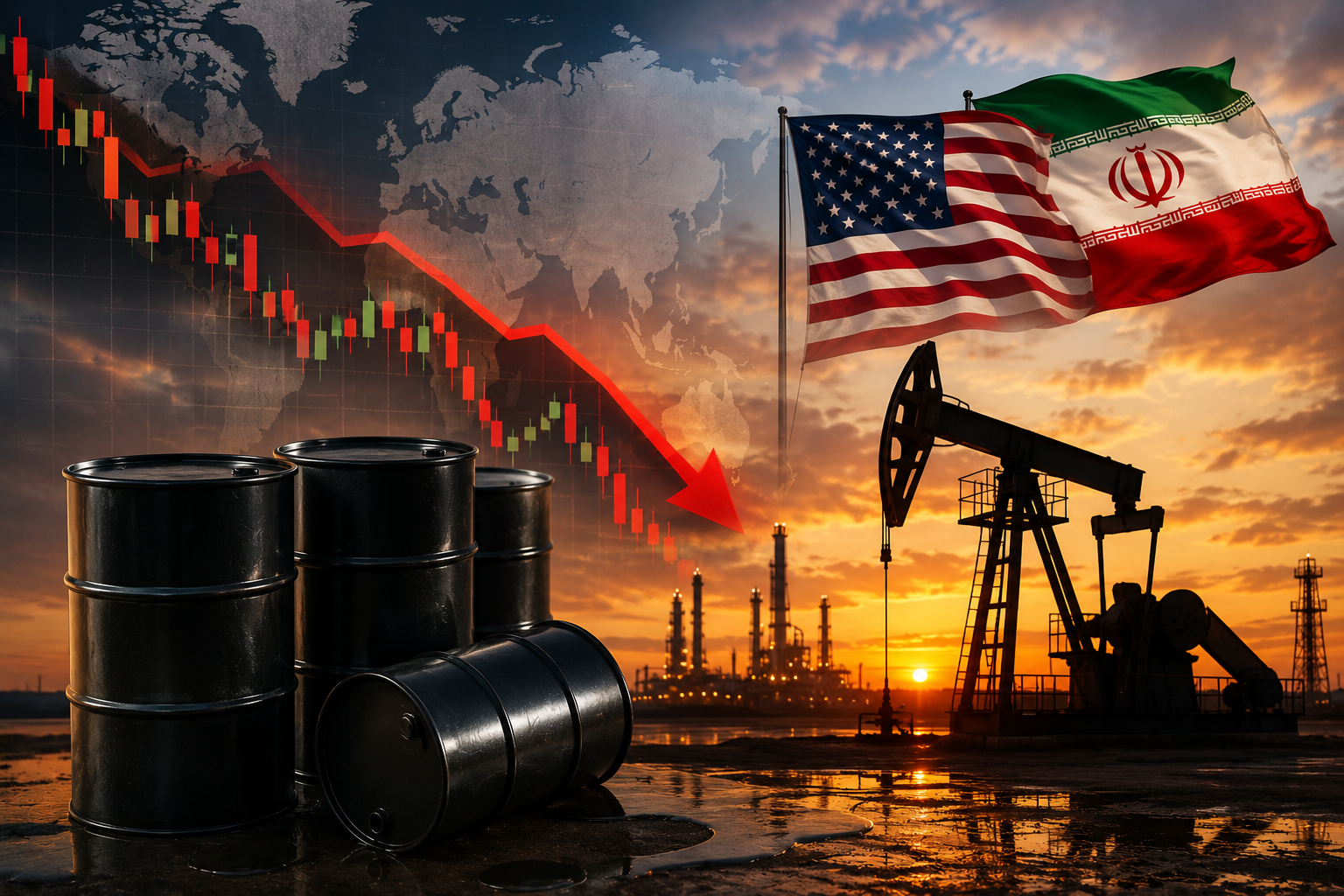
Brent Crude Falls Below $79 a Barrel, Down Over 12% This Week; Diplomatic Hopes Ease Supply Fears but Strait of Hormuz Remains a Key Risk
Global oil prices continued their downward trajectory on Wednesday, extending losses for a third consecutive session as investors closely monitored diplomatic efforts between the United States and Iran that could determine the future of energy supplies from the Middle East. Optimism surrounding ongoing negotiations has prompted traders to unwind a significant portion of the geopolitical risk premium that had pushed crude prices sharply higher in recent weeks.
Benchmark Brent crude slipped below the psychologically important $80-per-barrel mark, while US crude also extended losses, reflecting growing expectations that tensions in the region may ease before causing any major disruption to global oil supplies.
Despite the recent decline, market participants remain cautious as negotiations are still underway and any setback could quickly reverse the current trend in oil prices.
Brent and WTI Extend Weekly Losses
Global crude benchmarks continued to weaken during Asian trading hours.
As of early Wednesday:
-
Brent Crude declined 92 cents (1.2%) to $78.44 per barrel
-
West Texas Intermediate (WTI) fell $1.07 (1.4%) to $74.70 per barrel
The losses have been significant over the week.
-
Brent crude has fallen more than 12%
-
WTI has declined over 11%
The latest correction follows one of the sharpest two-day declines seen in recent months after oil markets reacted positively to signs of diplomatic engagement between Washington and Tehran.
Earlier this week, Brent crude settled below $80 per barrel for the first time since mid-July, indicating that traders are becoming increasingly confident that immediate supply disruptions may be avoided.
Diplomatic Optimism Drives Market Sentiment
The primary catalyst behind the recent decline has been renewed optimism surrounding diplomatic efforts to reduce tensions between the United States and Iran.
Officials from Qatar, which has been acting as one of the mediators, stated that negotiations aimed at ending the conflict are making progress.
The comments encouraged investors to reduce speculative positions built around the possibility of prolonged disruptions to Middle East oil exports.
However, uncertainty continues to persist.
Iran has publicly denied US President Donald Trump's assertion that formal negotiations are currently taking place, highlighting the fragile nature of the ongoing diplomatic process.
Even so, financial markets appear increasingly hopeful that continued dialogue could eventually lead to a lasting settlement.
Geopolitical Risk Premium Continues to Fade
The recent fall in oil prices largely reflects the unwinding of the geopolitical premium that had accumulated following fears of a broader regional conflict.
At the height of tensions, traders feared that military escalation could significantly disrupt crude oil shipments through the Strait of Hormuz, one of the world's busiest energy transportation corridors.
As diplomatic engagement gains momentum, investors have become less concerned about immediate supply disruptions, resulting in aggressive selling across oil markets.
However, analysts caution that the geopolitical premium has not disappeared entirely and could return quickly if negotiations deteriorate.
Strait of Hormuz Remains Critical to Global Energy Security
Despite improving sentiment, the Strait of Hormuz remains the single biggest risk factor for global oil markets.
The narrow waterway serves as one of the world's most strategically important shipping routes.
Before tensions escalated:
-
Nearly 20% of global crude oil exports passed through the Strait of Hormuz.
-
A significant share of global liquefied natural gas (LNG) shipments also relied on the route.
Earlier this year, concerns over possible disruptions had contributed to a sharp rise in crude prices.
According to market analysts, one of the key unresolved issues in current negotiations is whether Iran will continue seeking greater control over the waterway and whether the United States will accept such an arrangement.
The outcome of these discussions could significantly influence oil prices in the coming weeks.
Supply Risks Continue Despite Falling Prices
Although crude prices have corrected sharply, analysts believe the global supply outlook remains uncertain.
According to energy market experts, the recent decline reflects optimism rather than a complete resolution of supply risks.
If diplomatic negotiations fail or military tensions escalate once again, oil inventories could tighten rapidly, causing another surge in prices.
Lower inventories across several regions could amplify the impact of any future supply disruptions.
Therefore, traders continue monitoring developments closely before taking aggressive long-term positions.
US-Qatar Discussions Support Investor Confidence
Further supporting market sentiment, US President Donald Trump and Qatar's Emir Sheikh Tamim bin Hamad Al Thani reportedly discussed efforts to bridge differences between Washington and Tehran during a telephone conversation.
According to Qatar's official statement, both leaders focused on:
-
Advancing diplomatic negotiations
-
Reducing regional tensions
-
Improving prospects for a durable political settlement
The discussions reinforced investor expectations that diplomatic channels remain active and that the probability of a broader military conflict has declined.
US Inventory Data Adds Another Layer of Focus
Apart from geopolitical developments, traders are also closely watching US petroleum inventory trends.
Preliminary data released by the American Petroleum Institute (API) indicated:
-
US crude oil inventories increased by approximately 2.7 million barrels during the previous week.
-
Gasoline inventories also recorded gains.
-
Distillate fuel inventories declined.
Higher crude inventories generally indicate relatively comfortable supply conditions and often exert downward pressure on prices.
Market participants are now awaiting the official inventory report from the US Energy Information Administration (EIA), which could influence short-term price movements.
Lower Crude Prices Could Benefit the Indian Economy
The recent correction in oil prices could provide meaningful support to India's macroeconomic outlook.
As one of the world's largest crude oil importers, India generally benefits from lower energy prices through:
-
Reduced import costs
-
Lower inflationary pressures
-
Improved fiscal balance
-
Stronger current account position
-
Reduced transportation costs
-
Improved corporate profitability
Several sectors are expected to benefit directly from softer crude prices, including:
-
Aviation
-
Paints
-
Chemicals
-
Logistics
-
Cement
-
Consumer goods
-
Tyre manufacturers
Conversely, upstream oil exploration companies could face earnings pressure if crude prices remain weak over an extended period.
Global Markets Continue Monitoring Energy Outlook
Energy traders continue balancing improving diplomatic developments against lingering geopolitical risks.
Future market direction will largely depend on:
-
Progress in US-Iran negotiations
-
Shipping conditions in the Strait of Hormuz
-
OPEC+ production policy
-
Global crude demand
-
US inventory data
-
Chinese economic recovery
-
US Federal Reserve policy
-
Currency movements
Any unexpected deterioration in geopolitical conditions could quickly reverse the recent decline in oil prices.
Market Outlook
The continued decline in global crude oil prices reflects improving optimism that diplomatic efforts between the United States and Iran could prevent major disruptions to energy supplies from the Middle East. While easing geopolitical tensions have reduced the immediate risk premium, uncertainty surrounding the Strait of Hormuz and global supply conditions continues to warrant caution. For India, softer crude prices are broadly positive, benefiting aviation, paints, chemicals, logistics, cement, consumer goods and other fuel-intensive industries through lower input costs and reduced inflationary pressures. Investors should closely monitor US-Iran negotiations, official US crude inventory data, OPEC+ production decisions, shipping activity through the Strait of Hormuz, global demand trends and crude price movements, as these factors are expected to remain the primary drivers of energy markets and influence broader equity market sentiment in the weeks ahead.