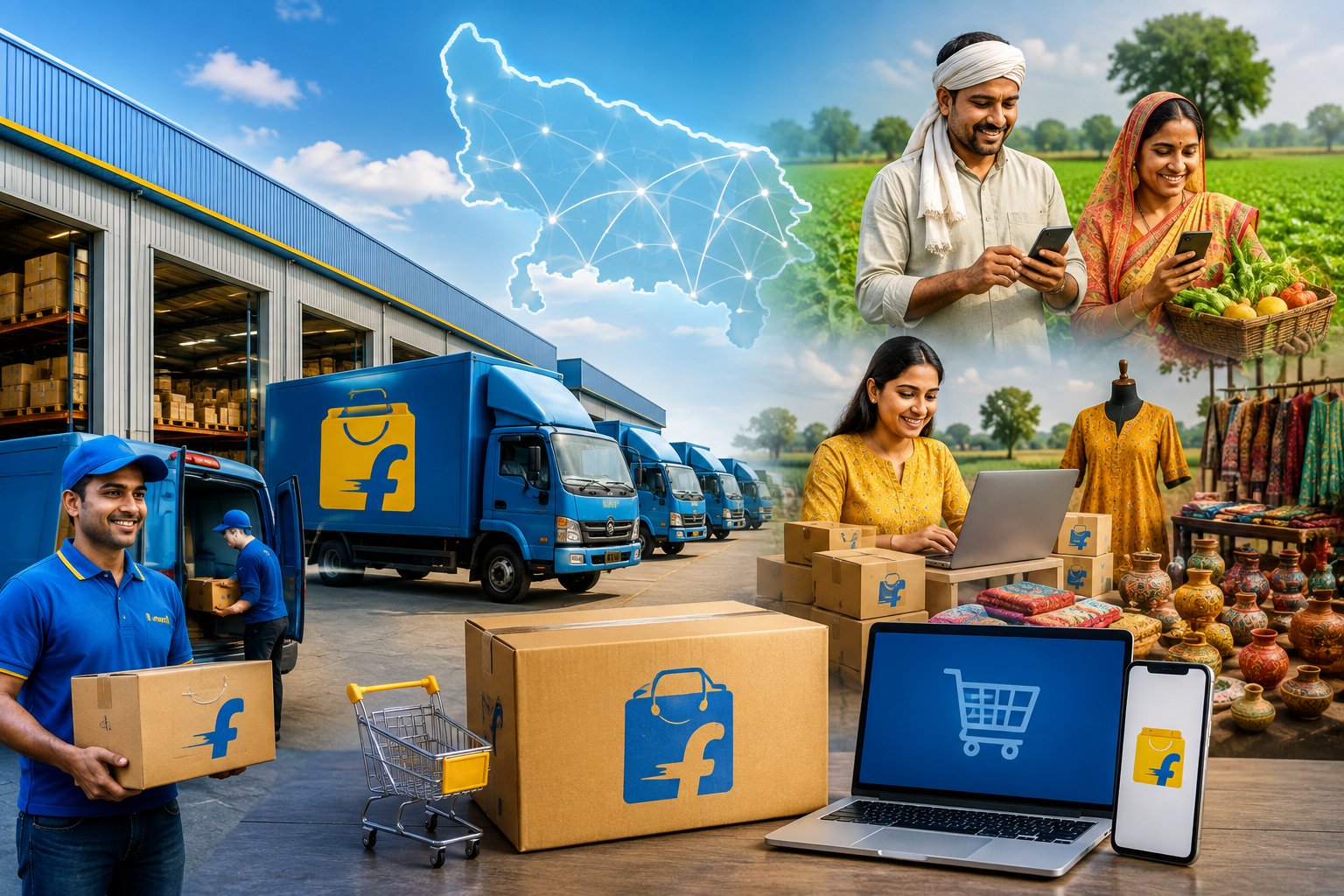
E-Commerce Giant Expands 2.4 Million Sq Ft Logistics Network, Empowers Over 8.5 Lakh Sellers and Accelerates Digital Commerce Growth Across India's Most Populous State
Walmart-owned Flipkart has announced a major expansion of its operations in Uttar Pradesh, reaffirming its long-term commitment to India's digital economy by strengthening investments in logistics infrastructure, MSME development, agriculture and technology-driven commerce. The company said its growing ecosystem in the state now supports nearly 7 lakh direct and indirect livelihoods while enabling more than 8.5 lakh sellers to reach customers across the country through its online marketplace.
The expansion reflects Flipkart's broader strategy of building a robust digital commerce ecosystem that not only serves consumers but also empowers small businesses, artisans, farmers and entrepreneurs. With Uttar Pradesh emerging as one of its largest markets, the company continues to invest in warehousing, fulfilment centres, quick commerce, supply chain technology and market access initiatives to improve efficiency and accelerate economic growth.
As India's e-commerce industry continues to expand rapidly, investments of this scale are expected to play a vital role in generating employment, strengthening logistics networks and integrating local businesses into the national digital economy.
Uttar Pradesh Emerges as a Strategic Growth Hub
Flipkart has identified Uttar Pradesh as one of its most important growth markets due to its large population, expanding digital infrastructure and increasing internet adoption.
The state has witnessed rapid growth in online shopping over the past few years, driven by:
-
Rising smartphone penetration.
-
Affordable internet connectivity.
-
Widespread adoption of digital payments.
-
Increasing demand from Tier-2 and Tier-3 cities.
-
Government initiatives promoting digital inclusion.
These structural factors have encouraged Flipkart to significantly expand its operational footprint across the state.
Supporting Nearly 7 Lakh Livelihoods
One of the biggest highlights of Flipkart's announcement is its contribution to employment generation.
According to the company, its operations now support approximately 7,00,000 direct and indirect livelihoods across Uttar Pradesh.
These opportunities extend beyond the company's direct workforce and include employment across:
-
Warehousing operations.
-
Delivery and logistics.
-
Transportation services.
-
Packaging and fulfilment.
-
Supply chain management.
-
Technology support.
-
MSME partnerships.
-
Agricultural sourcing.
The expansion highlights the growing economic impact of e-commerce beyond traditional retail.
Over 8.5 Lakh Sellers Connected to National Markets
Flipkart's platform currently enables more than 8,50,000 sellers from Uttar Pradesh to access customers across India.
The seller ecosystem includes:
-
Micro, Small and Medium Enterprises (MSMEs).
-
Local manufacturers.
-
Home-based entrepreneurs.
-
Traditional artisans.
-
Textile businesses.
-
Agricultural producers.
-
Regional handicraft exporters.
Digital commerce has helped remove geographical barriers, allowing businesses from smaller towns and rural districts to compete in the national marketplace.
Massive Logistics Expansion Across the State
To strengthen its supply chain capabilities, Flipkart has invested heavily in logistics infrastructure throughout Uttar Pradesh.
Infrastructure Highlights
-
Approximately 2.4 million square feet of logistics infrastructure.
-
Multiple fulfilment centres.
-
Advanced sorting facilities.
-
More than 220 grocery, city and last-mile delivery hubs.
-
Expanded warehousing capacity.
-
Technology-enabled inventory management systems.
The extensive logistics network enables faster deliveries while improving operational efficiency for both customers and sellers.
Driving MSME Growth Through Digital Commerce
Supporting MSMEs remains one of Flipkart's key strategic priorities.
The company offers small businesses:
-
Nationwide market access.
-
Digital storefronts.
-
Payment solutions.
-
Logistics support.
-
Inventory management tools.
-
Business training initiatives.
-
Marketing assistance.
By helping MSMEs transition to online commerce, Flipkart is contributing to greater formalisation and competitiveness within India's small business ecosystem.
Empowering Farmers Through Market Access
Agriculture has emerged as another important pillar of Flipkart's expansion strategy in Uttar Pradesh.
The company continues to strengthen programmes aimed at connecting farmers directly with digital marketplaces.
These initiatives help farmers:
-
Reach larger customer bases.
-
Improve price realisation.
-
Reduce dependence on intermediaries.
-
Enhance supply chain efficiency.
-
Increase market transparency.
Technology-driven agriculture is expected to play an increasingly important role in India's rural economic transformation.
Boosting Traditional Artisans and Local Industries
Uttar Pradesh is home to several globally recognised handicrafts, textiles and traditional industries.
Flipkart's digital marketplace enables local artisans to:
-
Expand beyond regional markets.
-
Reach customers across India.
-
Increase product visibility.
-
Improve income opportunities.
-
Preserve traditional craftsmanship.
The company's seller ecosystem has become an important channel for promoting India's indigenous products.
Quick Commerce and Last-Mile Delivery Gain Momentum
Apart from conventional e-commerce, Flipkart continues expanding its investments in quick commerce and hyperlocal delivery services.
The company is strengthening:
-
Grocery delivery infrastructure.
-
Urban fulfilment centres.
-
Last-mile delivery networks.
-
Inventory optimisation.
-
Technology-driven logistics.
As consumer preferences increasingly shift toward faster deliveries, these investments are expected to become a major competitive advantage.
Digital Infrastructure Strengthens the E-Commerce Ecosystem
The expansion of warehouses, sorting centres and delivery hubs contributes significantly to India's digital infrastructure.
Improved logistics enables:
-
Faster order fulfilment.
-
Reduced delivery costs.
-
Better inventory management.
-
Enhanced customer experience.
-
Higher seller efficiency.
-
Improved supply chain resilience.
Such infrastructure investments also support long-term economic development by improving connectivity between producers and consumers.
India's E-Commerce Market Continues to Expand
India remains one of the fastest-growing digital commerce markets globally.
Growth is being supported by:
-
Rising disposable incomes.
-
Expanding middle-class population.
-
Increasing smartphone usage.
-
Digital payment adoption.
-
Government's Digital India initiatives.
-
Better logistics infrastructure.
-
Growing consumer confidence in online shopping.
Industry analysts expect India's e-commerce sector to continue growing at a strong pace over the next decade as digital penetration deepens across rural and semi-urban regions.
Economic Benefits Extend Beyond Online Retail
Large-scale investments in digital commerce create multiplier effects across the broader economy.
These include:
-
Employment generation.
-
MSME formalisation.
-
Rural entrepreneurship.
-
Increased tax compliance.
-
Better financial inclusion.
-
Technology adoption.
-
Infrastructure development.
-
Higher consumer choice.
As more businesses integrate into digital marketplaces, the contribution of e-commerce to India's GDP is expected to rise steadily.
Market Outlook
Flipkart's continued investment in Uttar Pradesh reflects the growing importance of digital commerce as a driver of economic growth, employment generation and entrepreneurship. The expansion of logistics infrastructure, seller ecosystems and agricultural outreach programmes is expected to strengthen the state's position as one of India's leading e-commerce hubs while improving market access for millions of small businesses.
Looking ahead, India's e-commerce sector remains well positioned for sustained long-term growth, supported by rising internet penetration, digital payments, favourable demographics and increasing consumer adoption across Tier-2, Tier-3 and rural markets. Continued investment in logistics, technology and seller enablement is likely to enhance supply chain efficiency while creating new opportunities for MSMEs, farmers and artisans. Companies that successfully integrate technology with strong logistics networks and local business partnerships are expected to remain key beneficiaries of India's expanding digital economy.