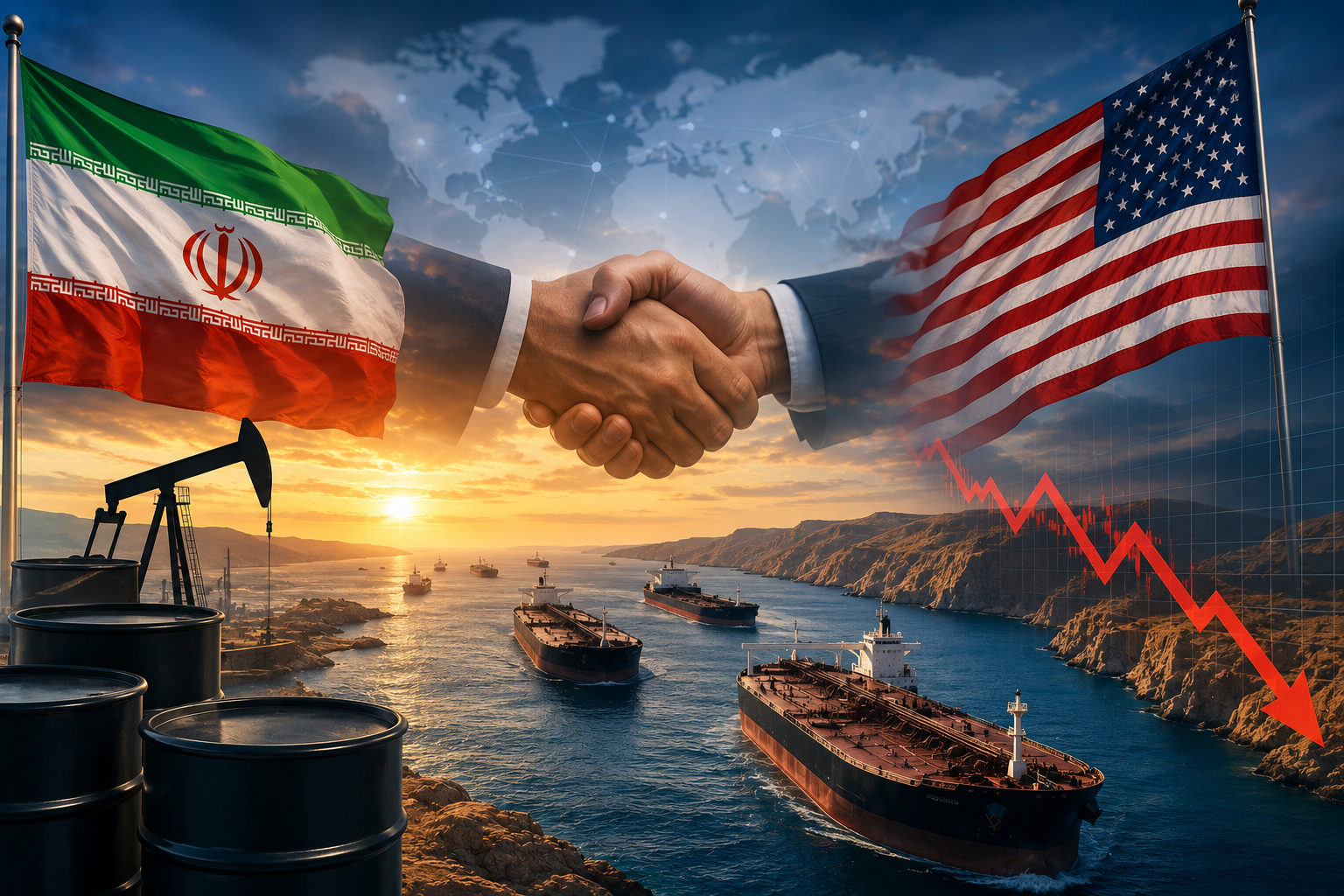
Fresh Diplomatic Efforts Ease Global Energy Market Concerns, Sending Crude Oil Prices Lower and Boosting Investor Confidence
Global markets received a boost on Monday after Iran indicated that negotiations aimed at improving maritime movement around the Strait of Hormuz were progressing, while US President Donald Trump announced that he had postponed planned military strikes against the country to allow diplomacy another chance.
The developments have renewed hopes that tensions in the Middle East could gradually ease after months of heightened conflict, reducing concerns over disruptions to one of the world's most strategically important energy corridors. Following the news, Brent crude oil prices fell sharply, reflecting expectations that global energy supplies may remain stable if negotiations continue to move forward.
The Strait of Hormuz is a critical gateway for global oil and liquefied natural gas (LNG) exports, with a significant share of the world's energy trade passing through the narrow waterway every day. Any threat to shipping through the strait has immediate implications for oil prices, inflation, shipping costs and financial markets worldwide.
Although diplomatic signals have improved market sentiment, uncertainty remains regarding the final outcome of the negotiations, as discussions currently focus on ensuring safe navigation rather than completely reopening the vital maritime route.
Diplomatic Momentum Replaces Immediate Military Escalation
Recent developments indicate that diplomacy has temporarily replaced military confrontation as the preferred path forward.
Iranian officials stated that discussions with Oman regarding maritime navigation have entered an advanced phase. While details remain limited, the negotiations are aimed at improving the movement and safety of commercial vessels operating around the Strait of Hormuz.
The renewed diplomatic engagement has reduced fears of an immediate military conflict that could have disrupted global energy supplies.
Trump Puts Planned Military Operation on Hold
US President Donald Trump said he decided to postpone military strikes against Iran after consultations with key regional allies and diplomatic partners.
According to the US administration:
-
Planned military action has been suspended.
-
Diplomatic negotiations will continue.
-
The objective remains restoring unrestricted navigation through the Strait of Hormuz.
-
Military preparedness remains in place if negotiations fail.
The decision was interpreted positively by financial markets, as it lowered the probability of a broader regional conflict in the near term.
Oil Prices Fall as Supply Risks Ease
Energy markets responded immediately to the easing geopolitical tensions.
Brent crude oil declined significantly after investors anticipated that successful negotiations could reduce supply risks and restore smoother shipping activity through the region.
Lower oil prices generally provide relief to global economies by:
-
Reducing transportation costs
-
Lowering inflation
-
Supporting industrial production
-
Improving corporate profitability
-
Reducing import bills for oil-dependent nations
The correction in crude prices also strengthened overall investor confidence across equity markets.
Why the Strait of Hormuz Matters
The Strait of Hormuz is among the most strategically important maritime trade routes in the world.
The narrow passage connects major oil-producing Gulf nations with international markets and handles a substantial portion of global exports of:
-
Crude oil
-
Liquefied Natural Gas (LNG)
-
Petroleum products
-
Fertilisers
-
Petrochemicals
Any disruption in this route can quickly impact global energy prices and economic stability.
Iran Clarifies Scope of Current Discussions
Iranian authorities clarified that ongoing negotiations are focused on establishing a temporary safe maritime corridor rather than reopening the entire Strait of Hormuz without restrictions.
Officials also stated that:
-
Discussions are taking place with Oman.
-
There are currently no direct negotiations with the United States regarding the shipping route.
-
Maritime safety remains the immediate priority.
This indicates that while progress is being made, broader geopolitical issues remain unresolved.
Regional Countries Encourage Peaceful Resolution
Several Gulf nations have reportedly supported diplomatic engagement in an effort to prevent further escalation.
Regional governments remain concerned that prolonged conflict could:
-
Disrupt energy exports
-
Damage economic activity
-
Increase security risks
-
Impact global trade
-
Raise shipping insurance costs
Countries dependent on regional stability are therefore encouraging continued negotiations between all parties.
Global Financial Markets Welcome Reduced Tensions
The easing geopolitical situation improved investor sentiment across multiple asset classes.
Positive market reactions included:
-
Lower crude oil prices
-
Strength in global equity markets
-
Improved investor risk appetite
-
Reduced commodity market volatility
-
Better outlook for inflation-sensitive sectors
Markets generally respond positively whenever geopolitical risks begin to subside.
Impact on the Indian Economy
India, which imports the majority of its crude oil requirements, stands to benefit from lower global oil prices.
Potential advantages include:
Economic Benefits
-
Lower fuel import costs
-
Reduced inflationary pressures
-
Improved fiscal balance
-
Stronger rupee
-
Better corporate earnings
-
Lower logistics expenses
Industries such as aviation, paints, chemicals, transportation and manufacturing typically benefit when crude oil prices decline.
Markets Will Continue Monitoring Developments
Despite recent optimism, investors remain cautious because the situation remains fluid.
Key developments likely to influence markets include:
-
Progress in diplomatic negotiations
-
Shipping activity through Hormuz
-
Future US policy decisions
-
Iran's response
-
Regional security developments
-
Global oil inventory trends
Any setback in negotiations could quickly reverse recent gains in financial markets.
Major Risks Still Remain
Although immediate military action has been avoided, several risks continue to persist.
Key Risks
-
Breakdown of diplomatic talks
-
Renewed military escalation
-
Further disruptions to shipping
-
Higher energy prices
-
Supply chain interruptions
-
Increased market volatility
These uncertainties mean investors are likely to remain cautious despite the recent improvement in sentiment.
Investment Perspective
The latest diplomatic developments have reduced short-term geopolitical risks, benefiting global equity markets while easing pressure on energy prices. Lower crude prices are particularly positive for emerging economies that rely heavily on imported energy, including India.
However, geopolitical events remain highly unpredictable, and markets will continue reacting swiftly to any developments involving the Middle East. Investors should therefore remain focused on both macroeconomic trends and geopolitical developments while maintaining diversified portfolios.
Outlook
The latest signs of diplomatic progress surrounding the Strait of Hormuz have provided welcome relief to global financial markets after months of elevated geopolitical uncertainty. Iran's indication that maritime discussions are advancing, combined with President Donald Trump's decision to postpone military action, has significantly reduced immediate concerns over disruptions to one of the world's most vital energy supply routes.
While the negotiations are still evolving and many critical issues remain unresolved, the sharp decline in crude oil prices highlights growing market optimism that diplomacy may help prevent a broader regional conflict. For India and other major energy-importing nations, sustained stability in the Middle East could translate into lower inflation, improved economic conditions and stronger financial markets. Nevertheless, given the strategic importance of the Strait of Hormuz, investors are expected to closely monitor every diplomatic and military development, as the region will continue to play a crucial role in shaping global commodity prices and market sentiment in the months ahead.