Steel Major Reports Double-Digit Growth in Profit and Revenue, While Analysts Remain Positive on Long-Term Outlook Amid Improving Steel Prices
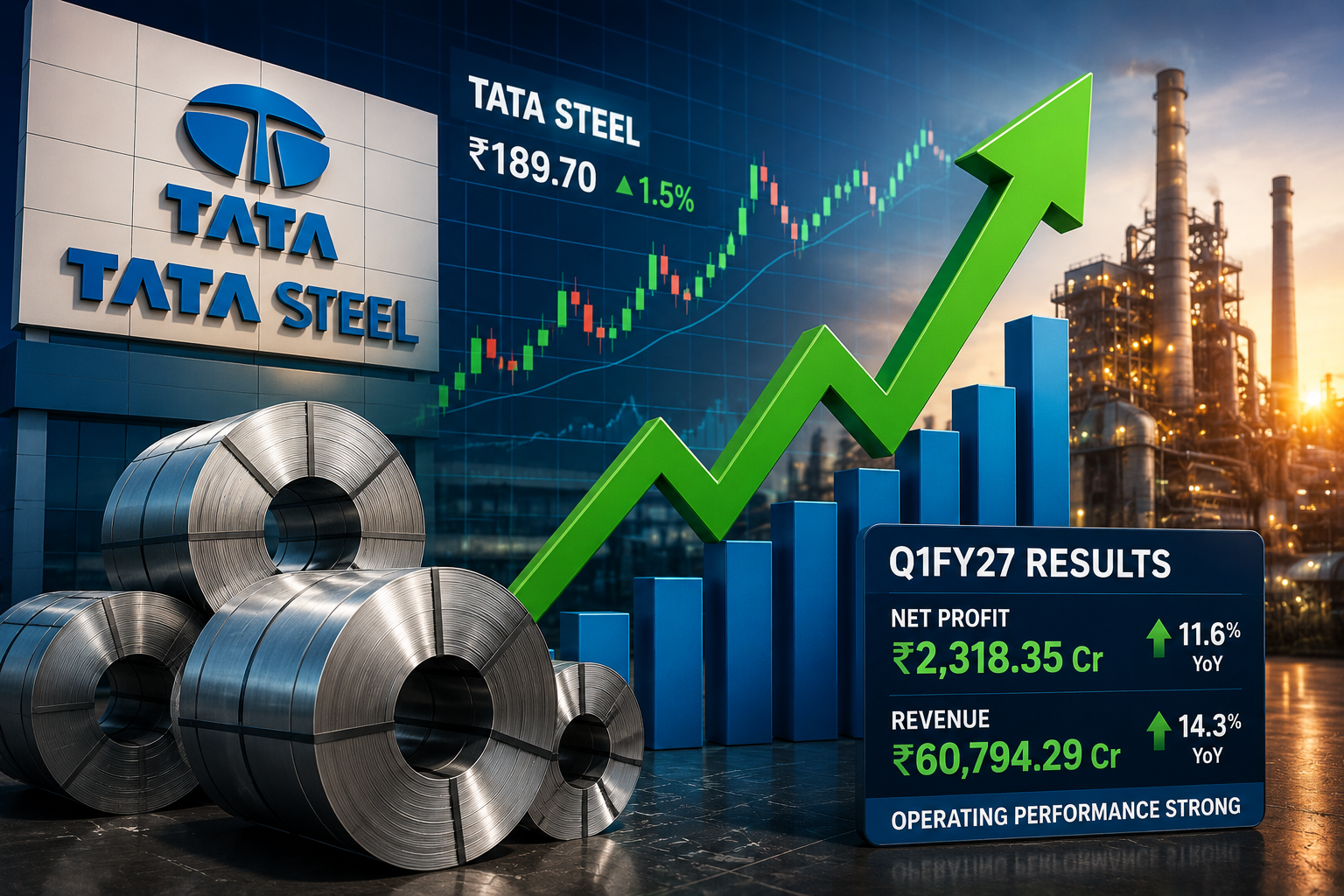
Tata Steel Ltd. began the new fiscal year on a strong note, delivering a solid set of first-quarter results that reinforced investor confidence in India's largest integrated steel producer. The company's shares gained more than 1.5% in early trade after reporting healthy growth in both profit and revenue for the quarter ended June 2026, with brokerages maintaining a bullish stance despite rising input costs.
Analysts described the quarterly performance as largely in line with expectations, supported by better steel realizations, resilient domestic demand and operational efficiency. While higher coking coal and energy costs weighed on margins sequentially, most research firms believe Tata Steel remains well-positioned to benefit from improving industry fundamentals and stronger steel pricing.
Stock Gains Despite Weak Broader Market
Tata Steel shares traded around ₹189.70 on the NSE during morning trade, rising nearly 1.5%, even as the benchmark Nifty 50 remained marginally lower.
The positive market reaction reflected investor confidence in the company's ability to sustain earnings despite ongoing cost pressures and global uncertainty affecting the steel sector.
The stock continues to attract long-term investors on expectations of stronger profitability over the coming quarters.
Tata Steel Delivers Strong Q1 FY27 Performance
For the quarter ended June 30, 2026, Tata Steel reported healthy year-on-year growth across its key financial parameters.
Q1 FY27 Financial Highlights
| Particulars | Q1 FY27 | YoY Change |
|---|---|---|
| Consolidated Net Profit | ₹2,318.35 crore | +11.6% |
| Consolidated Revenue | ₹60,794.29 crore | +14.3% |
| Capital Expenditure | ₹3,579 crore | — |
| Net Debt | ₹84,173 crore | — |
The company benefited from higher steel prices, improved product mix and stable domestic demand, enabling revenue growth despite lower sequential volumes.
Sequential Weakness Reflects Lower Volumes
While annual growth remained healthy, sequential performance moderated during the quarter.
Compared with the March quarter:
-
Net profit declined 20.8%.
-
Revenue fell 3.9%.
-
Steel deliveries moderated as sales volumes softened.
The decline was primarily attributed to lower shipment volumes and normal seasonal factors rather than deterioration in underlying demand.
Management remains optimistic about improving demand during the remainder of FY27.
Tata Steel India Continues to Lead Growth
The company's domestic operations remained a major earnings driver.
Tata Steel India reported:
-
Turnover of ₹36,989 crore
-
Compared with ₹31,137 crore in Q1 FY26
The strong domestic performance reflects continued infrastructure spending, healthy construction activity and steady demand from the automobile and engineering sectors.
India continues to remain Tata Steel's most profitable operating geography.
Better Steel Prices Offset Volume Pressure
A key positive during the quarter was the sharp improvement in steel realizations.
Average selling prices increased:
-
12% year-on-year
-
15% quarter-on-quarter
The recovery in steel prices significantly supported revenue growth despite lower shipment volumes.
Higher realizations helped offset rising raw material costs and preserved profitability during the quarter.
Production Remains Healthy
Operationally, Tata Steel continued to maintain stable production levels.
During the quarter:
-
Steel production reached 5.46 million tonnes
-
Steel sales volume stood at 7.2 million tonnes
-
Sales increased 2% year-on-year
-
Sequential sales declined 17%
The company expects demand to improve as infrastructure projects, construction activity and manufacturing investments gather pace during the second half of the financial year.
Rising Input Costs Remain a Challenge
Although revenues improved significantly, the quarter also highlighted continued cost pressures.
According to brokerage estimates:
-
Raw material costs per tonne increased 5% sequentially.
-
Coking coal costs remained elevated.
-
Conversion costs rose nearly 25% quarter-on-quarter.
-
Higher power and fuel costs impacted margins.
The increase in energy costs was partly linked to geopolitical disruptions affecting global commodity markets.
Despite these challenges, Tata Steel managed to deliver earnings broadly in line with market expectations.
Strong Capital Investment Continues
Tata Steel continued investing aggressively in future growth.
The company spent ₹3,579 crore on capital expenditure during the quarter, reflecting its ongoing commitment to:
-
Capacity expansion.
-
Technology upgrades.
-
Sustainability initiatives.
-
Operational efficiency improvements.
-
Green steel production.
These investments are expected to strengthen the company's long-term competitive position.
Net Debt Remains Under Watch
At the end of the quarter, Tata Steel reported net debt of ₹84,173 crore.
Although leverage remains elevated due to ongoing expansion projects, analysts believe improving profitability and stable cash generation should gradually support deleveraging over the medium term.
Debt reduction continues to remain an important focus area for investors.
Brokerages Maintain Positive Outlook
Nomura: Better Realisations Drive Earnings Beat
Global brokerage Nomura noted that Tata Steel's consolidated adjusted EBITDA slightly exceeded both its own estimates and market consensus.
According to the brokerage:
-
EBITDA surpassed estimates by approximately 2–3%.
-
Better steel realizations drove the upside.
-
Domestic operations remained resilient.
However, Nomura highlighted rising input costs as an area requiring close monitoring.
The brokerage maintained its 'Buy' recommendation with a target price of ₹240, implying nearly 29% upside from current levels.
Motilal Oswal: Operational Performance Remains Strong
Motilal Oswal Financial Services (MOFSL) described the quarter as operationally in line with expectations.
The brokerage highlighted:
-
Healthy production levels.
-
Strong domestic demand.
-
Better-than-expected revenue.
-
Improving steel prices.
-
Stable operational execution.
According to MOFSL, Tata Steel remains well positioned to benefit from improving steel demand over the coming quarters.
The brokerage retained its positive view on the stock.
Domestic Steel Demand Remains Supportive
Industry experts expect India's steel consumption to remain robust over the next several quarters.
Key growth drivers include:
-
Government infrastructure spending.
-
Railway expansion projects.
-
Affordable housing initiatives.
-
Manufacturing investments.
-
Growth in renewable energy infrastructure.
-
Rising automobile production.
These structural demand drivers continue to support long-term growth prospects for domestic steel producers.
Global Risks Still Exist
Despite encouraging domestic fundamentals, several external risks remain.
Investors will continue monitoring:
-
Coking coal prices.
-
Iron ore availability.
-
Chinese steel exports.
-
Global steel demand.
-
Energy costs.
-
Geopolitical tensions.
-
Currency movements.
Any sharp rise in raw material costs could pressure profitability even if steel prices remain firm.
What Investors Should Watch Ahead
Going forward, market participants will closely track:
-
Domestic steel price trends.
-
Infrastructure spending.
-
Capacity expansion progress.
-
Margin recovery.
-
Debt reduction.
-
Raw material costs.
-
European operations.
-
Export demand.
These factors will determine whether Tata Steel can sustain its earnings momentum during the remainder of FY27.
Market Outlook
Tata Steel has delivered another resilient quarter, demonstrating its ability to navigate a challenging global environment through strong domestic demand, improved steel realizations and disciplined operational execution. Double-digit growth in both profit and revenue, coupled with continued investment in capacity expansion, reinforces confidence in the company's long-term growth strategy.
While rising coking coal and energy costs remain near-term challenges, improving steel prices, robust infrastructure-led demand and supportive brokerage commentary suggest that the company's earnings outlook remains constructive. Investors are likely to focus on margin trends, debt reduction and domestic demand over the coming quarters as Tata Steel seeks to build on its strong start to FY27.