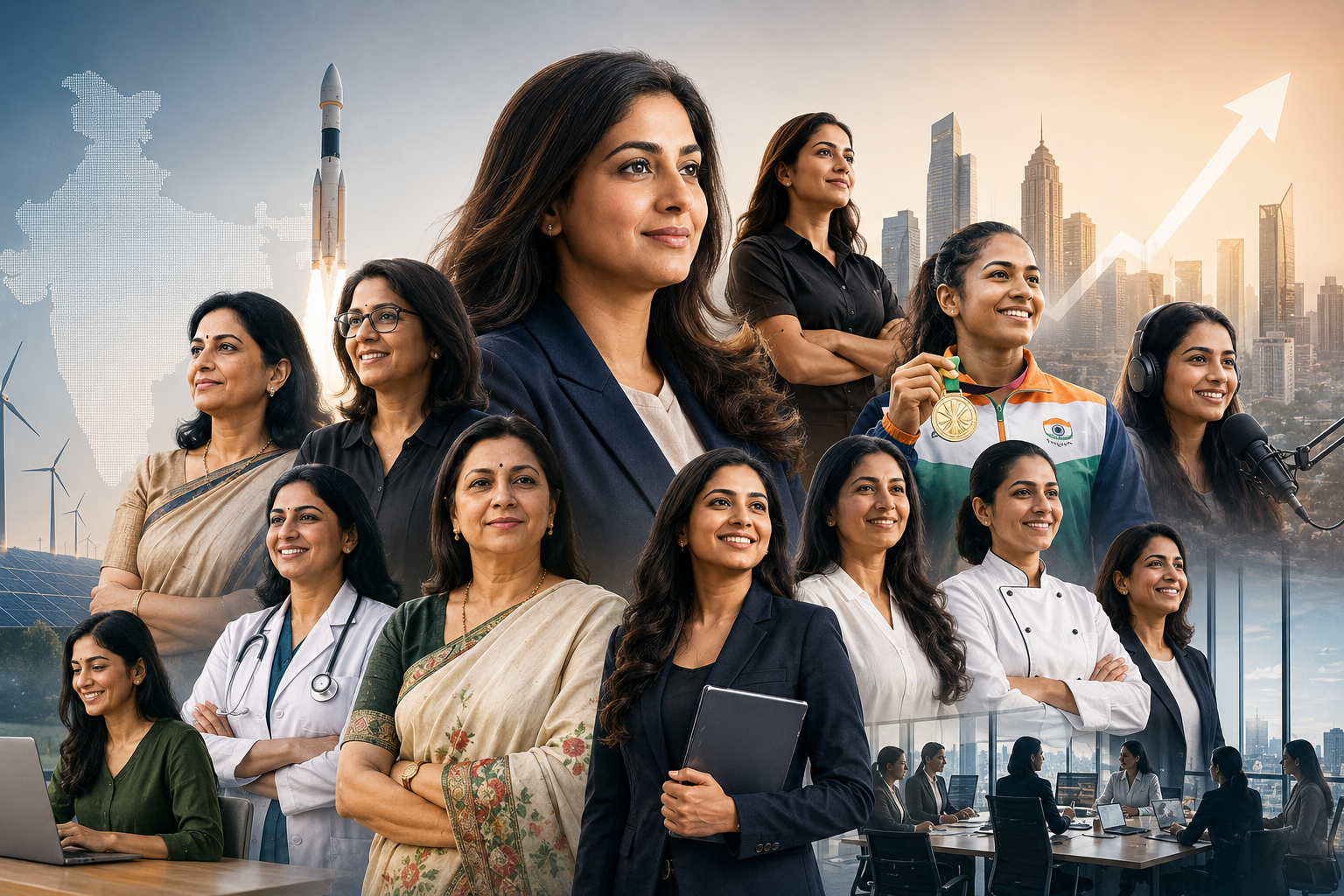
2026 Candere Hurun India Women Leaders List Highlights the Rise of Entrepreneurs, CEOs, Innovators, Athletes and Digital Creators Driving India's New Economy
India's economic transformation is increasingly being powered by women who have built businesses, led global corporations, created successful startups, excelled in sports and shaped public discourse through media and digital platforms. The 2026 Candere Hurun India Women Leaders List reflects this changing landscape, recognising 117 influential women whose combined enterprise value, market capitalisation and personal wealth amount to an extraordinary ₹39 lakh crore.
Perhaps the most remarkable finding is that 98 of the 117 women—84% of the list—are self-made, signalling a dramatic shift from India's traditional business landscape, where inherited wealth and family-run enterprises historically dominated leadership rankings. Today, entrepreneurs, professional CEOs, startup founders, investors, authors, journalists, sustainability advocates, athletes and digital creators are emerging as powerful contributors to India's economic growth.
The latest edition of the report also demonstrates how leadership itself is evolving. The number of categories has expanded from nine in 2025 to twelve in 2026, recognising excellence across a broader range of professions and industries while reflecting the increasing diversity of women's achievements.
117 Women Represent an Economic Value of ₹39 Lakh Crore
The collective economic footprint of the women featured in the report is comparable to the size of major global economies, underlining their growing importance in India's development story.
2026 Hurun Women Leaders Snapshot
| Particulars | 2026 Data |
|---|---|
| Total Honourees | 117 |
| Combined Enterprise Value, Market Capitalisation & Wealth | ₹39 Lakh Crore |
| Self-Made Leaders | 98 |
| Women with Inherited Leadership | 19 |
| Categories Covered | 12 |
| Average Age | 48 Years |
The report highlights that women's leadership today extends well beyond family-owned businesses into innovation-led industries, technology, sports and social impact.
Rise of Self-Made Women Marks a Historic Shift
One of the report's strongest messages is the growing dominance of self-made women leaders.
Self-Made vs Inherited Leadership
| Category | Number |
|---|---|
| Self-Made Leaders | 98 |
| Inherited Leadership | 19 |
More than five self-made women now exist for every woman who inherited her position, demonstrating India's rapidly evolving entrepreneurial ecosystem.
This transformation has been driven by:
-
Expanding startup opportunities.
-
Improved access to venture capital.
-
Growth of digital businesses.
-
Higher female workforce participation.
-
Better educational opportunities.
-
Increasing representation in leadership roles.
Corporate India Continues to Produce Powerful Women Leaders
Business remains one of the strongest pillars of influence.
Several women continue leading some of India's largest listed companies and business groups.
Leading Business Personalities
| Leader | Achievement |
|---|---|
| Roshni Nadar Malhotra | Wealth Multipliers Category Leader |
| Priya Nair | Top Professional CEO |
| Preetha Reddy | Veterans Category Leader |
| Suneeta Reddy | Veterans Category Leader |
| Vaishali Nigam Sinha | New Economy Category Leader |
These executives are helping shape India's corporate growth across information technology, consumer goods, healthcare and renewable energy.
Leadership Now Extends Beyond Traditional Business
Unlike earlier years, the latest report recognises influence across diverse professions.
Women are now being celebrated for contributions in:
-
Entrepreneurship.
-
Technology.
-
Startups.
-
Journalism.
-
Literature.
-
Fashion.
-
Sustainability.
-
Sports.
-
Social media.
-
Public policy.
-
Education.
The broader definition reflects changing economic realities where innovation and digital influence carry significant value.
Culture Emerges as the Largest Leadership Pillar
Hurun has grouped honourees under five broad pillars.
Distribution Across Leadership Pillars
| Pillar | Number of Honourees |
|---|---|
| Culture | 42 |
| Startups | 28 |
| Value Creation | 19 |
| Wealth Creation | 18 |
| Impact | 10 |
The findings indicate that influence today is increasingly measured through creativity, innovation and public engagement rather than financial wealth alone.
Sportswomen Become National Icons
Olympic and Paralympic medallists represent the single largest category on the list.
Key highlights include:
-
20 medal-winning athletes recognised.
-
Around 60% are Paralympic champions.
The growing representation of athletes reflects the increasing recognition of sports as a major contributor to India's global image and national development.
Leadership Across Generations
The report showcases leaders across a remarkable age spectrum.
Youngest and Oldest Honourees
| Name | Age |
|---|---|
| Sheetal Devi | 19 Years |
| Rajni Bector | 86 Years |
The nearly seven-decade age range illustrates that leadership can emerge through youthful talent as well as decades of entrepreneurial excellence.
Mumbai Continues to Lead India's Women Leadership Ecosystem
Mumbai retained its position as India's leading city for influential women.
Top Cities
| City | Honourees |
|---|---|
| Mumbai | 26 |
| New Delhi | 21 |
| Bengaluru | 16 |
| Gurugram | Emerging Technology Hub |
At the state level:
-
Maharashtra ranked first.
-
Delhi followed.
-
Karnataka secured third place.
The data also reflects the growing importance of startup ecosystems in Bengaluru and the National Capital Region.
Digital Influence Is Reshaping Leadership
The report highlights how social media and digital platforms have become important tools for building influence.
Key trends include:
-
Independent journalism.
-
Creator economy.
-
Personal branding.
-
Digital entrepreneurship.
-
Online education.
-
Content creation.
Women are increasingly reaching millions of people directly through digital platforms, expanding their influence beyond traditional institutions.
Education Continues to Build Future Leaders
Higher education remains a common factor among many successful women leaders.
Leading educational institutions represented include:
-
University of Delhi.
-
University of Mumbai.
Strong academic foundations continue supporting leadership across business, technology, governance and public life.
Women Entrepreneurs Strengthen India's Startup Ecosystem
India's startup revolution has significantly increased opportunities for women entrepreneurs.
Many featured leaders have successfully built businesses in:
-
Fintech.
-
Healthcare.
-
Consumer products.
-
Fashion.
-
Beauty.
-
Food processing.
-
Renewable energy.
-
Artificial intelligence.
Growing investor interest in women-led startups is further strengthening India's entrepreneurial ecosystem.
Corporate Diversity Becoming a Competitive Advantage
Companies with greater gender diversity are increasingly viewed favourably by investors.
Women leaders are driving:
-
Better governance.
-
Innovation.
-
Employee diversity.
-
Sustainable growth.
-
Long-term shareholder value.
Global investors are also placing greater emphasis on diversity and inclusion while evaluating corporate performance.
Economic Significance of Women's Leadership
Increasing female participation in leadership positions contributes to:
-
Higher innovation.
-
Stronger entrepreneurship.
-
Greater employment generation.
-
Improved household incomes.
-
Better corporate governance.
-
Financial inclusion.
-
Sustainable economic development.
The report suggests that women's leadership is becoming a major driver of India's long-term growth.
The Road Ahead
As India progresses toward becoming one of the world's largest economies, women are expected to play an increasingly important role across corporate leadership, technology, manufacturing, healthcare, renewable energy, financial services and digital businesses.
Continued policy support, startup funding, educational opportunities and improved access to capital are likely to accelerate women's contribution to the country's economic development.
Market Outlook
The 2026 Candere Hurun India Women Leaders List reflects a structural transformation in India's economic landscape, where leadership is increasingly being defined by entrepreneurship, innovation and professional excellence rather than inherited wealth. The fact that self-made women account for 84% of the honourees highlights the growing strength of India's startup ecosystem, corporate sector and digital economy. Their combined economic footprint of ₹39 lakh crore underscores the substantial role women now play in wealth creation, business expansion and value generation across multiple industries.
From an investment perspective, the continued rise of women-led enterprises and professionally managed organisations is expected to strengthen corporate governance, improve innovation and support sustainable long-term growth. Sectors including technology, healthcare, consumer goods, financial services, renewable energy, digital media and retail are likely to benefit from increasing female leadership. As environmental, social and governance (ESG) considerations gain greater importance among global investors, companies promoting diversity and inclusive leadership may attract stronger institutional interest, contributing positively to India's long-term economic and capital market development.