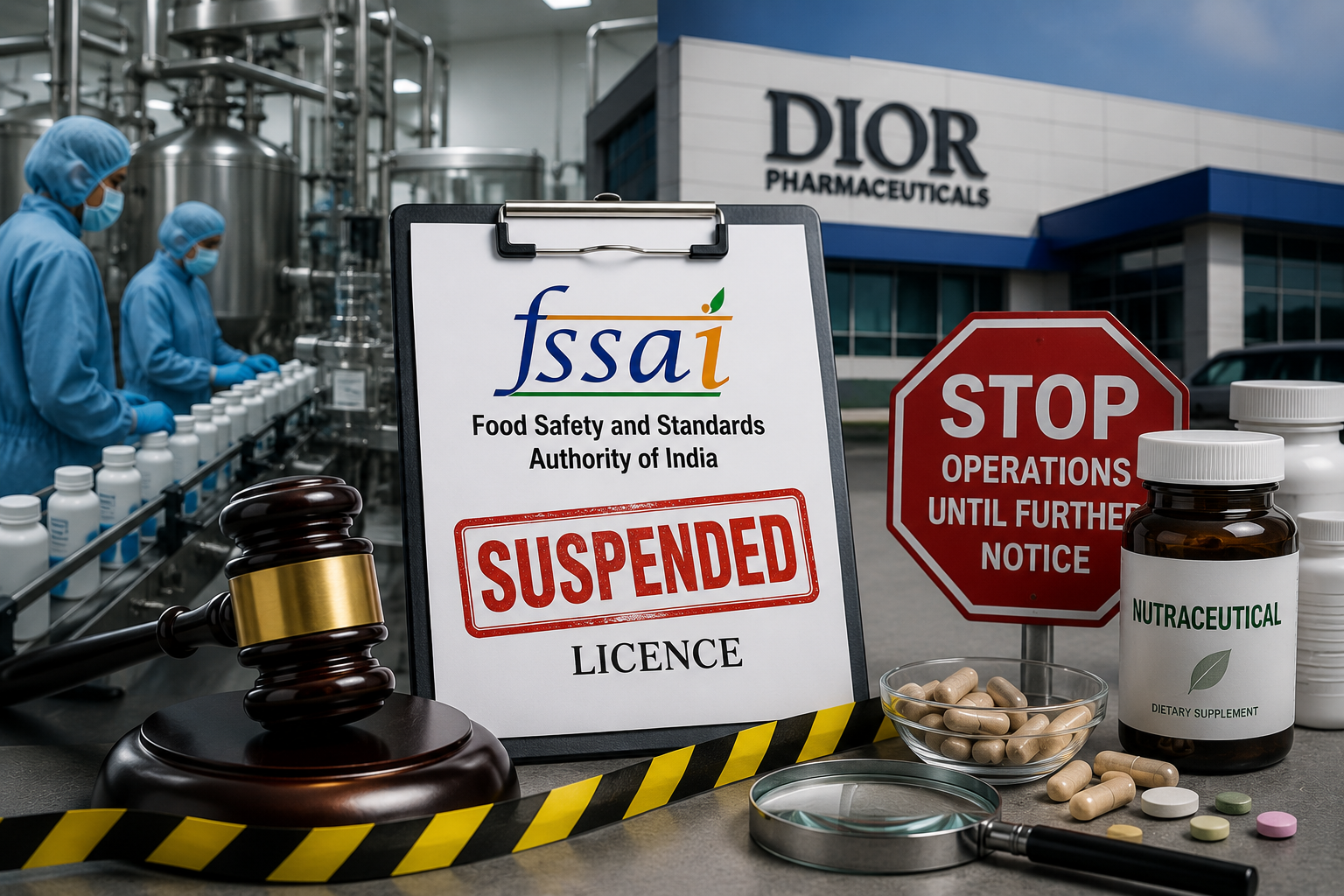
Food Safety Regulator Orders Immediate Halt to Nutraceutical Manufacturing Operations Following Major Lapses in GMP, Hygiene Standards and Quality Management Systems
The Food Safety and Standards Authority of India (FSSAI) has suspended the food business licence of Dior Pharmaceuticals Ltd. after uncovering serious violations during an inspection of the company's nutraceutical manufacturing facility in Punjab. The regulator cited multiple deficiencies in manufacturing practices, hygiene standards, food safety systems and quality controls, stating that the lapses posed a significant risk to public health.
Following the inspection, FSSAI directed the company to immediately cease all manufacturing and food business operations until every deficiency is rectified and compliance is established to the satisfaction of the competent authority. The action reflects the regulator's increasing focus on strengthening food safety standards across India's rapidly expanding nutraceutical and health supplement industry.
The suspension also sends a strong message to food manufacturers that adherence to Good Manufacturing Practices (GMP), Good Hygiene Practices (GHP) and Food Safety Management Systems (FSMS) is no longer optional but an essential requirement for operating in India's food sector.
Licence Suspended with Immediate Effect
The regulator took swift action after identifying widespread regulatory violations during the inspection.
According to the FSSAI:
-
The food business licence has been suspended immediately.
-
Manufacturing activities must stop without delay.
-
Production can resume only after all deficiencies are rectified.
-
Compliance will be verified through further regulatory assessment before approval is granted.
The suspension underscores the regulator's zero-tolerance approach toward practices that may compromise food safety.
Inspection Reveals Multiple Critical Violations
The inspection found deficiencies across nearly every major area of food manufacturing and quality management.
Major Areas of Non-Compliance
| Compliance Area | Observation |
|---|---|
| Good Manufacturing Practices (GMP) | Serious deficiencies |
| Good Hygiene Practices (GHP) | Inadequate implementation |
| Food Safety Management System (FSMS) | Significant non-compliance |
| Infrastructure | Poor maintenance |
| Sanitation & Housekeeping | Unsatisfactory conditions |
| Pest Control | Inadequate management |
| Storage & Handling | Improper procedures |
| Manufacturing Process Controls | Weak monitoring |
| Personnel Hygiene | Regulatory shortcomings |
| Water Quality Monitoring | Deficient testing systems |
| Documentation & Record Keeping | Incomplete records |
The regulator concluded that these shortcomings represented systemic failures rather than isolated incidents.
Public Health Concerns Prompt Regulatory Action
FSSAI stated that the observed deficiencies could potentially compromise consumer safety and product quality.
The regulator highlighted failures relating to:
-
Product safety.
-
Manufacturing consistency.
-
Hygiene management.
-
Product traceability.
-
Quality assurance.
-
Regulatory compliance.
Given that nutraceutical products are consumed for health and wellness purposes, maintaining stringent manufacturing standards is considered essential.
Understanding GMP, GHP and FSMS
The three compliance frameworks highlighted by the regulator form the backbone of food manufacturing standards in India.
Good Manufacturing Practices (GMP)
GMP establishes standardized procedures to ensure products are manufactured consistently under controlled conditions.
It covers:
-
Production systems.
-
Equipment validation.
-
Facility maintenance.
-
Employee training.
-
Process documentation.
Good Hygiene Practices (GHP)
GHP focuses on preventing contamination throughout the manufacturing process.
Key requirements include:
-
Personal hygiene.
-
Cleaning schedules.
-
Pest prevention.
-
Waste disposal.
-
Facility sanitation.
Strong hygiene practices are critical for maintaining product safety and preventing microbial contamination.
Food Safety Management System (FSMS)
FSMS provides a structured framework for identifying and controlling food safety risks.
It includes:
-
Hazard analysis.
-
Preventive controls.
-
Monitoring procedures.
-
Corrective actions.
-
Internal audits.
-
Continuous improvement.
A well-functioning FSMS ensures consistent product quality while reducing operational risks.
Infrastructure and Process Deficiencies Raise Concerns
The inspection reportedly identified weaknesses in both physical infrastructure and manufacturing operations.
Areas requiring improvement include:
-
Production facilities.
-
Equipment maintenance.
-
Environmental controls.
-
Raw material handling.
-
Storage practices.
-
Manufacturing supervision.
Such deficiencies can affect product quality and regulatory compliance if not addressed promptly.
Importance of Product Traceability
One of the regulator's key observations involved inadequate traceability systems.
Product traceability enables manufacturers to:
-
Track raw materials.
-
Identify production batches.
-
Investigate quality complaints.
-
Conduct targeted product recalls.
-
Strengthen consumer protection.
Modern food manufacturing increasingly depends on digital record-keeping and automated traceability systems.
India's Nutraceutical Industry Under Greater Regulatory Scrutiny
India's nutraceutical market has grown rapidly over the past decade as consumers increasingly focus on preventive healthcare and wellness products.
The industry includes:
-
Dietary supplements.
-
Protein powders.
-
Vitamins.
-
Herbal formulations.
-
Functional foods.
-
Mineral supplements.
As consumption rises, regulators are intensifying oversight to ensure product quality and consumer safety.
FSSAI Expands Enforcement Across Food Industry
The action against Dior Pharmaceuticals is part of a broader nationwide enforcement drive.
In recent months, FSSAI has taken action involving:
-
Nutraceutical manufacturers.
-
Energy drink companies.
-
Alcoholic beverage producers.
-
Food processing businesses.
-
E-commerce platforms selling food products.
The regulator has focused on issues such as misleading claims, improper labelling, hygiene failures and violations of food safety standards.
Consumer Complaints Driving Regulatory Action
FSSAI's investigations increasingly originate from multiple sources.
These include:
-
Consumer complaints.
-
Routine inspections.
-
Food safety officers' reports.
-
Surprise inspections.
-
Suo motu investigations.
The regulator has also increased public awareness by regularly publishing enforcement actions through digital platforms.
Potential Business Impact on Dior Pharmaceuticals
The suspension is expected to have operational implications for the company.
Possible impacts include:
-
Temporary production shutdown.
-
Delay in product supplies.
-
Compliance-related capital expenditure.
-
Additional regulatory inspections.
-
Temporary revenue disruption.
-
Brand reputation challenges.
The company will need to implement corrective measures before operations can resume.
Compliance Becoming a Competitive Advantage
As India's food and nutraceutical industries mature, regulatory compliance is becoming a key differentiator.
Companies investing in:
-
Automated manufacturing.
-
International quality certifications.
-
Digital quality management.
-
Employee training.
-
Robust internal audits.
-
Advanced traceability systems.
are likely to strengthen consumer confidence and reduce regulatory risks.
Future Outlook for the Nutraceutical Industry
The latest enforcement action is expected to encourage manufacturers across the sector to strengthen quality control systems and invest in better manufacturing infrastructure.
Industry experts believe increased compliance will improve:
-
Consumer trust.
-
Export competitiveness.
-
Product quality.
-
International acceptance of Indian nutraceutical products.
-
Long-term industry sustainability.
Stronger regulatory standards may also accelerate consolidation, benefiting companies with established compliance capabilities.
Market Outlook
The suspension of Dior Pharmaceuticals' licence reflects the FSSAI's increasingly proactive approach towards strengthening food safety standards across India's nutraceutical industry. As the market for dietary supplements and health products continues to expand, regulators are placing greater emphasis on manufacturing quality, hygiene, product traceability and compliance with internationally accepted food safety practices. Companies that invest in modern manufacturing facilities, robust quality management systems and continuous regulatory compliance are likely to gain stronger consumer trust and improve their long-term competitive position.
From an industry perspective, stricter enforcement may temporarily increase compliance costs but is expected to enhance the overall credibility of India's food and nutraceutical sector. Improved regulatory oversight can strengthen consumer confidence, support export opportunities and encourage higher manufacturing standards across the industry. Investors should closely monitor companies' governance practices, quality certifications and regulatory compliance records, as these factors are becoming increasingly important in assessing long-term business sustainability and growth potential.