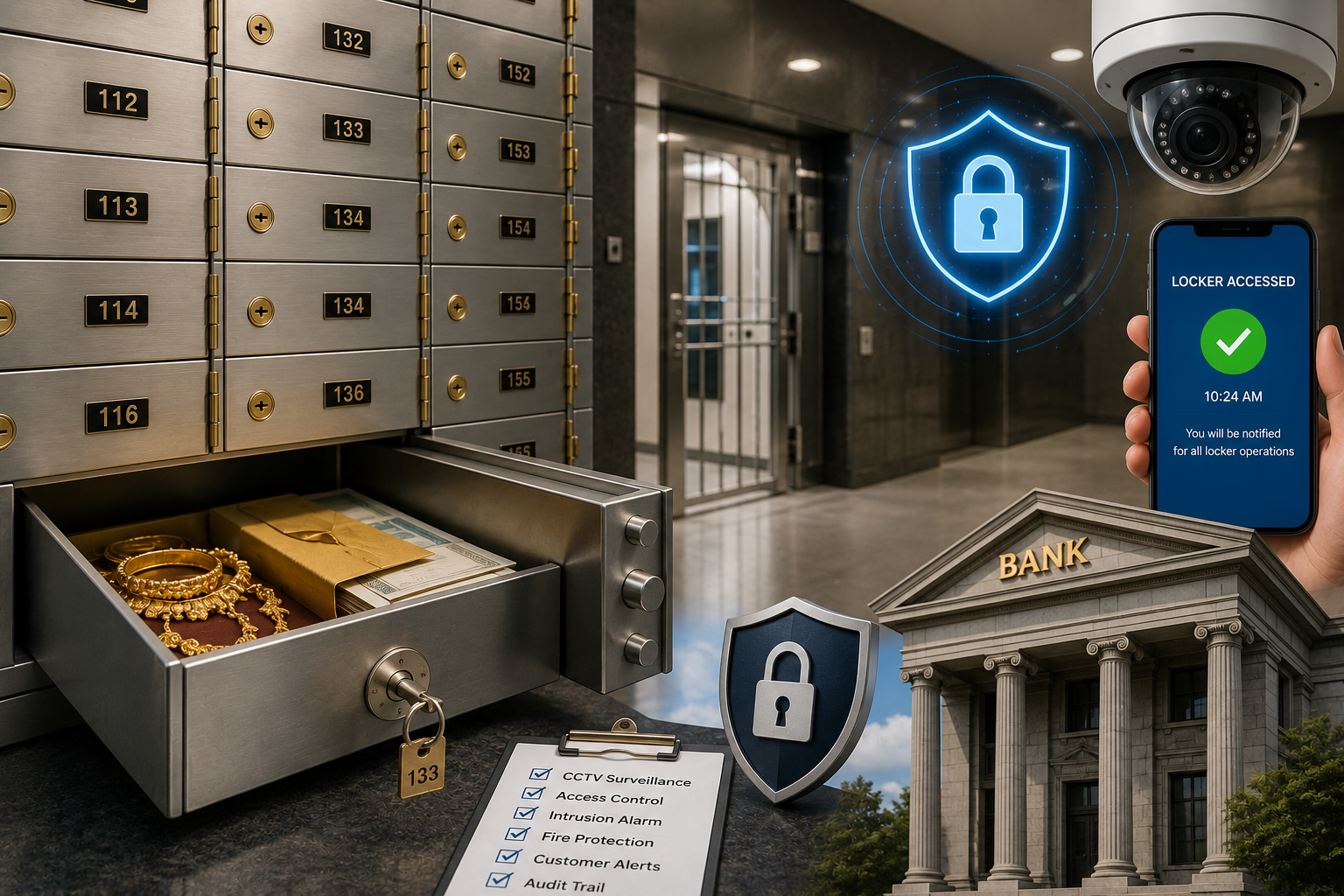
Enhanced RBI Regulations, Advanced Surveillance Systems and Digital Customer Alerts Help Eliminate Locker Theft Cases Across India's Public Sector Banks
India's public sector banking system achieved a significant milestone in the financial year 2025-26, with zero established bank locker theft cases reported across all public sector banks (PSBs). The achievement marks the first time in five years that no confirmed locker thefts have been recorded, highlighting the effectiveness of stronger security protocols, technological upgrades and tighter regulatory oversight introduced by the Reserve Bank of India (RBI).
The improvement comes after public sector banks collectively reported 40 confirmed locker theft cases between FY22 and FY25. The steady decline—from double-digit cases immediately after the Covid-19 pandemic to none in FY26—demonstrates the success of comprehensive reforms aimed at strengthening customer protection and improving operational security.
As of March 31, 2026, India's 12 public sector banks operated more than 11.11 million bank lockers, making the country's locker network one of the largest in the world.
Locker Theft Cases Decline Sharply Over Five Years
The government's latest data reflects a consistent improvement in locker security across public sector banks.
Locker Theft Trend
| Financial Year | Confirmed Locker Theft Cases |
|---|---|
| FY22 | 16 |
| FY23 | 17 |
| FY24 | 3 |
| FY25 | 4 |
| FY26 | 0 |
The sharp reduction suggests that investments in physical security, digital monitoring and regulatory compliance have significantly reduced operational risks.
Over 11 Million Lockers Operated Across Public Sector Banks
Public sector banks continue to play a dominant role in providing safe custody services to millions of Indian households.
PSB Locker Network
| Particulars | Details |
|---|---|
| Operational Lockers | 11,111,077 |
| Public Sector Banks | 12 |
Bank lockers remain widely used for storing:
-
Jewellery.
-
Property documents.
-
Legal papers.
-
Family heirlooms.
-
Financial certificates.
-
Other valuable possessions.
The scale of operations makes robust security systems essential.
Banks with the Highest Historical Locker Theft Cases
Although no cases were reported in FY26, a few banks accounted for most of the confirmed incidents during the previous five years.
Bank-wise Cases (FY22–FY26)
| Bank | Confirmed Cases |
|---|---|
| Bank of India | 14 |
| Central Bank of India | 14 |
| State Bank of India | 10 |
| Indian Bank | Reported Cases |
| Indian Overseas Bank | Reported Cases |
The latest data indicates that these institutions have significantly strengthened their security infrastructure.
States Reporting the Most Incidents
Locker theft cases were concentrated in only a handful of states.
State-wise Distribution
| State | Cases |
|---|---|
| Uttar Pradesh | 18 |
| Jharkhand | 12 |
| Maharashtra | 5 |
| Andhra Pradesh | 1 |
| Bihar | 1 |
| Chhattisgarh | 1 |
| Gujarat | 1 |
| Haryana | 1 |
The trend has helped banks identify high-risk regions and deploy additional monitoring measures.
RBI's Revised Locker Framework Changed the Industry
In 2021, the Reserve Bank of India introduced comprehensive reforms governing bank lockers and the safe custody of valuables.
The revised framework requires banks to:
-
Adopt standard locker agreements.
-
Improve physical security.
-
Introduce digital monitoring.
-
Notify customers instantly.
-
Maintain transparent operational procedures.
-
Clearly define customer compensation policies.
These reforms have fundamentally transformed locker management practices across the banking industry.
Advanced Physical Security Measures Now Mandatory
Banks are required to maintain multiple layers of protection around locker premises.
Mandatory security measures include:
-
Reinforced strong rooms.
-
Controlled access systems.
-
Single-entry and exit points.
-
Fire-resistant infrastructure.
-
Flood protection.
-
Burglar-resistant vaults.
-
Adequate security personnel.
These measures significantly reduce the possibility of unauthorized access.
Digital Surveillance Strengthens Monitoring
Technology has become an important component of locker security.
Banks are now required to install:
-
CCTV surveillance systems.
-
Theft alarms.
-
Motion detection sensors.
-
Integrated fire alarms.
-
Electronic access monitoring.
The RBI also requires CCTV footage to be retained for at least 180 days, ensuring that investigations can be conducted effectively whenever required.
Customers Receive Instant Locker Access Alerts
One of the most significant customer-centric reforms has been the introduction of mandatory notifications.
Whenever a locker is accessed, customers receive:
-
SMS alerts.
-
Email notifications.
This enables customers to immediately identify any unauthorized access and contact the bank without delay.
The feature has substantially improved transparency and customer confidence.
Detailed Access Records Improve Accountability
Banks must now maintain comprehensive records of every locker operation.
These records include:
-
Date of visit.
-
Exact entry and exit time.
-
Customer verification.
-
Signature authentication.
-
Operational logs.
The detailed audit trail makes investigations easier and strengthens accountability.
When Are Banks Responsible for Locker Losses?
Under RBI regulations, banks can be held liable when losses occur because of negligence or deficiencies in service.
Liability may arise from incidents such as:
-
Theft.
-
Burglary.
-
Robbery.
-
Fire.
-
Building collapse.
-
Fraud committed by bank employees.
However, liability generally applies only if the bank fails to maintain the prescribed level of care.
Compensation Rules Explained
The RBI has established a standardized compensation mechanism for customers.
Compensation Formula
If negligence is established, compensation is limited to:
100 times the annual locker rent.
Example
| Annual Rent | Maximum Compensation |
|---|---|
| ₹2,000 | ₹2,00,000 |
This compensation limit applies regardless of the actual value of the items stored inside the locker.
Natural Disasters Fall Under Different Rules
Banks are generally not responsible for losses resulting solely from natural disasters unless negligence can be demonstrated.
Examples include:
-
Earthquakes.
-
Floods.
-
Cyclones.
-
Lightning.
-
Other Acts of God.
Customers should therefore understand the limitations of the compensation framework while storing high-value assets.
Best Practices for Locker Users
Experts recommend that customers follow several precautionary measures to enhance safety.
These include:
-
Maintaining an inventory of stored valuables.
-
Keeping purchase invoices for jewellery.
-
Updating nominee details regularly.
-
Ensuring mobile numbers and email IDs remain current.
-
Reviewing locker agreements periodically.
-
Visiting lockers occasionally to verify contents.
Such practices help simplify future claims and strengthen personal record-keeping.
Strengthening Trust in India's Banking System
The elimination of locker theft cases in FY26 represents a major achievement for India's public banking sector.
It reflects improvements in:
-
Operational governance.
-
Risk management.
-
Regulatory compliance.
-
Customer service.
-
Physical infrastructure.
-
Digital monitoring.
As banking services continue becoming more technology-driven, customer security is expected to remain one of the RBI's highest priorities.
Future of Secure Banking Infrastructure
With rising customer awareness and increasing adoption of digital banking, financial institutions are expected to continue investing in advanced security technologies, biometric authentication, artificial intelligence-based surveillance and automated monitoring systems.
These developments are likely to further strengthen India's banking ecosystem while enhancing customer confidence in both physical and digital banking services.
Market Outlook
The achievement of zero established locker theft cases across public sector banks in FY26 reflects the growing maturity of India's banking infrastructure and regulatory framework. Stronger security standards, continuous surveillance, digital customer notifications and clearly defined operational procedures have significantly enhanced customer protection and reduced operational risks. These improvements demonstrate how regulatory reforms and technology investments can strengthen public confidence in the banking system while improving governance standards.
Looking ahead, banks are expected to continue investing in digital security, surveillance technologies and risk management systems as customer expectations and regulatory standards continue to evolve. Enhanced operational resilience, improved compliance and greater transparency are likely to strengthen trust in India's financial sector, supporting long-term growth in banking services. For investors, continued improvements in governance, technology adoption and customer protection remain positive indicators for the overall stability and credibility of India's banking industry.