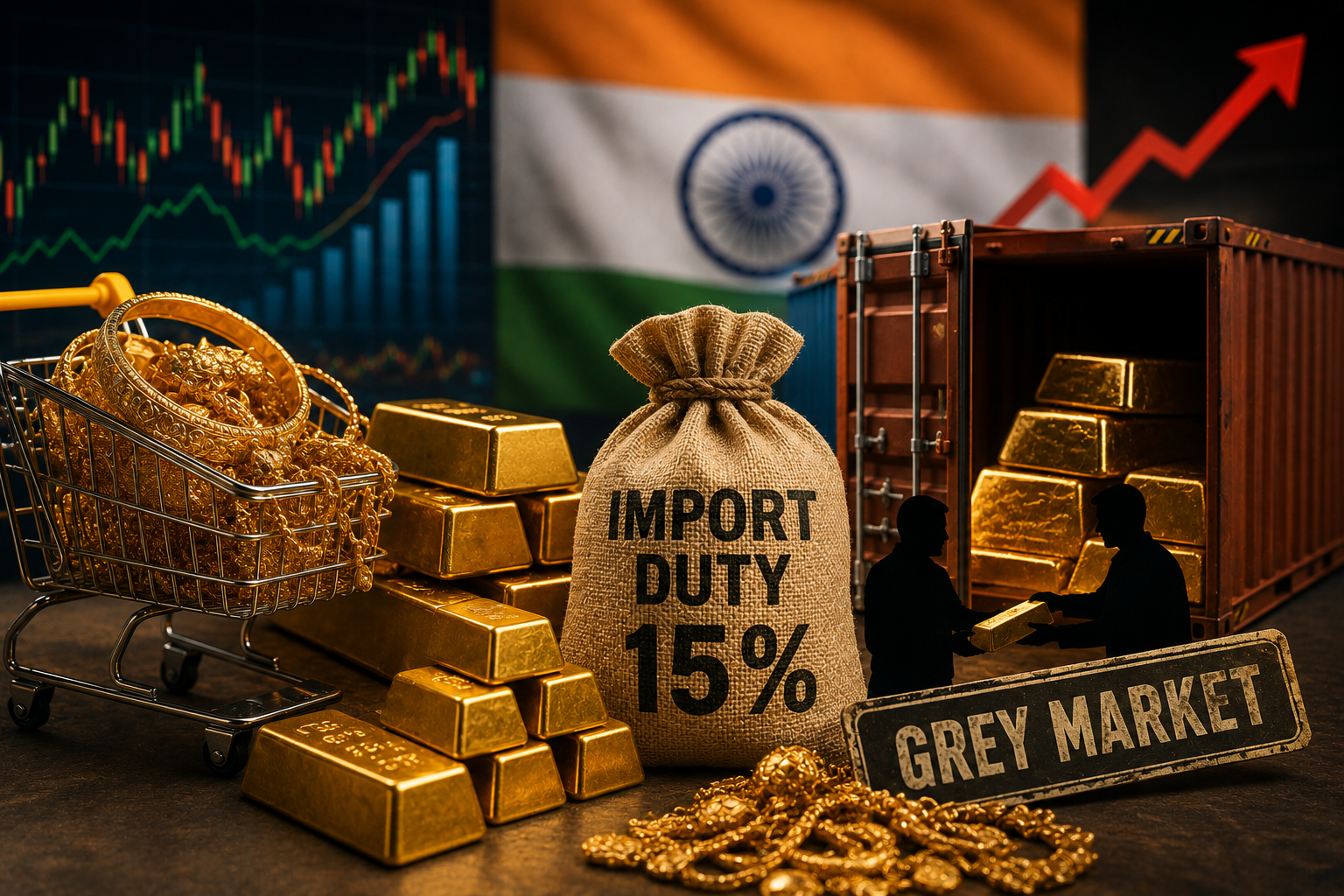
Higher Import Tariffs Trigger Surge in Smuggling, Reduce Official Gold Imports and Put Pressure on Formal Retailers Despite Strong Investment Demand
India's decision to sharply increase import duties on gold has begun to reshape the domestic bullion market, with the World Gold Council (WGC) warning that the higher tax structure is encouraging grey-market activity while placing organised jewellers under growing pressure.
The government raised the gold import duty to 15% on May 13, taking the effective tax burden to nearly 18% after adding the 3% Goods and Services Tax (GST). The move was aimed at reducing gold imports, narrowing the trade deficit and supporting the Indian rupee. However, industry experts believe the higher tariffs have significantly widened the price gap between legally imported gold and smuggled bullion, making illegal imports increasingly attractive.
According to the WGC, the resurgence in unofficial gold inflows could undermine the formal jewellery industry, reduce government tax collections and distort the domestic bullion market if current trends continue.
Higher Import Duty Widens Price Gap
The increase in import duty has substantially altered the economics of India's gold market.
Current Tax Structure on Gold
| Component | Rate |
|---|---|
| Import Duty | 15% |
| Goods and Services Tax (GST) | 3% |
| Total Effective Tax Burden | 18% |
The higher tax burden creates a significant price difference between officially imported gold and illegally smuggled bullion.
Industry experts believe this arbitrage has become large enough to encourage the growth of an organised grey market.
Grey Market Activity Sees Fresh Momentum
According to the World Gold Council, the widening price differential has made smuggling financially attractive once again.
The informal market benefits because:
-
Smuggled gold avoids import duties.
-
Illegal operators can sell at lower prices.
-
Buyers receive immediate price advantages.
-
Organised retailers struggle to match unofficial prices.
As a result, legitimate businesses are increasingly facing unfair competition despite complying with tax and regulatory requirements.
Gold Seizures Nearly Double After Tariff Hike
Government enforcement data suggests that smuggling activity has increased following the duty revision.
Gold Seized by Authorities
| Period | Quantity Seized |
|---|---|
| April 1 – May 12 | 86.16 kg |
| May 13 – June 30 | 160.91 kg |
The sharp rise in seizures indicates increased enforcement activity as well as higher attempts to illegally import gold into the country.
However, industry participants believe actual smuggled volumes could be considerably larger than official seizure figures.
Earlier Duty Cut Had Reduced Smuggling
The current trend represents a reversal from previous years when lower import duties had significantly reduced illegal imports.
Estimated Gold Smuggling
| Year | Estimated Smuggled Gold |
|---|---|
| 2023 | 156.1 tonnes |
| 2024 | 69.2 tonnes |
| 2025 | 20.4 tonnes |
Lower duties had narrowed the pricing gap between legal and illegal gold, reducing incentives for smuggling.
The latest tariff increase has once again widened that gap, leading to renewed concerns among industry participants.
Unofficial Imports Could Cross 100 Tonnes
Industry estimates suggest that if current conditions persist, illegal gold imports may exceed 100 tonnes during 2026.
Such a rise could have significant implications for:
-
Government tax revenue.
-
Customs enforcement.
-
Organised jewellery retailers.
-
Official bullion imports.
-
Market transparency.
A larger grey market could also weaken the effectiveness of the government's efforts to regulate gold imports.
Official Gold Imports Decline Sharply
Higher import duties have also affected legal imports of bullion.
Net Gold Imports
| Quarter | Imports |
|---|---|
| June Quarter 2026 | 98.1 tonnes |
| Year-on-Year Change | -23% |
According to the WGC, this represents the lowest quarterly import level since September 2020, when pandemic-related restrictions disrupted consumer demand.
The decline reflects both higher prices and the impact of increased import duties.
Overall Gold Demand Moderates
India's total gold demand also weakened during the June quarter.
Total Gold Demand
| Particulars | Data |
|---|---|
| Total Demand | 131.4 tonnes |
| YoY Change | -6% |
The decline was largely driven by weaker jewellery purchases as elevated prices discouraged discretionary buying.
However, investment demand remained resilient, providing partial support to overall consumption.
Investment Demand Continues to Shine
Despite softer jewellery sales, investors continued allocating funds to gold.
Several factors supported investment demand:
-
Global geopolitical tensions.
-
Inflation concerns.
-
Safe-haven buying.
-
Currency volatility.
-
Central bank purchases.
-
Portfolio diversification.
Gold continues to be viewed as a defensive asset during periods of global uncertainty.
Organised Jewellers Face Margin Pressure
Formal jewellery retailers are expected to face increasing challenges if grey-market activity continues expanding.
Key concerns include:
-
Lower customer footfall.
-
Reduced market share.
-
Price competition from illegal imports.
-
Pressure on operating margins.
-
Slower inventory turnover.
Organised players continue bearing full tax and compliance costs while competing against untaxed unofficial supply.
Government's Policy Objectives
The tariff increase was introduced with several macroeconomic objectives.
These include:
-
Reducing non-essential imports.
-
Narrowing the trade deficit.
-
Supporting the current account balance.
-
Protecting the rupee.
-
Managing foreign exchange outflows.
While these goals remain important, industry participants argue that the policy may require periodic review if grey-market activity continues rising.
Festive Season Could Revive Demand
The World Gold Council remains optimistic about the second half of the year.
Demand may improve because of:
-
The festive shopping season.
-
Wedding-related purchases.
-
Stable international gold prices.
-
Pent-up consumer demand.
-
Improved buying confidence.
Many consumers postponed purchases during the recent rally in gold prices and may return once prices stabilise.
Implications for India's Jewellery Industry
India remains one of the world's largest gold markets, making policy changes particularly significant for the jewellery ecosystem.
Companies with:
-
Strong brands.
-
Transparent pricing.
-
Hallmarked products.
-
Nationwide retail networks.
-
Omnichannel sales platforms.
may be better positioned to withstand competitive pressures arising from unofficial imports.
However, prolonged expansion of the grey market could continue affecting profitability across the organised sector.
Global Gold Market Remains Supportive
Internationally, gold continues to receive support from:
-
Central bank purchases.
-
Global geopolitical risks.
-
Lower real interest rates.
-
Economic uncertainty.
-
Currency market volatility.
These factors could keep international gold prices elevated even if domestic demand experiences temporary fluctuations.
Market Outlook
India's higher gold import duty has significantly altered the dynamics of the domestic bullion market. While the policy aims to reduce imports, support the rupee and narrow the trade deficit, the widening price gap between legally imported and smuggled gold has revived grey-market activity, creating fresh challenges for organised jewellers and bullion importers. Rising seizures and declining official imports indicate that the market is adjusting to the new tariff regime, although illegal trade may continue to expand if the current price differential persists.
From an investment perspective, gold remains supported by global geopolitical uncertainty, central bank buying and resilient investment demand. However, listed jewellery companies may face near-term margin pressure if grey-market competition intensifies and consumer purchases remain subdued due to elevated prices. Investors should monitor festive season demand, international gold price movements, import policy changes and quarterly earnings of organised jewellery retailers, as these factors will play a crucial role in determining the outlook for India's precious metals and jewellery sector during the remainder of FY27.