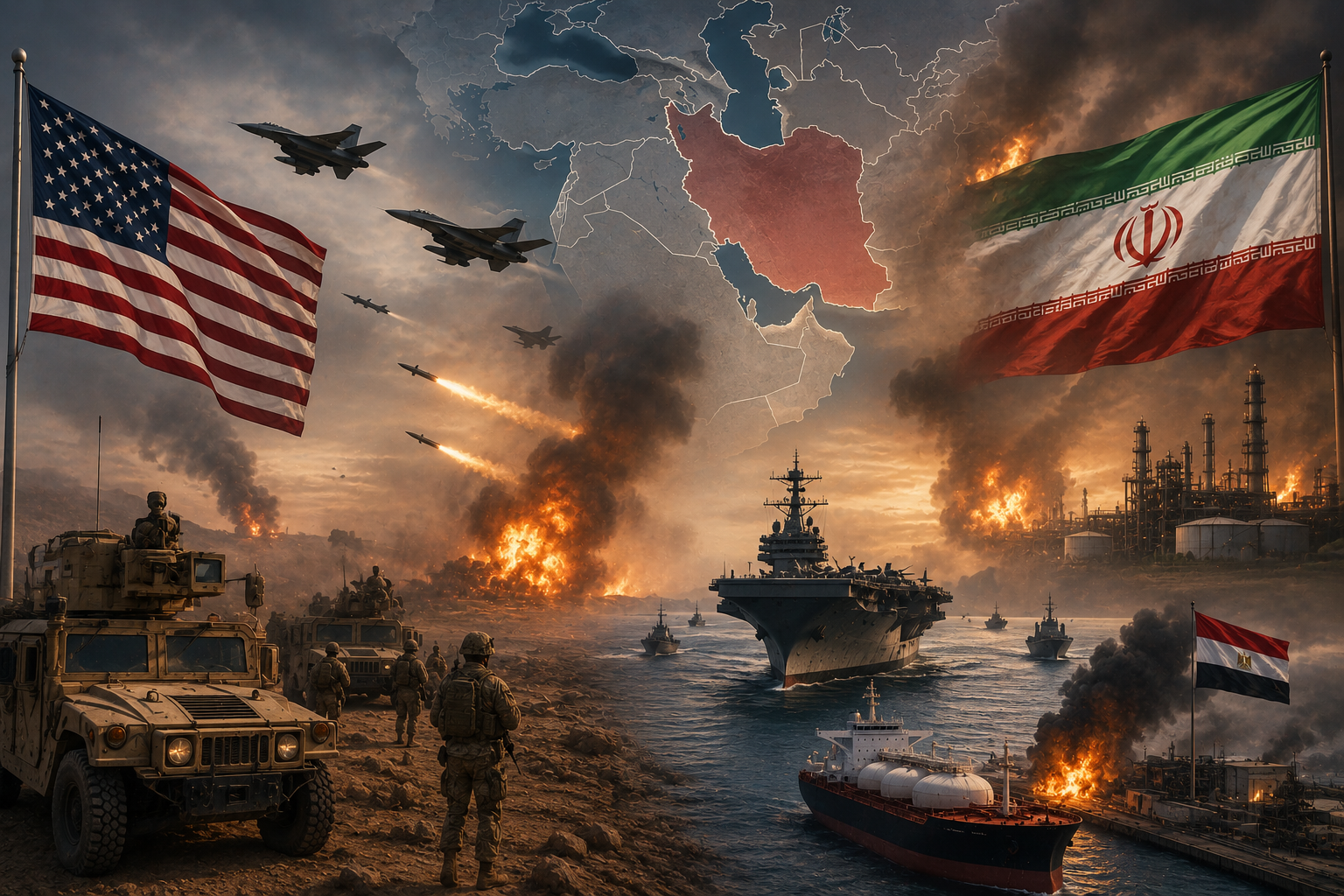
Retaliatory US Military Action Following Attack on American Base in Jordan Sends Oil Prices Soaring, Raises Concerns Over Global Trade and Inflation
The conflict in West Asia has entered a more dangerous phase after the United States carried out retaliatory strikes on Iranian targets, a day after Tehran targeted an American military base in Jordan. The renewed hostilities have expanded the conflict across multiple fronts, increasing fears of a prolonged regional confrontation that could disrupt global energy supplies, international shipping and financial markets.
The escalation follows several months of intermittent military exchanges involving the US, Iran and Iran-backed armed groups across the Middle East. Fresh reports of explosions in southern Iran, drone attacks near Egypt's Damietta Port and renewed tensions around the Strait of Hormuz have heightened concerns that diplomatic efforts to restore stability are losing momentum.
Financial markets reacted swiftly, with Brent crude oil prices jumping more than 7%, while investors shifted towards safe-haven assets amid fears that further escalation could weigh on global economic growth.
US Responds to Attack on Military Base in Jordan
The latest military action was triggered after Iran launched an attack on a US military installation in Jordan, where American personnel are stationed.
In response, US forces conducted precision strikes on Iranian targets after previously joining Saudi Arabia in operations against Iran-backed militias in neighbouring Iraq.
According to reports, earlier operations resulted in the deaths of several militia fighters and Iranian military advisers, further intensifying tensions between Washington and Tehran.
The latest strikes demonstrate that the conflict has moved beyond proxy confrontations and now involves increasingly direct military engagements.
Trump Signals More Military Action
US President Donald Trump reaffirmed his administration's hardline approach towards Iran following the latest attack.
Speaking at a public event, Trump indicated that the United States would continue responding forcefully to any attacks targeting American personnel or strategic interests.
The statement reinforced expectations that further military operations remain possible if tensions continue to escalate.
Analysts believe the strong rhetoric could reduce the likelihood of an immediate diplomatic breakthrough.
Explosions Reported Near the Strait of Hormuz
Following the US strikes, Iranian media reported explosions in multiple locations.
Initial reports indicated:
-
Explosions on Qeshm Island.
-
Incidents in Khuzestan Province.
-
Injuries to civilians in southern Iran.
These developments are significant because Qeshm Island lies close to the Strait of Hormuz, one of the world's most important maritime trade routes for crude oil and liquefied natural gas.
Any prolonged disruption in this region could have far-reaching implications for global energy markets.
Drone Attacks Expand Conflict Towards Egypt
The conflict also spread westward after drone attacks reportedly targeted two natural gas vessels near Egypt's Damietta Port.
According to maritime security reports:
-
One vessel was linked to a US-owned floating storage facility.
-
Another was a Greek-owned tanker.
-
Fires broke out following the attacks.
-
No casualties were reported.
Although responsibility has not been officially confirmed, the incident has heightened concerns that strategic energy infrastructure across the region may increasingly become a target.
Multiple Flashpoints Increase Regional Instability
The latest developments illustrate how the conflict is expanding across several countries simultaneously.
Major Areas Experiencing Military Activity
-
Iran
-
Iraq
-
Jordan
-
Saudi Arabia
-
Yemen
-
Egypt
-
Strait of Hormuz
The growing geographical spread significantly raises the risk of miscalculation and broader regional instability.
Saudi Arabia Reports Fresh Threats to Energy Infrastructure
Saudi Arabia has accused Iran-backed militias operating in Iraq of launching drones targeting its energy facilities.
While some militia groups denied involvement, Yemen's Houthi movement separately claimed attacks on Saudi infrastructure as part of its broader regional campaign.
The repeated targeting of energy assets has reinforced concerns regarding the security of global oil supplies.
Diplomatic Efforts Face Renewed Challenges
Prior to the latest military escalation, regional mediators had been attempting to restart negotiations between Washington and Tehran.
However, renewed fighting has significantly complicated diplomatic efforts.
Officials involved in back-channel discussions indicated that communication channels remain open, but acknowledged that both sides continue to prioritise military responses over negotiations.
With attacks continuing across multiple fronts, prospects for a near-term ceasefire appear increasingly uncertain.
Strait of Hormuz Remains Critical to Global Energy Security
The Strait of Hormuz continues to be one of the most strategically important shipping corridors in the world.
A significant portion of global crude oil exports passes through this narrow waterway each day.
Any disruption could affect:
-
Global crude oil supply.
-
LNG exports.
-
Shipping costs.
-
Marine insurance premiums.
-
International trade flows.
-
Energy security.
The renewed military activity has therefore become a major concern for governments and financial markets worldwide.
Oil Prices Surge as Investors Price in Supply Risks
Commodity markets reacted sharply to the latest escalation.
Commodity Market Reaction
| Commodity | Market Move |
|---|---|
| Brent Crude Oil | Rose more than 7% to around US$88 per barrel |
The rally reflects growing fears that prolonged conflict could interrupt crude oil shipments from the Gulf region.
Higher energy prices also increase inflation risks across both developed and emerging economies.
Impact on Global Financial Markets
The renewed geopolitical uncertainty has increased volatility across global financial markets.
Investors typically shift towards defensive assets during periods of heightened conflict.
Markets are expected to closely monitor:
-
Crude oil prices.
-
Gold prices.
-
US dollar movement.
-
Government bond yields.
-
Defence sector stocks.
-
Shipping and logistics companies.
Risk sentiment is likely to remain fragile until there is greater clarity regarding the conflict.
Implications for the Indian Economy
India remains one of the world's largest crude oil importers, making developments in West Asia particularly significant.
Sustained higher oil prices could influence:
-
Fuel inflation.
-
Current account deficit.
-
Rupee exchange rate.
-
Fiscal deficit.
-
Corporate profitability.
-
Consumer spending.
Energy-intensive sectors including aviation, chemicals, paints, logistics, plastics and oil marketing companies may face increased cost pressures if crude prices remain elevated for an extended period.
Global Supply Chains Could Face Fresh Pressure
The latest escalation has renewed concerns over global supply chains already facing challenges from geopolitical tensions.
Potential risks include:
-
Delays in maritime transportation.
-
Higher freight charges.
-
Increased insurance costs.
-
Energy supply disruptions.
-
Rising manufacturing costs.
-
Inflationary pressures across major economies.
Businesses dependent on imported energy and raw materials could experience higher operating expenses if instability continues.
What Investors Should Monitor
Investors are expected to focus on several key developments in the coming weeks:
-
Further US military operations.
-
Iran's response.
-
Security of the Strait of Hormuz.
-
Global crude oil inventories.
-
Diplomatic mediation efforts.
-
OPEC+ production policy.
-
Central bank responses to inflation risks.
These factors will shape market direction across equities, commodities, currencies and fixed-income markets.
Market Outlook
The latest escalation between the United States and Iran has significantly increased geopolitical uncertainty, placing global financial markets on alert. The sharp rise in Brent crude oil prices reflects investor concerns over potential disruptions to energy supplies, particularly if tensions around the Strait of Hormuz intensify further. Continued military exchanges could lead to sustained volatility in commodity prices, shipping costs and inflation expectations, while also delaying prospects for a broader diplomatic resolution in the region.
For Indian markets, elevated crude oil prices remain a key macroeconomic risk due to the country's dependence on imported energy. Higher fuel costs could affect inflation, corporate margins and the rupee, particularly for sectors such as aviation, logistics, paints, chemicals and oil marketing companies. Conversely, upstream oil and gas producers, defence-related businesses and select energy companies could benefit from the evolving geopolitical landscape. Investors should closely monitor developments in West Asia, crude oil prices, currency movements and global central bank commentary, as these factors are expected to play a crucial role in shaping market sentiment in the near term.