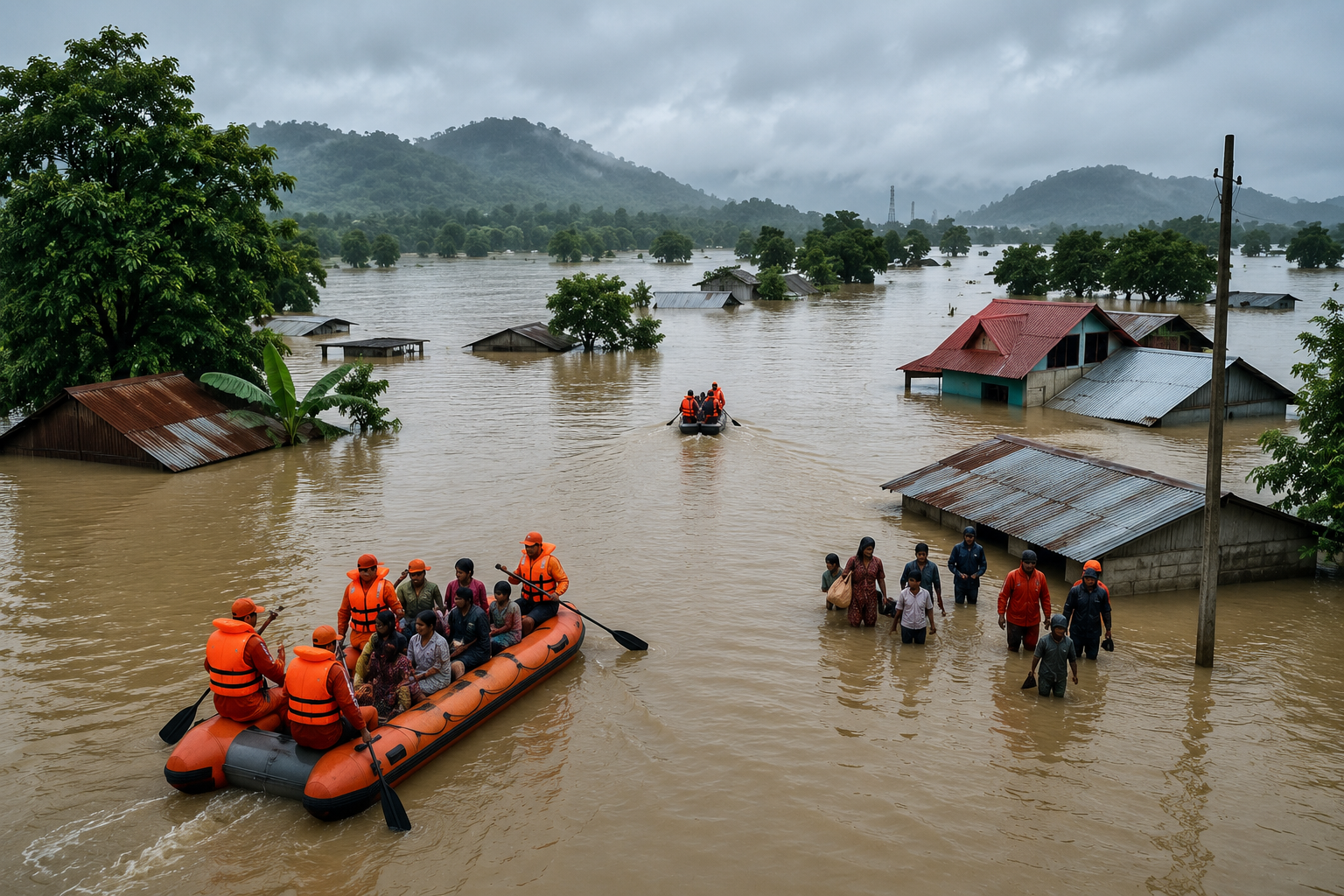
Seven Districts Remain Under Water as Hundreds of Villages Stay Submerged, Thousands of Hectares of Cropland Destroyed and Relief Operations Intensify
The flood situation in Assam continues to remain critical, with the death toll rising to 78 and more than 3 lakh people still affected across seven districts. According to the latest official data released by the Assam State Disaster Management Authority (ASDMA), floodwaters continue to inundate hundreds of villages, displace thousands of families and inflict extensive damage on agriculture and infrastructure.
Despite a gradual improvement in some areas, fresh rainfall and overflowing rivers continue to pose a serious threat, prompting authorities to maintain rescue and relief operations on a war footing. The state government has intensified the distribution of food, financial assistance and essential supplies to affected families while emergency teams remain deployed across vulnerable regions.
Over 3 Lakh People Continue to Battle Floodwaters
The latest assessment shows that 3,00,031 people remain affected by floods spread across seven districts of Assam.
Current Flood Situation
| Particulars | Status |
|---|---|
| Districts affected | 7 |
| Revenue Circles affected | 21 |
| Villages submerged | 551 |
| Population affected | 3,00,031 |
| Crop area damaged | 21,523.08 hectares |
| Flood-related deaths | 78 |
Although water levels have receded in certain pockets, thousands of residents continue to live in difficult conditions as homes, roads and public infrastructure remain submerged.
Seven Districts Continue to Face Severe Flooding
Floodwaters continue to impact several districts across Upper and Central Assam.
Worst-Affected Districts
-
Sivasagar
-
Charaideo
-
Golaghat
-
Jorhat
-
Nagaon
-
Biswanath
-
Kamrup (Metro)
The floods have affected 21 Revenue Circles and submerged 551 villages, disrupting transportation, communication and access to essential services.
Authorities continue to monitor river levels while preparing for any further rise caused by additional rainfall.
Death Toll Increases to 78
The human cost of this year's floods continues to rise.
According to official figures, three fresh deaths were reported during the latest assessment.
Latest Casualties
-
Two deaths in Sivasagar
-
One death in Golaghat
With these fatalities, the cumulative number of people who have lost their lives due to floods and related incidents this season has reached 78.
Emergency services have urged residents living in vulnerable riverbank areas to remain alert as weather conditions remain unpredictable.
Agriculture Suffers Heavy Damage
The floods have severely impacted Assam's agriculture, which remains the backbone of the state's rural economy.
Official estimates indicate that more than 21,523 hectares of cropland have been damaged.
Likely Crops Affected
-
Paddy
-
Vegetables
-
Mustard
-
Pulses
-
Horticultural crops
The destruction of standing crops is expected to affect farmer incomes and may also impact food supplies in certain districts during the coming months.
Urban Flooding Hits Guwahati
Apart from river floods, Kamrup (Metro) has witnessed extensive urban flooding after heavy rainfall overwhelmed drainage systems.
Several important residential and commercial localities have experienced severe waterlogging.
Areas Affected
-
Padumbari
-
Boragaon
-
Lachit Nagar
-
Zoo Road
-
Rukminigaon
-
Anil Nagar
-
Nabin Nagar
-
Satgaon
-
Beharbari
-
Hatigaon
-
Wireless
-
Jorabat
-
Kamarkuchi
-
Excelcare Hospital area
Although urban flooding has disrupted normal life and traffic movement, officials stated that no population displacement has been reported in Guwahati due to waterlogging.
Government Intensifies Relief Operations
The Assam government has stepped up relief measures for flood-affected communities.
Approximately 30 trucks carrying relief materials have been dispatched to the worst-hit districts.
Relief Materials Include
-
Food grains
-
Packaged food
-
Drinking water
-
Clothing
-
Medicines
-
Essential household items
-
Hygiene kits
Government agencies are working alongside district administrations to ensure that relief reaches remote villages cut off by floodwaters.
Financial Assistance for Affected Families
State authorities have announced financial support for families affected by the floods.
According to Assam Minister Atul Bora, the government under Chief Minister Himanta Biswa Sharma has approved:
-
₹15,000 financial assistance per eligible family
-
Free food distribution
-
Clothing and emergency essentials
-
Continued rehabilitation support
The government has assured that assistance will continue until the situation returns to normal.
Political Representatives Join Relief Efforts
Relief operations have received support from several political leaders and volunteers.
Members of Parliament, MLAs, senior Assam Gana Parishad leaders and Assam Police personnel have accompanied relief convoys carrying emergency supplies to the flood-hit districts.
Officials said the coordinated effort aims to speed up relief distribution and ensure aid reaches the most vulnerable communities.
Health Risks Rise Amid Prolonged Flooding
As floodwaters remain stagnant in several areas, health authorities are monitoring the risk of disease outbreaks.
Officials are taking preventive measures against:
-
Water-borne diseases
-
Mosquito-borne infections
-
Contaminated drinking water
-
Shortage of sanitation facilities
Medical teams have been deployed to relief camps, while health workers are conducting awareness campaigns in affected villages.
Infrastructure and Livelihoods Face Major Setback
The floods have disrupted daily life across affected districts.
Several roads remain damaged, transportation has been interrupted and many small businesses have temporarily suspended operations.
Key sectors affected include:
-
Agriculture
-
Fisheries
-
Rural transport
-
Small retail businesses
-
Livestock
-
Rural employment
The financial impact is expected to extend beyond the monsoon season as rebuilding efforts begin.
Rescue Teams Remain on High Alert
State disaster response teams, local administration and emergency personnel continue to monitor river levels and weather forecasts.
Authorities are focusing on:
-
Evacuating vulnerable populations
-
Restoring road connectivity
-
Providing drinking water
-
Strengthening embankments
-
Delivering food and medical aid
-
Assessing infrastructure damage
The government has urged residents living near rivers to follow official advisories and relocate if necessary.
Economic Impact of the Floods
Beyond the humanitarian crisis, the floods are expected to affect Assam's regional economy.
The destruction of agricultural land, disruption of transportation networks and damage to public infrastructure may require significant government expenditure for reconstruction and rehabilitation.
Insurance claims, compensation packages and infrastructure rebuilding are likely to increase public spending over the coming months, while rural consumption may remain subdued until livelihoods are restored.
Market Outlook
Although the Assam floods are primarily a humanitarian emergency, they could have localised economic implications for agriculture, infrastructure, logistics and consumer demand within the region. Damage to more than 21,500 hectares of cropland may reduce agricultural output, while disruptions to transportation and supply chains could temporarily increase logistics costs and delay the movement of goods. Increased government expenditure on relief, compensation and reconstruction may provide opportunities for companies engaged in construction materials, infrastructure development, engineering services and disaster rehabilitation.
From a broader market perspective, the direct impact on India's equity markets is expected to remain limited, given Assam's relatively small contribution to the national economy. However, investors should monitor developments in the agriculture, insurance and infrastructure sectors, along with weather patterns across other states during the monsoon season. Prolonged flooding or additional extreme weather events could influence food inflation, rural demand and government spending priorities, making monsoon developments an important macroeconomic factor in the months ahead.