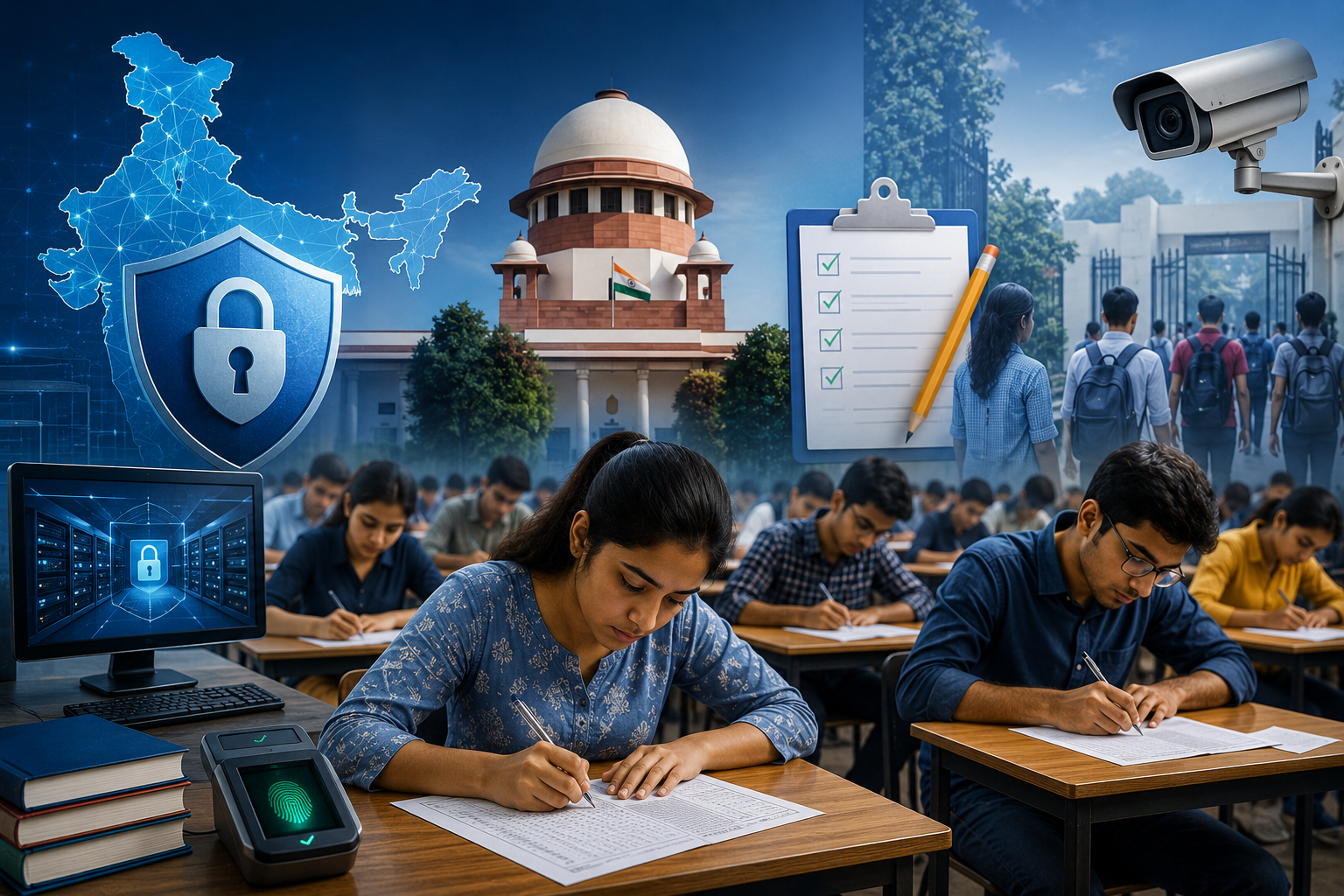
From Paper Leak Controversies to AI-Powered Security, the 2024 Expert Committee Laid the Foundation for a More Transparent and Technology-Driven Examination Ecosystem
India's examination system is undergoing one of its biggest transformations in decades as the government continues implementing sweeping reforms aimed at restoring trust in national entrance examinations. The latest announcement of a high-powered task force led by Infosys co-founder Nandan Nilekani to modernise examination processes has once again brought attention to the landmark recommendations of the Radhakrishnan Committee, which was constituted in 2024 following major controversies surrounding the National Testing Agency (NTA).
The committee, chaired by former ISRO Chairman Dr K. Radhakrishnan, was established to examine the functioning of the NTA after allegations of question paper leaks and irregularities in some of India's most important competitive examinations, including NEET-UG and UGC-NET. Its mission was not merely to address immediate concerns but to redesign the country's examination framework for the long term.
After months of consultation with education experts, government agencies, universities, cyber-security professionals and technology specialists, the committee submitted a comprehensive report containing 101 recommendations designed to strengthen examination integrity, improve governance and leverage technology to safeguard the future of competitive examinations.
Nearly two years later, many of these reforms have already been implemented, while others continue to be rolled out in phases.
Background: Why the Committee Was Constituted
The Ministry of Education constituted the High-Level Committee of Experts (HLCE) in June 2024 following growing public concern over the security and credibility of examinations conducted by the National Testing Agency.
The committee was tasked with reviewing every aspect of the examination ecosystem, including:
-
Governance and organisational structure.
-
Question paper security.
-
Digital infrastructure.
-
Data protection.
-
Candidate authentication.
-
Standard operating procedures.
-
Monitoring and accountability mechanisms.
The primary objective was to ensure that future examinations remain fair, transparent and resistant to malpractice.
The Events That Triggered the Reform Process
The committee's formation was prompted by a series of high-profile controversies that shook public confidence.
Key Incidents
-
Alleged paper leak in UGC-NET 2024, leading to cancellation of the examination.
-
Allegations of irregularities during NEET-UG 2024.
-
Concerns regarding cyber security and examination logistics.
-
Widespread criticism over examination management.
-
Growing calls for structural reforms within the NTA.
The incidents highlighted vulnerabilities that required immediate policy intervention.
A Comprehensive Blueprint for Reform
The committee submitted its report titled:
"The Reformation of National Common Entrance Testing in India"
The report included:
-
101 recommendations
-
46 strategic action points
Rather than focusing solely on examination security, the report proposed a complete transformation of India's national testing framework.
Rebuilding the National Testing Agency
A central theme of the report was strengthening the institutional capacity of the NTA.
Major Organisational Recommendations
-
Recruit permanent technical and administrative staff.
-
Reduce dependence on outsourced manpower.
-
Create specialised divisions for examination administration.
-
Establish domain-specific expertise.
-
Improve governance and accountability.
-
Focus primarily on higher education entrance examinations.
The committee argued that a stronger institution would be better equipped to conduct examinations involving millions of candidates annually.
State Governments Given a Bigger Role
Recognising the importance of local administration, the committee recommended closer collaboration with state governments.
Recommended Administrative Structure
-
State-Level Coordination Committees.
-
District-Level Coordination Committees.
Their responsibilities include:
-
Identifying secure examination centres.
-
Coordinating with law enforcement agencies.
-
Supervising logistics.
-
Monitoring examination centres.
-
Managing emergency responses.
Government educational institutions were recommended as the preferred venues wherever possible.
Technology at the Heart of Future Examinations
The committee placed significant emphasis on leveraging technology to minimise human intervention and strengthen examination security.
Recommended Digital Reforms
-
Digi-Exam identity framework.
-
Aadhaar-based authentication.
-
Biometric verification.
-
Encrypted transmission of question papers.
-
Artificial Intelligence-based monitoring.
-
Advanced cyber-security systems.
-
Computer-adaptive testing.
-
Hybrid examination models.
These measures are designed to reduce opportunities for paper leaks, impersonation and organised malpractice.
Comprehensive Security Framework
The committee recommended security enhancements throughout the examination lifecycle.
Security Measures
-
Secure question paper creation.
-
Controlled printing.
-
Encrypted digital transfer.
-
GPS-monitored logistics.
-
CCTV surveillance.
-
Multi-layer frisking.
-
Secure answer-sheet custody.
-
Digital audit trails.
The aim is to establish multiple layers of protection rather than relying on a single security mechanism.
Monitoring Implementation
To ensure recommendations are translated into action, the committee proposed creating a dedicated implementation body.
Accordingly, the Ministry of Education established a High-Powered Steering Committee in November 2024, again chaired by Dr K. Radhakrishnan.
The committee continues monitoring implementation across various government departments and examination agencies.
Major Reforms Already Implemented
Government updates indicate substantial progress.
Key Achievements
-
Creation of 16 senior-level posts within the NTA.
-
Aadhaar-based biometric authentication.
-
AI-powered data analytics.
-
Expanded CCTV surveillance.
-
Mobile signal jammers.
-
Improved grievance redressal mechanisms.
-
Stronger cyber-security infrastructure.
-
Enhanced examination monitoring.
These reforms have already been introduced across major national examinations.
Government Institutions Now Dominate Examination Centres
One of the committee's important recommendations was increasing the use of government institutions as examination venues.
According to government data:
-
More than 99.5% of NEET-UG 2026 examination centres were government institutions.
This shift improves oversight while reducing dependence on private infrastructure.
Artificial Intelligence Becoming a Key Safeguard
AI is now playing an increasingly important role in examination management.
Current applications include:
-
Candidate verification.
-
Fraud detection.
-
Pattern recognition.
-
Data analytics.
-
Security monitoring.
-
Risk assessment.
The government intends to expand AI capabilities in future examination cycles.
Reforms Still in Progress
Several long-term recommendations continue to be implemented.
Upcoming Initiatives
-
Multi-session examinations.
-
Computer-adaptive testing.
-
Nationwide harmonisation of entrance examinations.
-
Enhanced cyber-security architecture.
-
AI-based predictive monitoring.
-
Integrated digital examination platforms.
These reforms are expected to be introduced gradually after consultation with stakeholders.
How the Nilekani Task Force Fits In
The recently announced task force headed by Nandan Nilekani represents the next phase of examination reforms.
It is expected to focus on:
-
End-to-end digital transformation.
-
AI-enabled governance.
-
Secure examination technology.
-
Advanced authentication systems.
-
Digital public infrastructure for examinations.
The initiative builds directly upon the institutional reforms recommended by the Radhakrishnan Committee.
Significance for Students
India conducts some of the world's largest competitive examinations every year, with millions of candidates competing for limited educational opportunities.
A stronger examination system benefits students by:
-
Enhancing transparency.
-
Reducing malpractice.
-
Improving fairness.
-
Building public confidence.
-
Strengthening merit-based admissions.
These reforms are expected to create a more reliable testing environment for future generations.
Challenges That Remain
Despite significant progress, experts caution that successful implementation requires sustained effort.
Key Challenges
-
Nationwide digital infrastructure.
-
Capacity building.
-
Cyber-security preparedness.
-
Uniform implementation across states.
-
Technology integration.
-
Continuous monitoring and audits.
Maintaining examination integrity will require ongoing investment and coordination.
The Road Ahead
India's examination system is steadily transitioning from a largely paper-based administrative framework to a technology-driven, data-secure and AI-enabled ecosystem. While complete transformation will take time, the reforms initiated by the Radhakrishnan Committee and now being expanded through the Nilekani-led task force represent one of the most ambitious overhauls of public examination governance in the country's history.
If implemented successfully, these initiatives could significantly reduce examination malpractice while improving transparency, operational efficiency and public trust.