Over 300,000 People Evacuated, Historic Fires Threaten Major Cities and Expose the Growing Economic Impact of Climate Change
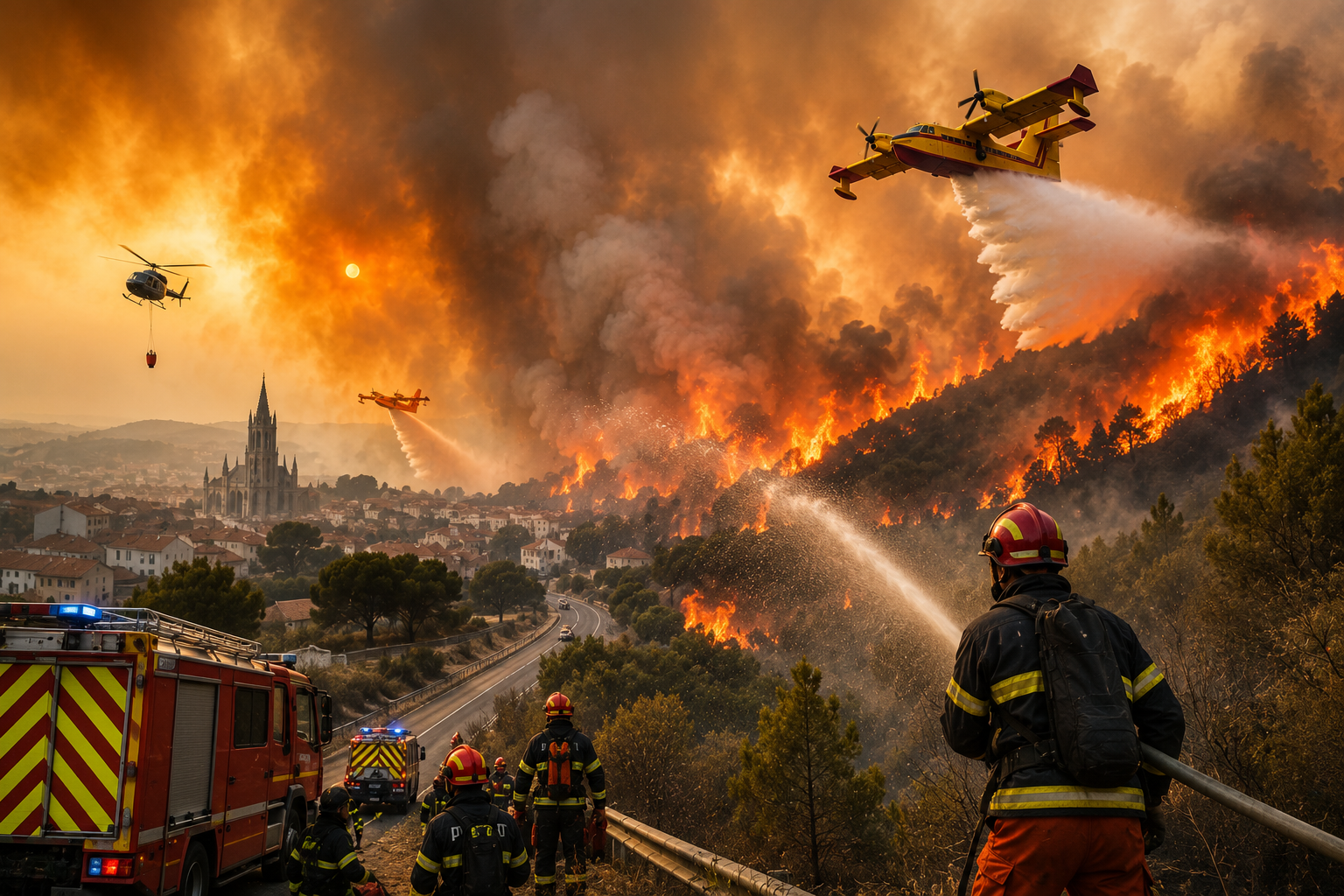
Southern Europe is confronting one of its most severe wildfire emergencies in recent history as massive blazes continue to spread across France and Spain, forcing the evacuation of more than 300,000 people and destroying vast stretches of forests, farmland and rural communities. With temperatures expected to climb further this week, emergency authorities have warned that firefighting efforts are becoming increasingly difficult as strong winds, dry vegetation and prolonged heatwaves fuel rapidly expanding fires.
The crisis has disrupted transport networks, damaged critical infrastructure and raised concerns over public health, agriculture and tourism, while climate experts warn that extreme weather events are becoming more frequent and more destructive across Europe.
Wildfire Near Bordeaux Raises Fresh Concerns in France
One of the most critical wildfire fronts is burning in France's Gironde region, where firefighters are battling an unpredictable blaze that continues to spread toward Bordeaux, one of the country's largest urban centres.
Authorities say the fire has become increasingly difficult to control due to rapidly changing wind conditions and extremely dry vegetation.
Emergency officials have not ruled out the possibility that the flames could move closer to populated areas if weather conditions deteriorate further.
Thousands of firefighters, emergency personnel and aerial firefighting units remain deployed as authorities race to contain the advancing fire before stronger heat arrives later in the week.
Spain Records Largest Wildfire in Its Modern History
Spain is witnessing an unprecedented wildfire season, with several large fires burning simultaneously across central and eastern parts of the country.
The most destructive blaze is located in Ávila province, southwest of Madrid, where nearly 50,000 hectares have already been consumed by fire, making it the largest wildfire ever recorded in Spain.
Across central Spain, fires have spread over approximately 77,000 hectares, while another major wildfire continues burning north of the Mediterranean city of Valencia.
Large forest areas, agricultural land and rural settlements have suffered extensive damage as firefighters continue efforts to prevent further expansion.
Mass Evacuations Across Both Countries
Authorities in France and Spain have launched one of the largest evacuation operations seen in recent years.
Emergency Situation at a Glance
-
More than 300,000 people evacuated across France and Spain.
-
Around 60,000 residents evacuated from affected regions in Spain.
-
Nearly 30,000 people instructed to remain indoors because of smoke and dangerous fire conditions.
-
41 highways closed across Spain.
-
More than 1,500 military personnel deployed to assist firefighters and emergency services.
Evacuation orders remain in place across several high-risk zones as authorities continue monitoring weather developments.
Extreme Heat Continues to Fuel Fire Behaviour
Meteorological agencies expect temperatures to rise further over the coming days, creating ideal conditions for wildfires to intensify.
Officials warn that several fires have become so powerful they are generating their own weather systems, producing unpredictable winds and rapidly changing fire directions.
These fire-induced microclimates make traditional firefighting strategies significantly less effective and increase risks for emergency responders.
The combination of:
-
High temperatures,
-
Low humidity,
-
Strong winds,
-
Dry forests, and
-
Long-term drought conditions
continues to create one of the most dangerous wildfire environments experienced in Europe in recent years.
Climate Change Increasing Wildfire Frequency
Climate scientists say the current wildfire emergency reflects broader changes in global weather patterns.
Spain experienced three intense heatwaves between June and mid-July, while unusually dry conditions followed an exceptionally wet winter that encouraged dense vegetation growth.
Once temperatures surged, this vegetation quickly became fuel for fast-moving fires.
Experts note that climate change is contributing to:
-
Earlier wildfire seasons.
-
Longer periods of extreme heat.
-
Reduced soil moisture.
-
Increased drought frequency.
-
More frequent large-scale wildfires.
These changing climate conditions are making wildfire management increasingly challenging across Southern Europe.
Smoke Creates Public Health Emergency
Beyond the immediate fire zones, smoke from the wildfires has significantly reduced air quality across several cities.
Residents in and around Madrid experienced hazardous air quality during the weekend as smoke spread into urban areas.
Health authorities have advised vulnerable groups—including children, senior citizens and individuals with respiratory illnesses—to remain indoors until conditions improve.
Poor air quality has also raised concerns about long-term health impacts if the fires continue for an extended period.
Heavy Damage to Forests, Agriculture and Wildlife
Although assessments are still underway, environmental damage is expected to be substantial.
The fires have destroyed:
-
Thousands of hectares of forest.
-
Agricultural land.
-
Wildlife habitats.
-
Rural infrastructure.
-
Recreational areas.
-
Tourist destinations.
Many affected ecosystems could require decades to recover fully, while biodiversity losses may prove irreversible in certain regions.
Farmers are also expected to suffer significant crop and livestock losses, adding further economic pressure on local communities.
Economic Impact Extends Beyond Fire Zones
The wildfire crisis is expected to have broader economic consequences across several industries.
Sectors Likely to Be Affected
-
Tourism and hospitality.
-
Agriculture.
-
Insurance.
-
Transportation.
-
Forestry.
-
Energy infrastructure.
-
Local retail businesses.
Insurance companies may face a sharp rise in claims related to property damage, while governments could incur billions of euros in emergency response, rebuilding and environmental restoration costs.
The disruption to tourism during the peak summer season may also weigh on regional economic activity.
Experts Call for Greater Investment in Wildfire Prevention
Environmental experts argue that preventing future disasters will require a significant increase in long-term investment.
Recommended measures include:
-
Forest thinning and vegetation management.
-
Expansion of firebreak networks.
-
Early wildfire detection technologies.
-
Improved aerial firefighting capacity.
-
Climate adaptation projects.
-
Better emergency planning.
-
Community awareness programmes.
Experts believe proactive forest management could substantially reduce wildfire intensity and limit future economic losses.
Europe Faces a New Climate Reality
The current emergency follows another devastating wildfire season across Europe, where more than one million hectares reportedly burned last year.
Scientists increasingly warn that rising global temperatures are changing the continent's climate profile, making extreme weather events more frequent and more severe.
Southern European nations—including France, Spain, Portugal, Italy and Greece—are expected to remain particularly vulnerable to prolonged heatwaves and destructive wildfires in the coming decades.
Global Markets Monitor Climate Risks
Beyond the humanitarian crisis, investors are paying closer attention to the growing financial implications of climate-related disasters.
Large-scale wildfires can influence:
-
Agricultural commodity prices.
-
Insurance sector profitability.
-
Infrastructure spending.
-
Renewable energy investments.
-
Forestry and timber industries.
-
Government fiscal expenditure.
As climate risks become more material, global financial markets are increasingly incorporating environmental resilience into long-term investment decisions.