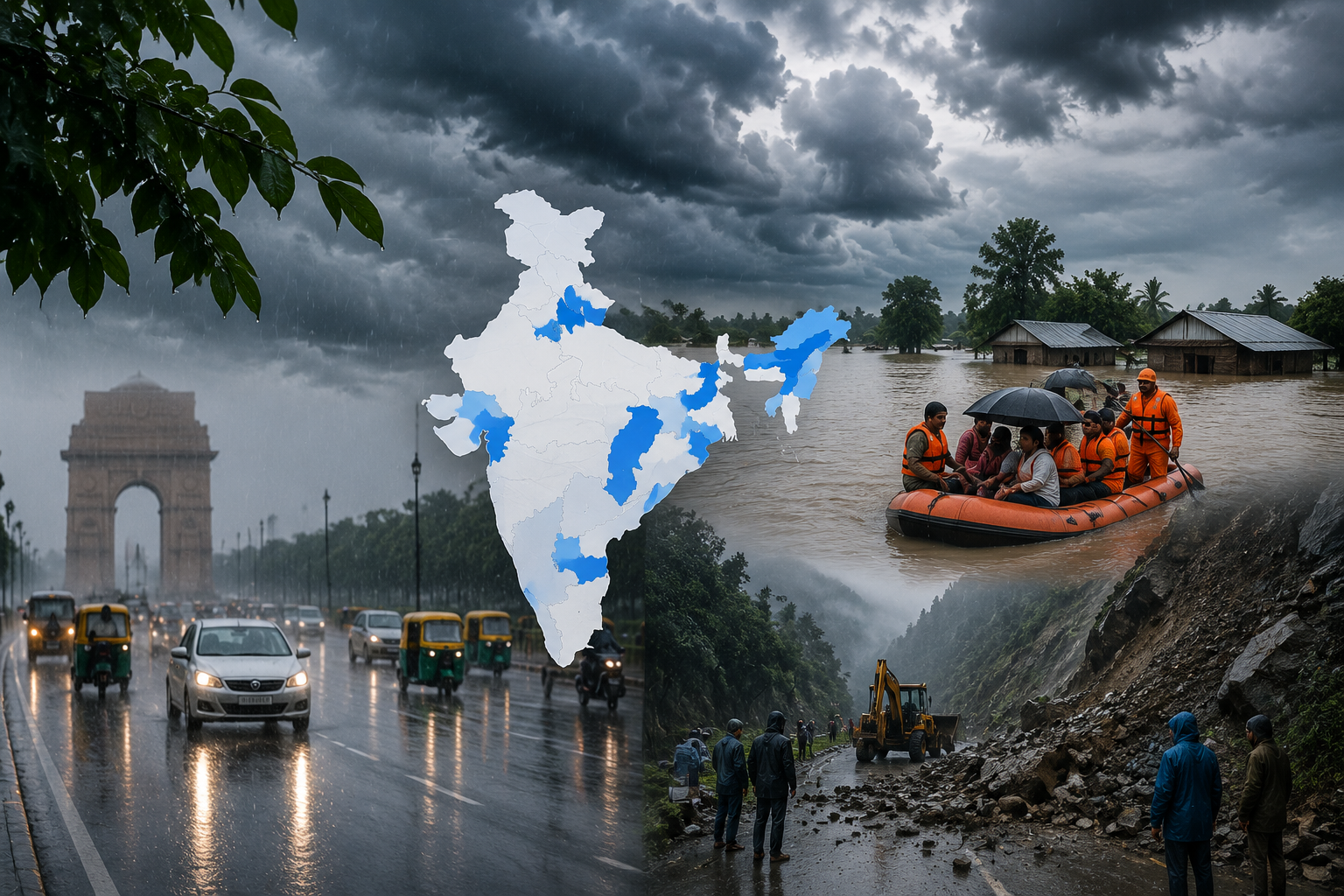
IMD Issues Heavy Rainfall Alerts for Multiple States; Flash Floods, Landslides and Transport Disruptions Raise Concerns as Monsoon Enters an Intense Phase
India's southwest monsoon has entered one of its most active phases, bringing widespread rainfall across northern, western, central and northeastern regions of the country. The national capital, Delhi, witnessed a rainy start to Wednesday with cloudy skies and intermittent showers, while the India Meteorological Department (IMD) forecast more rain, thunderstorms and gusty winds through the day.
At the same time, several states are battling severe weather-related disruptions. Assam continues to face one of the worst flood situations of the season, with rising river levels affecting more than five lakh people, while Jammu & Kashmir is grappling with landslides, flash floods and the suspension of major pilgrimage routes following relentless rainfall.
The IMD has warned that heavy to extremely heavy rainfall is likely to continue across several parts of the country over the next few days, prompting state governments and disaster management agencies to remain on high alert.
Delhi Gets Relief from Heat but Faces Waterlogging Risk
After days of humid weather, residents of Delhi woke up to pleasant temperatures as rain showers covered large parts of the city during the early morning hours.
The rainfall helped lower temperatures and improve air quality, but it also increased the likelihood of:
-
Waterlogging in low-lying areas
-
Traffic congestion during office hours
-
Delays in public transport
-
Localized flooding in vulnerable zones
According to the IMD, Delhi is expected to experience light to moderate rainfall throughout the day, with isolated heavy spells accompanied by thunderstorms, lightning and strong winds.
Authorities have advised commuters to remain cautious during peak travel hours due to reduced visibility and slippery road conditions.
Weather Conditions to Remain Pleasant
The continuous cloud cover is expected to keep temperatures below normal for this time of the year.
The IMD forecasts:
-
Maximum Temperature: 31°C–33°C
-
Minimum Temperature: 24°C–26°C
The combination of moderate rainfall and lower temperatures is expected to provide temporary relief from heat stress, although humidity levels are likely to remain elevated.
IMD Extends Heavy Rainfall Warning Across India
The weather department has predicted widespread rainfall activity across several regions as the monsoon system remains vigorous.
North India
Heavy rainfall is expected across:
-
Delhi-NCR
-
Punjab
-
Haryana
-
Uttar Pradesh
-
Himachal Pradesh
-
Uttarakhand
-
Jammu & Kashmir
Very heavy rainfall in hilly states could increase the risk of:
-
Landslides
-
Flash floods
-
Road blockages
-
River overflow
-
Damage to public infrastructure
Rajasthan Faces Extremely Heavy Rainfall
The IMD has issued an alert for East Rajasthan, where isolated places may receive extremely heavy rainfall.
Such intense downpours can lead to:
-
Urban flooding
-
Crop damage
-
River swelling
-
Waterlogging
-
Traffic disruptions
Disaster management teams have been instructed to closely monitor rainfall intensity and respond quickly to emergencies.
Central India to Receive Widespread Showers
Monsoon activity is expected to remain strong across central India.
States likely to witness widespread rainfall include:
-
Madhya Pradesh
-
Chhattisgarh
-
Vidarbha
The rainfall is expected to support Kharif crop cultivation by improving soil moisture, although excessive precipitation in certain districts may create localized flooding.
Eastern India Continues Under Monsoon Influence
The eastern part of the country is also expected to receive widespread rainfall.
Affected states include:
-
Bihar
-
Jharkhand
-
West Bengal
-
Odisha
-
Sikkim
The rainfall is likely to improve reservoir levels while also increasing the risk of river flooding in low-lying districts.
Heavy Rain Alert for Western India
The western coastline remains under an active monsoon system.
Heavy rainfall has been forecast across:
-
Gujarat
-
Konkan
-
Goa
-
Marathwada
-
Parts of Maharashtra
Strong winds and rough sea conditions have prompted authorities to advise fishermen against venturing into the Arabian Sea.
Transportation services may also experience temporary disruptions due to continuous rainfall.
Southern States Continue to Receive Beneficial Rainfall
The IMD has forecast widespread rainfall across southern India, including:
-
Karnataka
-
Kerala
-
Tamil Nadu
-
Telangana
-
Andhra Pradesh
The rains are expected to improve water availability, replenish reservoirs and support agricultural activities across the region.
Northeast Remains the Worst-Affected Region
The Northeast continues to witness one of the most intense phases of this year's monsoon.
The IMD expects widespread rainfall over:
-
Assam
-
Meghalaya
-
Arunachal Pradesh
-
Nagaland
-
Manipur
-
Mizoram
-
Tripura
Continuous rainfall has caused several rivers to flow above danger levels, increasing the risk of further flooding.
Assam Flood Crisis Worsens
Flood conditions in Assam have deteriorated significantly following relentless rainfall across the Brahmaputra basin.
According to the Assam State Disaster Management Authority (ASDMA):
-
Flood-related deaths have risen to 31 this year.
-
21 fatalities were reported in the last 24 hours alone.
-
More than 5.64 lakh people have been affected.
-
Around 872 villages remain submerged.
-
Floodwaters have spread across 16 districts.
Thousands of displaced families have been shifted to relief camps, while rescue teams continue evacuation and relief operations.
Large areas of agricultural land remain underwater, raising concerns over crop losses and rural livelihoods.
Rail Connectivity Disrupted
Floodwaters have submerged railway tracks in several districts of Assam.
Train services have remained disrupted for a second consecutive day, affecting both passenger travel and freight movement.
Railway authorities are continuously monitoring water levels before restoring normal operations.
Jammu & Kashmir Battles Landslides and Flash Floods
Heavy rainfall has severely disrupted normal life across several districts of Jammu & Kashmir.
Persistent downpours have triggered:
-
Landslides
-
Flash floods
-
Road closures
-
Power supply interruptions
-
Damage to infrastructure
The districts of Poonch, Rajouri and Doda have been among the worst affected.
Emergency response teams remain deployed to assist affected communities.
Pilgrimages Temporarily Suspended
Authorities have suspended several major pilgrimage routes as a precautionary measure.
These include:
-
Amarnath Yatra
-
Vaishno Devi Yatra
-
Shiv Khori Yatra
-
Machail Mata Yatra
Officials cited continuous rainfall, unstable terrain and heightened flash flood risks as reasons for the temporary suspension.
The decision prioritizes the safety of thousands of pilgrims visiting the region during the monsoon season.
Disaster Management Agencies on High Alert
State governments and disaster management authorities have intensified preparedness measures across vulnerable regions.
Emergency teams remain on standby to respond to:
-
Flood emergencies
-
Landslides
-
Building collapses
-
Urban flooding
-
Rescue operations
-
Medical assistance
Authorities have urged residents to closely follow official advisories and avoid travelling through flood-prone or landslide-prone areas unless absolutely necessary.
Monsoon Brings Economic Opportunities and Risks
The southwest monsoon remains one of the most important drivers of India's economy.
Positive Impact
-
Improved reservoir storage.
-
Better groundwater recharge.
-
Healthy Kharif crop prospects.
-
Stronger rural income.
-
Higher agricultural productivity.
Negative Impact
-
Flood-related infrastructure damage.
-
Crop losses in affected regions.
-
Supply chain disruptions.
-
Transportation delays.
-
Tourism slowdown.
-
Increased insurance claims.
The balance between beneficial rainfall and excessive precipitation will determine the overall economic impact of this year's monsoon.
Sectors Likely to Be Impacted
Market participants will closely monitor rainfall trends and their impact on various industries.
Agriculture
Improved soil moisture supports sowing, although excessive rainfall could damage standing crops.
Infrastructure
Construction activity may slow temporarily due to persistent rainfall.
Insurance
Flood-related claims may increase significantly.
Transportation
Railways, aviation and road logistics may continue facing disruptions.
FMCG
Rural demand may improve if rainfall remains well distributed.
Power
Hydropower generation could benefit from higher reservoir levels.
What Investors Should Watch
Over the coming days, markets will monitor:
-
IMD rainfall updates.
-
Reservoir water levels.
-
Crop sowing progress.
-
Flood damage assessments.
-
Food inflation trends.
-
Government relief measures.
-
Infrastructure restoration.
-
Insurance sector exposure.
These factors will influence both economic activity and market sentiment during the remainder of the monsoon season