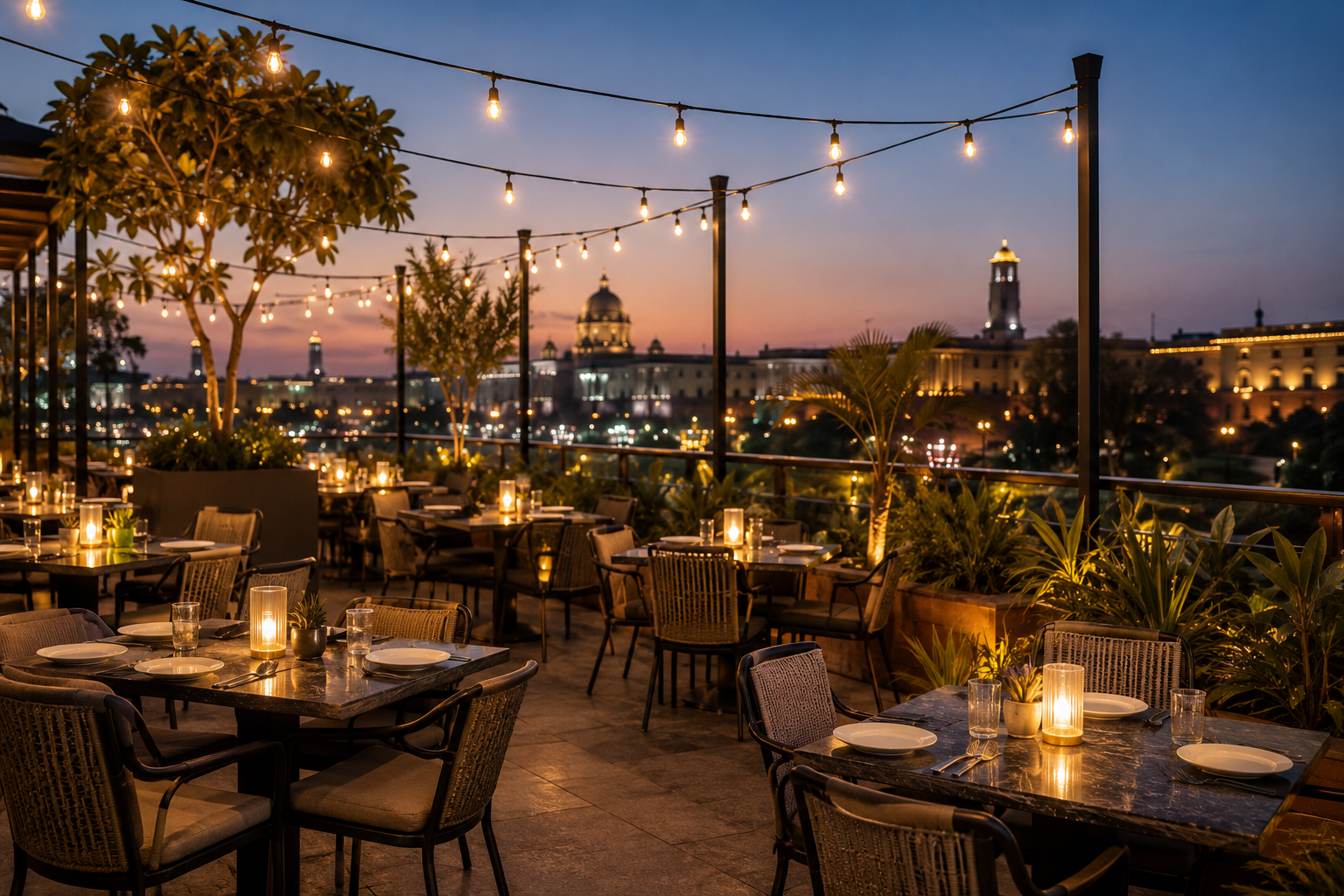
Despite Nearly 1,500 Restaurants Offering Outdoor Seating, Regulatory Hurdles, High Compliance Costs and Infrastructure Challenges Continue to Slow Adoption
More than four years after the introduction of Delhi's Open Dining Policy, the capital's ambition of becoming a vibrant café and outdoor dining destination remains far from reality. While nearly 1,500 restaurants and cafés across Delhi have created outdoor seating spaces, only around 70 establishments currently possess valid licences, highlighting the significant implementation gap between policy objectives and industry participation.
Launched to encourage tourism, strengthen the hospitality industry and create more lively public spaces, the policy was expected to simplify approvals and promote a modern urban dining culture. However, restaurant owners continue to face multiple administrative, financial and operational challenges that have discouraged wider adoption.
Industry experts believe that unless licensing procedures become simpler and urban infrastructure improves, Delhi may struggle to fully capitalize on the growing demand for experience-based dining.
Open Dining Policy Was Designed to Transform Delhi's Hospitality Landscape
The Delhi government introduced the Open Dining Policy with the objective of creating vibrant commercial districts while encouraging restaurants and cafés to utilize outdoor spaces more effectively.
The initiative sought to:
-
Promote café culture.
-
Improve tourism appeal.
-
Boost restaurant revenues.
-
Generate employment.
-
Encourage pedestrian-friendly commercial areas.
-
Enhance urban aesthetics.
Inspired by successful outdoor dining models in several international cities, the policy aimed to transform Delhi into a more attractive destination for residents and tourists alike.
Large Gap Between Outdoor Seating and Licensed Establishments
Although outdoor seating has become increasingly popular among restaurants, official licensing has remained limited.
Current estimates indicate:
-
Approximately 1,500 eateries offer outdoor seating.
-
Only around 70 restaurants currently possess valid licences.
This wide disparity suggests that many businesses continue operating without formal approvals or have chosen not to apply because of regulatory complexities.
Industry representatives argue that the policy's objectives have been undermined by cumbersome implementation rather than lack of interest.
Restaurant Owners Continue to Face Multiple Regulatory Challenges
Hospitality businesses point to several issues that continue restricting wider participation.
Multiple Government Approvals
Restaurant owners often need permissions from several agencies before obtaining operational approval.
Lengthy Administrative Process
Approval timelines remain unpredictable, delaying business expansion plans.
Frequent Compliance Requirements
Businesses face repeated documentation, inspections and regulatory obligations.
Inconsistent Interpretation of Rules
Different authorities may apply varying standards across municipal jurisdictions.
Collectively, these factors increase both uncertainty and operating costs for restaurant operators.
High Compliance Costs Affect Smaller Businesses
The financial burden associated with obtaining and maintaining licences has emerged as another major concern.
Restaurant operators must invest in:
-
Licence application fees.
-
Periodic renewals.
-
Structural modifications.
-
Design compliance.
-
Safety standards.
-
Outdoor infrastructure.
For many independent cafés and medium-sized restaurants, these costs significantly affect profitability.
As a result, several businesses have delayed formal participation despite recognizing the commercial benefits of outdoor dining.
Outdoor Dining Has Become an Important Business Strategy
Hospitality experts increasingly view outdoor seating as an essential component of customer experience rather than merely additional seating capacity.
Well-designed outdoor spaces can contribute to:
-
Increased customer footfall.
-
Longer dining duration.
-
Higher average spending.
-
Better brand visibility.
-
Stronger customer engagement.
-
Enhanced social media appeal.
As consumer preferences evolve, restaurants with attractive outdoor environments often enjoy a competitive advantage.
Weather Conditions Limit Year-Round Utilisation
Delhi's climatic conditions remain one of the biggest operational challenges for outdoor dining.
Restaurant owners must contend with:
Extreme Summer Temperatures
High heat significantly reduces customer demand during peak summer months.
Monsoon Season
Heavy rainfall limits usability of outdoor seating.
Winter Pollution
Poor air quality often discourages open-air dining during winter.
Seasonal Demand
Outdoor spaces remain commercially attractive only during limited periods of the year.
These seasonal variations make it difficult for businesses to recover the investments required for compliant outdoor infrastructure.
Urban Infrastructure Needs Significant Improvement
Industry participants also believe that better urban planning is necessary for the policy to succeed.
Current challenges include:
-
Limited pedestrian walkways.
-
Inadequate parking.
-
Traffic congestion.
-
Encroachment issues.
-
Poor streetscape design.
-
Inconsistent public space management.
Without improvements to surrounding infrastructure, outdoor dining experiences remain less attractive compared to international standards.
Tourism Industry Could Also Benefit
A successful open dining ecosystem could generate broader economic benefits beyond the restaurant industry.
Potential advantages include:
Tourism Growth
Attractive café districts encourage domestic and international visitors to spend more time exploring the city.
Local Business Activity
Greater pedestrian movement benefits nearby retail stores, entertainment venues and service providers.
Employment Creation
Higher restaurant activity supports jobs across hospitality, logistics, maintenance and event management.
Night-Time Economy
Vibrant outdoor dining districts contribute to safer and more active evening commercial zones.
Many global cities have successfully leveraged outdoor dining to stimulate urban regeneration and economic growth.
Digital Governance Could Improve Policy Implementation
Industry stakeholders believe digital reforms could significantly improve the licensing process.
Suggested measures include:
Single-Window Clearance
One centralized platform for all approvals.
Online Application Tracking
Applicants should be able to monitor approval status digitally.
Standardized Regulations
Uniform compliance requirements across all municipal zones.
Longer Licence Validity
Reducing the frequency of renewals and repeated paperwork.
Predictable Enforcement
Clear inspection schedules and transparent compliance standards.
Such reforms could reduce administrative burden while encouraging greater participation.
Experience Economy Continues to Shape Hospitality Trends
Consumer preferences are increasingly shifting toward experience-led dining.
Customers today seek:
-
Outdoor ambience.
-
Community spaces.
-
Lifestyle cafés.
-
Family-friendly environments.
-
Social gatherings.
-
Instagram-worthy locations.
This transformation has made outdoor dining an increasingly valuable business asset for modern restaurants.
Cities that successfully integrate hospitality with attractive public spaces often experience stronger tourism and local economic activity.
Industry Calls for Collaborative Policy Reform
Hospitality associations believe meaningful progress will require cooperation between:
-
Municipal authorities.
-
Urban planners.
-
Restaurant associations.
-
Tourism departments.
-
Infrastructure agencies.
A coordinated approach could help simplify regulations while balancing public safety, urban planning and commercial development.
Outlook
Delhi's Open Dining Policy reflects an ambitious vision to modernize the city's hospitality sector and create more engaging public spaces. However, the significant gap between restaurants offering outdoor seating and those holding valid licences demonstrates that regulatory complexity, compliance costs and infrastructure limitations continue to hinder widespread adoption.
As consumer demand for experience-driven dining continues to grow, simplifying approvals, digitizing licensing processes and improving urban infrastructure could unlock significant opportunities for restaurants, tourism and local businesses. Successful implementation of these reforms would not only strengthen Delhi's hospitality ecosystem but also contribute to creating more vibrant, pedestrian-friendly urban environments.