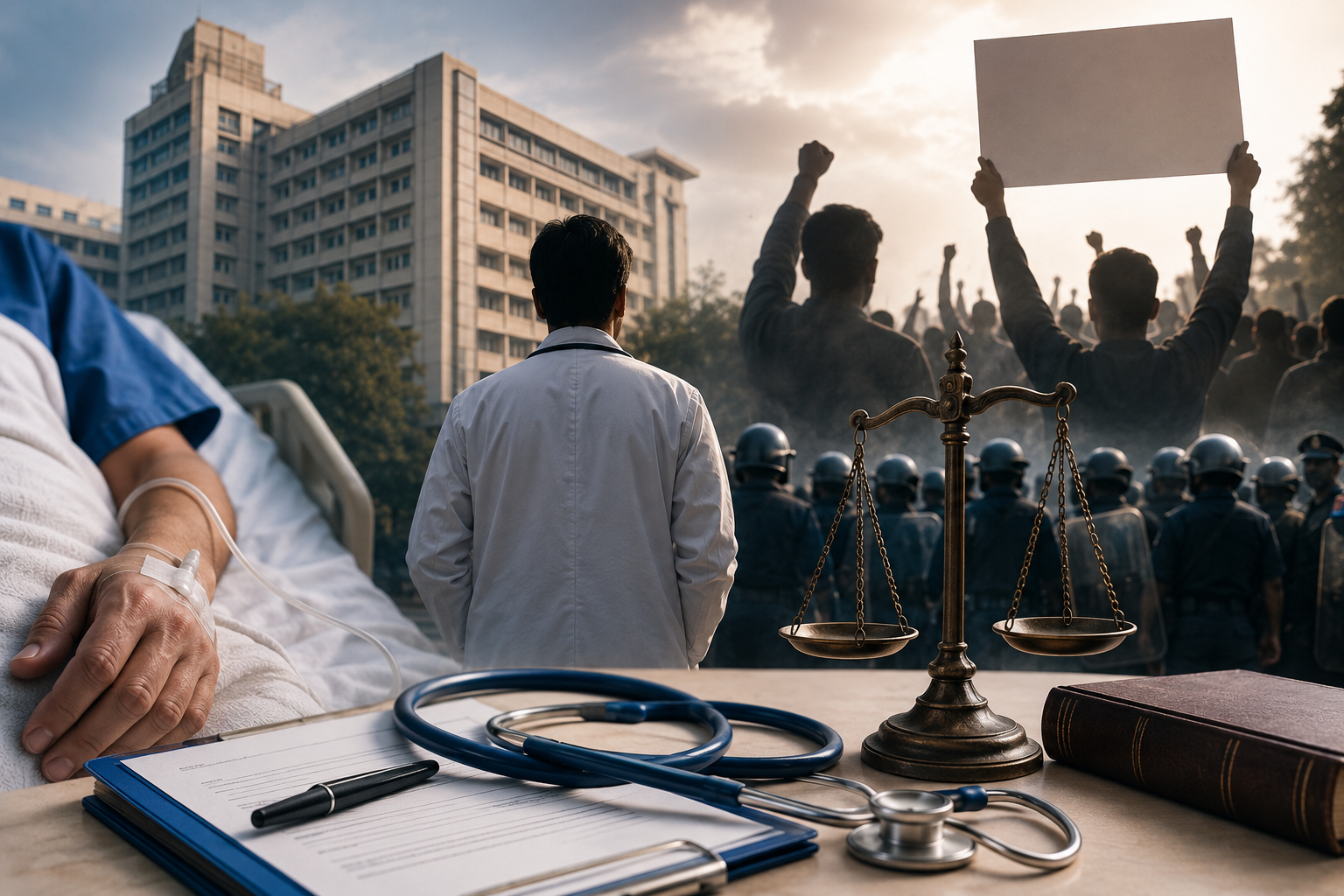
Resident Doctors Raise Concerns Over Patient Autonomy, Medical Ethics and Police Action During Jantar Mantar Protest
A fresh debate over patient rights, medical ethics and the handling of peaceful protests has emerged after the Resident Doctors' Associations (RDAs) of AIIMS Delhi and Vardhman Mahavir Medical College (VMMC) & Safdarjung Hospital appealed to President Droupadi Murmu to order an independent inquiry into the hospitalisation of climate activist Sonam Wangchuk and the police action during the Jantar Mantar protest.
The doctors have sought a time-bound investigation into reports alleging the use of force against peaceful demonstrators and questioned the circumstances under which Wangchuk reportedly remained admitted at Safdarjung Hospital despite expressing his desire to leave under Leave Against Medical Advice (LAMA).
Doctors Appeal Directly to President Murmu
In separate representations submitted to President Droupadi Murmu, both resident doctors' associations requested an impartial inquiry into the events that unfolded during the protest at Jantar Mantar.
The AIIMS RDA stated that multiple media reports, public videos and eyewitness accounts have raised concerns over the handling of peaceful demonstrators, many of whom reportedly included doctors, students and young citizens.
The associations said the inquiry should examine whether constitutional rights were respected while maintaining law and order and whether the reported actions complied with legal procedures.
Questions Raised Over Wangchuk's Continued Hospitalisation
One of the central issues highlighted by the doctors is the reported restriction on Sonam Wangchuk's ability to leave Safdarjung Hospital after he allegedly sought Leave Against Medical Advice (LAMA).
According to the resident doctors, if these reports are accurate, they raise important questions regarding patient autonomy and the ethical responsibilities of healthcare institutions.
Medical professionals emphasized that every competent adult patient has the legal and ethical right to refuse treatment or discontinue hospitalisation, except in circumstances specifically permitted under law.
The associations said any exception to this principle should be supported by transparent legal justification and due process.
Medical Ethics and Informed Consent Come into Focus
The controversy has also renewed discussions around informed consent, one of the core principles of medical ethics.
Doctors noted that informed consent allows patients to make voluntary decisions regarding their treatment after understanding the associated risks and benefits.
The associations argued that protecting patient autonomy is fundamental to maintaining public trust in the healthcare system and preserving professional medical standards.
Concerns Over Police Action at Jantar Mantar
The AIIMS Resident Doctors' Association also expressed concern over reports of police action against demonstrators during the protest.
The representation referred to allegations of:
-
Lathi charge on protesters.
-
Use of tear gas.
-
Physical force against demonstrators.
-
Detention of protesters.
The association stated that while some facts remain disputed, publicly available videos and eyewitness accounts warrant an independent investigation to establish the sequence of events.
Questions Over Police Accountability
The AIIMS RDA also pointed to reports and visuals allegedly showing police personnel with their faces and identification badges covered during the operation.
According to the doctors, such actions, if verified, could undermine transparency and accountability within law enforcement agencies.
They requested that the inquiry also examine whether standard policing protocols were followed during the protest.
Safdarjung Hospital Security Arrangements Under Scrutiny
The Resident Doctors' Association of Safdarjung Hospital expressed concern over the extraordinary security deployment inside the hospital during Wangchuk's stay.
According to the representation, reports suggested:
-
Restricted access to certain hospital areas.
-
Heavy deployment of security personnel.
-
Temporary closure of parts of the hospital.
-
Disruptions to routine hospital operations.
The association emphasized that hospitals must remain spaces dedicated to patient care and should not appear to function as extensions of law enforcement unless legally required.
Impact on Patient Care Raises Questions
The doctors also sought an examination of whether the extensive security arrangements affected routine healthcare services.
They said authorities should determine whether patients experienced delays in treatment, restricted access to hospital facilities or disruptions to normal medical operations because of the security measures.
Maintaining uninterrupted healthcare services, they argued, must remain the highest priority for public hospitals.
Call to Protect Constitutional Rights
Both doctors' associations reiterated that every citizen has the constitutional right to peaceful protest and freedom of expression.
The representations urged authorities to ensure that healthcare professionals, medical students and ordinary citizens can exercise these rights without intimidation or excessive use of force.
They also stressed that constitutional safeguards must be balanced with public order through lawful and proportionate measures.
Doctors Describe Their Appeal as Apolitical
The resident doctors clarified that their appeal is not politically motivated.
Instead, they described it as an effort to uphold:
-
Medical ethics.
-
Constitutional values.
-
Patient rights.
-
Institutional independence.
-
Rule of law.
The associations reaffirmed their commitment to providing quality healthcare while protecting the dignity and rights of every patient.
Growing Debate Over Institutional Independence
The incident has sparked broader discussions about the independence of public healthcare institutions.
Medical professionals argue that hospitals should remain neutral spaces focused solely on patient treatment and should not become associated with administrative or law enforcement actions beyond what is legally necessary.
Healthcare experts believe maintaining institutional neutrality is essential for preserving public trust in government hospitals.
President Asked to Order Independent Investigation
Among the key demands made by the associations are:
-
A time-bound independent inquiry into the events at Jantar Mantar.
-
Investigation into allegations of excessive use of force during the protest.
-
Clarification regarding the circumstances of Sonam Wangchuk's continued hospitalisation.
-
Examination of whether hospital security arrangements affected patient care.
-
Protection of constitutional rights, patient autonomy and medical ethics.
The doctors expressed confidence that the constitutional office of the President would help ensure transparency, accountability and adherence to the rule of law.
Why the Issue Matters
Legal experts note that the case brings together several important constitutional and institutional questions, including:
-
The right to peaceful protest.
-
Patient autonomy and informed consent.
-
Independence of public healthcare institutions.
-
Accountability of law enforcement agencies.
-
Protection of civil liberties.
The outcome of any inquiry could shape future administrative and legal practices concerning public protests, medical ethics and hospital governance.
Outlook
The appeals by AIIMS and Safdarjung resident doctors have added a significant institutional voice to the ongoing debate surrounding Sonam Wangchuk's hospitalisation and the events at Jantar Mantar. While authorities have yet to respond to the requests for an inquiry, the issue has reignited discussions on balancing law enforcement with constitutional freedoms, protecting patient rights and ensuring the independence of healthcare institutions.
Any official investigation or response could have wider implications for medical ethics, hospital administration and the protection of democratic rights in India.