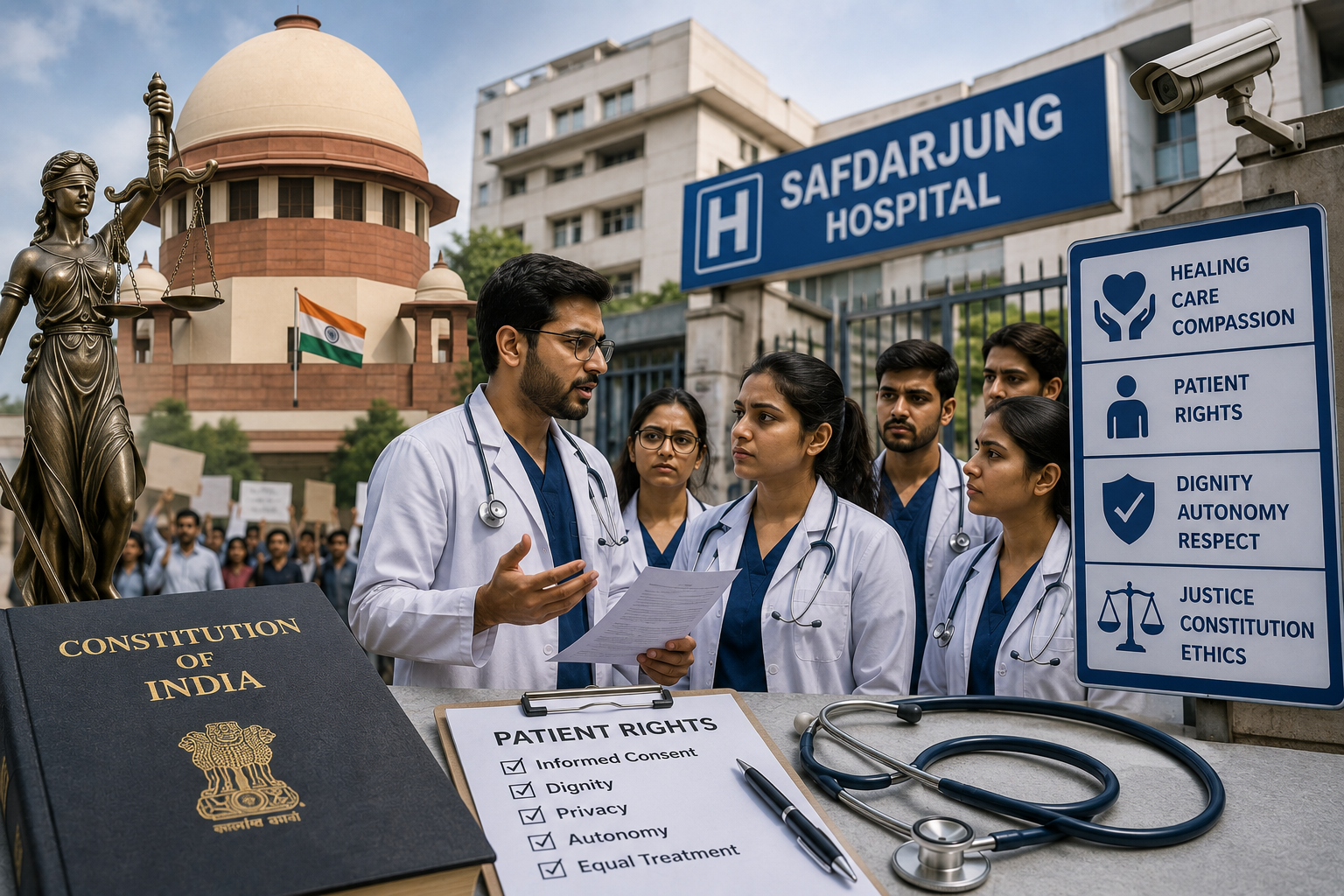
Resident Doctors Seek Independent Inquiry Into Sonam Wangchuk's Hospitalisation, Stress Medical Ethics, Constitutional Rights and Institutional Independence
The Resident Doctors' Association (RDA) of Vardhman Mahavir Medical College (VMMC) and Safdarjung Hospital has written to President Droupadi Murmu, urging intervention to safeguard patient rights, uphold medical ethics and preserve the independence of public healthcare institutions. The appeal comes amid ongoing public attention surrounding the hospitalisation of climate activist Sonam Wangchuk, who has been undergoing treatment at Safdarjung Hospital during his prolonged hunger strike.
In its formal representation, the association raised concerns over reports suggesting that Wangchuk was allegedly not permitted to seek Leave Against Medical Advice (LAMA) despite reportedly being medically competent. The doctors stated that if such reports are accurate, they warrant careful examination from the perspective of patient autonomy, constitutional protections and ethical medical practice.
The representation has sparked a broader debate on the relationship between healthcare institutions, patient rights and law enforcement, particularly in cases involving high-profile public figures.
Doctors Call for Protection of Patient Autonomy
At the centre of the association's appeal is the principle of patient autonomy.
The Resident Doctors' Association emphasised that every competent patient possesses the right to make informed decisions regarding medical treatment, including the option of leaving a hospital against medical advice after understanding the associated risks.
According to the doctors, informed consent remains one of the fundamental principles of modern healthcare and forms an essential part of ethical medical practice worldwide.
The association argued that hospitals should always respect individual dignity while ensuring that patients receive complete medical information before making decisions regarding their treatment.
Appeal Sent Directly to the President
Recognising the constitutional significance of the issue, the association addressed its concerns directly to President Droupadi Murmu.
The representation requested intervention to help uphold:
-
Constitutional rights.
-
Patient dignity.
-
Medical ethics.
-
Institutional independence.
-
Transparency in public healthcare.
The doctors also urged authorities to ensure that healthcare institutions continue functioning independently without compromising their primary responsibility of providing medical care.
Hospitals Should Remain Places of Healing
One of the strongest observations made in the representation concerns the role of hospitals in society.
The association stated that hospitals exist exclusively for the treatment and recovery of patients and should never be perceived as detention facilities except where restrictions are explicitly authorised under applicable laws and implemented through proper legal procedures.
According to the doctors, preserving this distinction is critical for maintaining public trust in government healthcare institutions.
They argued that patients should always feel confident that hospitals are environments dedicated solely to medical treatment, compassion and recovery.
Concerns Raised Over Continued Hospitalisation
The Resident Doctors' Association clarified that decisions regarding a patient's medical condition must remain based solely on independent clinical judgment.
However, the association expressed concern over reports suggesting restrictions on Wangchuk's ability to leave the hospital.
The doctors stated that every patient deserves to receive treatment with:
-
Dignity.
-
Respect.
-
Compassion.
-
Professional medical care.
At the same time, they stressed that medical decisions should remain free from external influence and should always prioritise patient welfare.
Security Arrangements Come Under Scrutiny
The representation also highlighted concerns regarding the extraordinary security deployment at Safdarjung Hospital during Wangchuk's stay.
According to the association, publicly available reports indicated:
-
Restricted movement within sections of the hospital.
-
Additional security deployment across multiple floors.
-
Limited access to certain hospital areas.
-
Possible disruption of routine medical operations.
The doctors expressed concern that if these measures affected normal healthcare services or patient access, they deserved independent evaluation.
Maintaining uninterrupted healthcare delivery, they said, should remain the foremost priority of every public hospital.
Demand for Independent Inquiry
The association has requested an impartial inquiry into the circumstances surrounding Wangchuk's hospitalisation and the security arrangements implemented at Safdarjung Hospital.
The proposed review, according to the representation, should examine:
-
The events leading to Wangchuk's admission.
-
Whether patient rights were fully respected.
-
The proportionality of security measures.
-
Any impact on hospital operations.
-
Possible disruption to patient care.
-
Compliance with medical ethics and constitutional principles.
The doctors believe that an independent examination would strengthen public confidence in healthcare institutions while ensuring accountability.
Medical Ethics Must Remain Paramount
The representation strongly reaffirmed the importance of medical ethics in every aspect of patient care.
According to the Resident Doctors' Association, healthcare professionals are bound by ethical responsibilities that include:
-
Respecting patient autonomy.
-
Obtaining informed consent.
-
Preserving confidentiality.
-
Providing equitable treatment.
-
Delivering unbiased clinical care.
The association stressed that these principles must remain applicable irrespective of a patient's public profile or the circumstances surrounding hospitalisation.
Healthcare Institutions Must Remain Independent
The doctors also highlighted the importance of preserving institutional independence.
Public hospitals, they argued, should function independently based on professional medical judgment rather than external pressures.
Maintaining this independence not only protects patient welfare but also reinforces confidence in India's public healthcare system.
The association warned that any perception of hospitals functioning beyond their medical mandate could affect public trust in healthcare institutions.
Protection Sought for Healthcare Professionals
Beyond patient rights, the association appealed for protection of healthcare workers and medical professionals.
The representation called for safeguards for:
-
Resident doctors.
-
Faculty members.
-
Medical students.
-
Healthcare professionals.
-
Citizens peacefully exercising constitutional rights.
The association emphasised that medical professionals should be able to discharge their responsibilities without intimidation or interference.
Balancing Healthcare and Public Security
The developments have once again highlighted the delicate balance between maintaining public security and protecting individual rights within healthcare settings.
Hospitals frequently provide treatment to individuals requiring additional security arrangements, particularly in high-profile cases. However, healthcare experts note that such measures should be implemented in a manner that does not compromise patient care, medical ethics or the functioning of healthcare institutions.
Finding an appropriate balance between security requirements and patient rights remains an important challenge for public authorities.
Growing Focus on Patient Rights in India
The issue has also drawn renewed attention to the broader importance of patient rights within India's healthcare system.
Medical experts increasingly emphasise that patient-centred care requires:
-
Respect for informed consent.
-
Transparent communication.
-
Clinical independence.
-
Ethical medical practice.
-
Equal treatment for all patients.
Strengthening these principles remains essential as India's healthcare infrastructure continues to expand and modernise.
What Happens Next
The representation submitted by the Resident Doctors' Association is expected to add momentum to the ongoing public discussion regarding healthcare governance, patient autonomy and institutional accountability.
Any response from constitutional authorities or further developments regarding the requested inquiry may influence future discussions on patient rights, hospital administration and the relationship between healthcare institutions and law enforcement agencies.
For now, the association has reiterated its commitment to upholding medical ethics while ensuring that hospitals continue to function as places of healing, dignity and compassionate care.