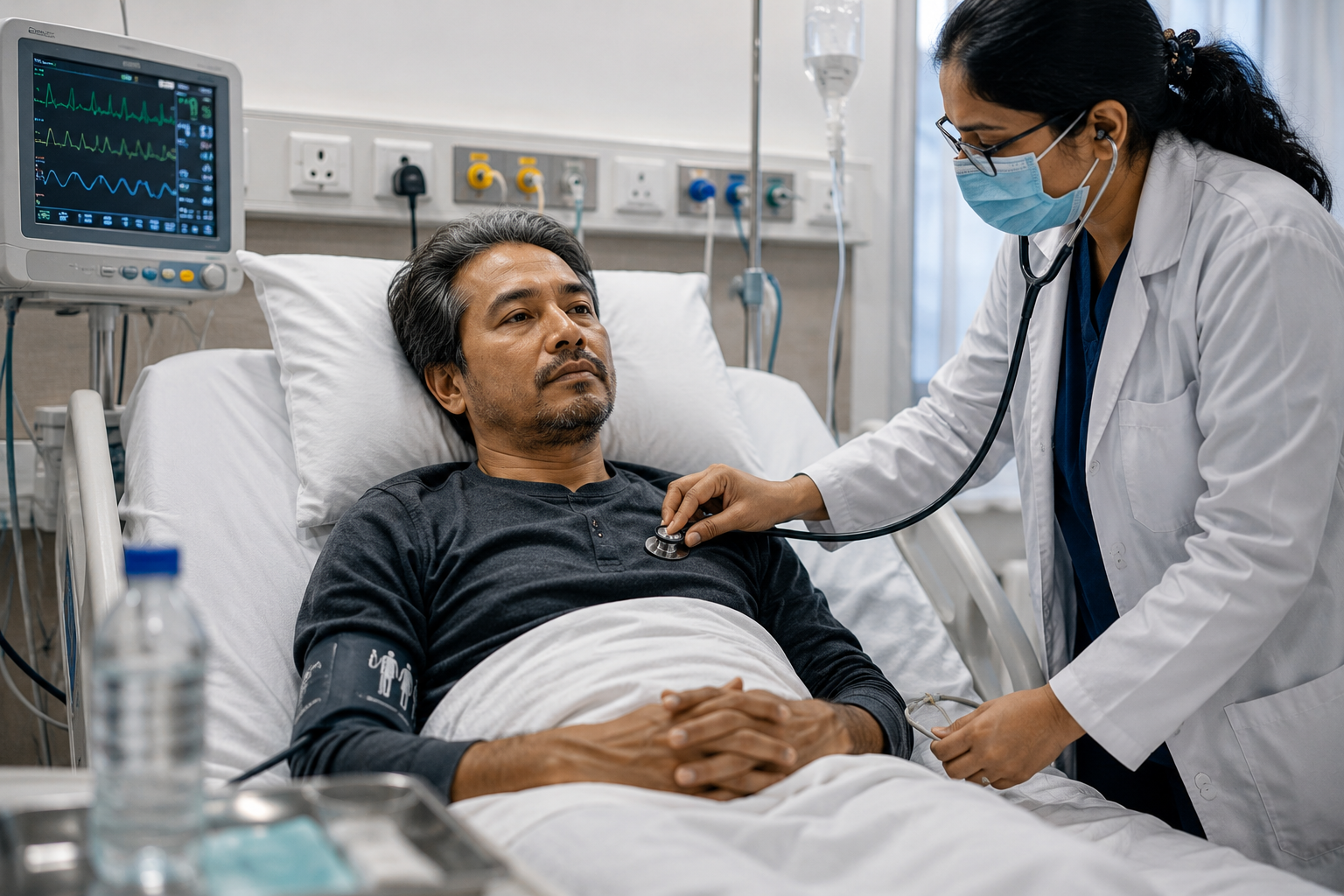
Safdarjung Hospital Reports Stable Vital Signs, While Low Blood Sugar, Electrolyte Imbalance and Blood Abnormalities Keep Activist Under Intensive Medical Supervision
Social activist and educator Sonam Wangchuk continues to remain under close medical observation at VMMC and Safdarjung Hospital, where doctors have confirmed that his vital parameters are stable but cautioned that his prolonged hunger strike continues to pose significant health risks. While his overall condition has not shown signs of immediate deterioration, hospital authorities have highlighted persistent laboratory abnormalities, dehydration and low blood sugar levels that require continuous monitoring.
The latest medical bulletin, released on Tuesday morning, stated that Wangchuk remains under the supervision of a multidisciplinary team comprising specialists from Safdarjung Hospital and AIIMS, New Delhi. Doctors have reiterated that they are providing all necessary medical care while closely tracking his condition through regular clinical assessments and laboratory investigations.
Vital Signs Stable, but Clinical Risks Remain
According to the official health bulletin, Wangchuk's vital parameters—including heart rate, blood pressure and other essential physiological indicators—remain stable despite the ongoing fast.
However, medical experts emphasised that stable vital signs should not be interpreted as an absence of risk. Prolonged fasting places continuous stress on multiple organ systems, and laboratory findings indicate that the activist remains vulnerable to complications if nutritional deficiencies and dehydration continue.
Doctors noted that the coming days will remain critical, requiring careful observation and repeated medical evaluations.
Low Blood Sugar Continues to Concern Doctors
One of the primary concerns highlighted in the medical update is Wangchuk's persistently low blood sugar level.
Extended fasting reduces the body's glucose reserves, potentially leading to symptoms such as weakness, dizziness, impaired concentration and, in severe cases, loss of consciousness.
Hospital authorities stated that although his condition remains stable, maintaining blood sugar levels continues to be one of the biggest medical challenges during the ongoing hunger strike.
Doctors have therefore advised intravenous glucose administration to reduce the risk of serious complications.
Potassium Deficiency and Blood Abnormalities Require Monitoring
The hospital also reported that Wangchuk's serum potassium level stands at 3.2 mEq/L, indicating hypokalaemia, or lower-than-normal potassium levels.
Potassium plays a vital role in maintaining:
-
Normal heart rhythm.
-
Muscle function.
-
Nerve signalling.
-
Cellular activity.
Low potassium levels can increase the risk of muscle weakness and cardiac complications if left untreated.
In addition, doctors reported persistent pancytopenia, a condition involving reduced blood cell counts, including:
-
Anaemia (low red blood cells).
-
Reduced white blood cell count.
-
Continued laboratory abnormalities requiring serial monitoring.
Medical specialists indicated that these findings underline the need for uninterrupted hospital supervision.
Patient Continues to Decline Intravenous Treatment
Hospital authorities confirmed that Wangchuk is currently accepting:
-
Oral Rehydration Solution (ORS).
-
Oral potassium supplements.
However, he continues to refuse:
-
Intravenous fluids.
-
Intravenous glucose administration.
Doctors have repeatedly advised intravenous treatment to correct dehydration and stabilise blood sugar levels, but Wangchuk has chosen to continue his fast without accepting these interventions.
Medical teams remain prepared to provide additional treatment whenever consent is obtained or if clinical circumstances require immediate intervention.
Multidisciplinary Medical Team Supervising Recovery
Given the prolonged duration of the hunger strike, Wangchuk's treatment is being managed by a specialised team of physicians from Safdarjung Hospital in collaboration with experts from AIIMS.
The multidisciplinary approach enables doctors to monitor multiple aspects of his health simultaneously, including:
-
Cardiovascular function.
-
Hydration status.
-
Electrolyte balance.
-
Blood investigations.
-
Nutritional status.
-
Organ function.
The hospital stated that future medical decisions will continue to be guided by serial laboratory investigations and the patient's overall clinical progress.
Hunger Strike Continues Over Education-Related Demands
Despite ongoing medical concerns, Wangchuk has announced that he intends to continue his indefinite hunger strike.
In a handwritten statement issued from the hospital, he said he would continue fasting until representatives of protesting students are allowed to present their concerns before Members of Parliament or until he is permitted to interact with lawmakers directly from the hospital.
He also appealed for peaceful dialogue between the government and protesting youth, urging authorities to facilitate constructive discussions instead of confrontation.
Background to the Ongoing Protest
Wangchuk has been observing the hunger strike in support of education-related demands raised by student groups.
The movement gained national attention following the "Sansad Chalo" protest in Delhi, during which clashes reportedly occurred between demonstrators and police near Parliament.
Subsequently, Wangchuk was admitted to Safdarjung Hospital after health concerns emerged during the prolonged fast.
The issue has since attracted widespread political and public attention, with education reforms remaining at the centre of the ongoing demonstrations.
Health Experts Warn About Prolonged Fasting
Medical professionals note that prolonged fasting without adequate nutritional support may result in several complications.
Potential health risks include:
-
Persistent dehydration.
-
Electrolyte imbalance.
-
Hypoglycaemia (low blood sugar).
-
Muscle wasting.
-
Reduced immunity.
-
Cardiac rhythm disturbances.
-
Organ dysfunction in prolonged cases.
Although Wangchuk's current vital signs remain stable, healthcare professionals stress that prolonged fasting requires continuous monitoring because clinical conditions can deteriorate unexpectedly.
Hospital Assures Continued Medical Care
Safdarjung Hospital has reiterated that every necessary medical facility is being made available to Wangchuk throughout his treatment.
Regular blood investigations, electrolyte monitoring, hydration assessment and specialist consultations are continuing to ensure early detection of any complications.
Hospital authorities stated that all future treatment decisions will depend upon his evolving clinical condition and repeated laboratory findings.
What Happens Next
Doctors are expected to continue monitoring Wangchuk's condition on a daily basis while encouraging him to accept recommended medical interventions. Meanwhile, the continuation of his hunger strike and the broader protest movement are likely to remain under close public and political scrutiny in the coming days.
Any change in his medical condition or progress in discussions between protest representatives and the government could significantly influence the course of events.