Security Tightened in Delhi After Parliament March; Protesters Say Agitation Will Continue Until Key Education Demands Are Addressed
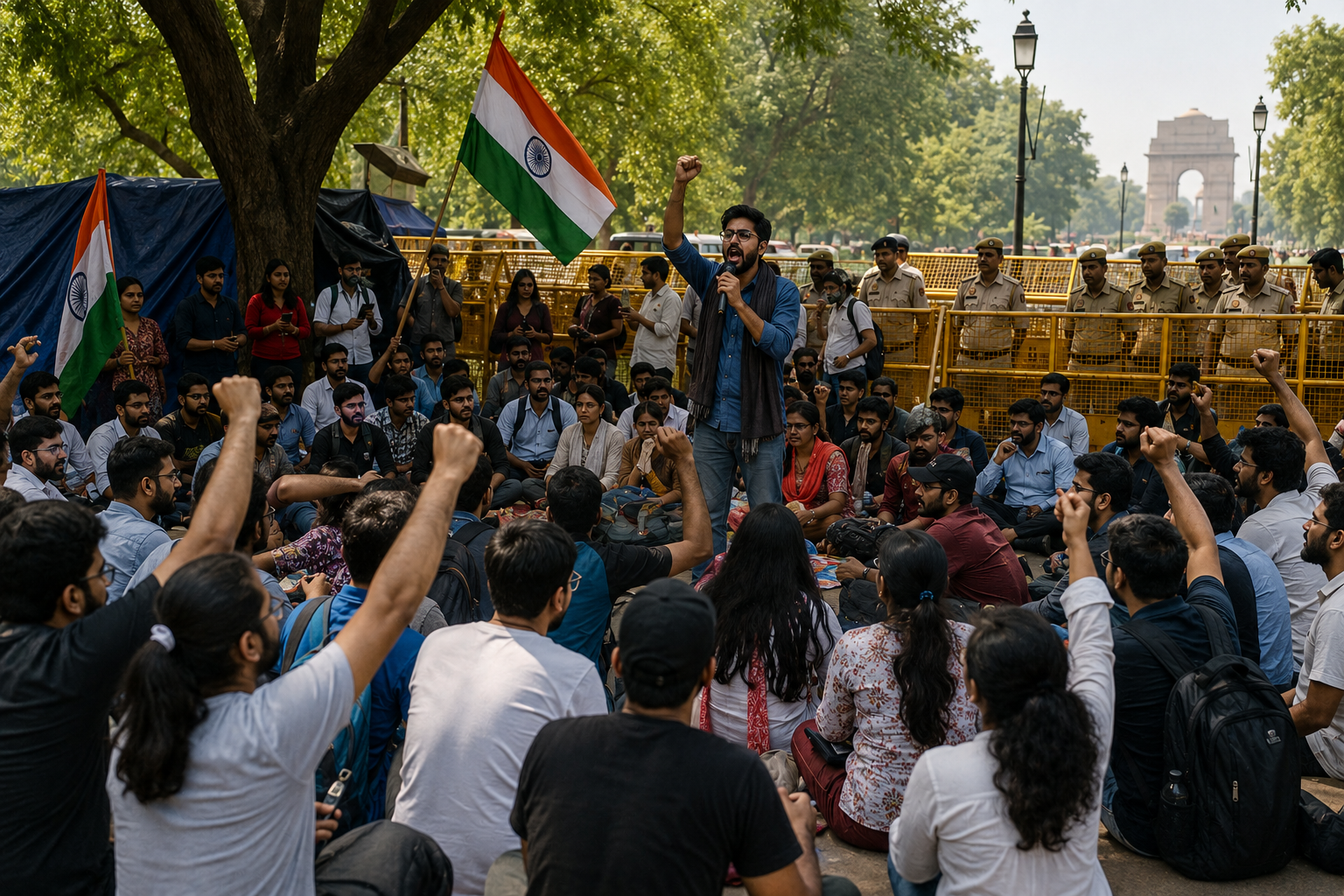
The protest at Delhi's Jantar Mantar entered its second consecutive day on Tuesday as demonstrators continued their sit-in despite heightened security arrangements and an inconclusive round of talks with the Central government. The agitation follows Monday's march towards Parliament, which witnessed clashes between protesters and police, resulting in injuries, detentions and increased security across central Delhi.
Protest organisers said they would continue their movement until their demands relating to education reforms receive a satisfactory response. The development comes at a politically significant time, coinciding with the ongoing Monsoon Session of Parliament, where education-related issues have also become a subject of debate.
Dialogue With Government Ends Without Resolution
Representatives of the protesting group held discussions with senior government officials in an attempt to resolve the standoff. However, according to protest leaders, the meeting concluded without any concrete assurance or agreement on their demands.
Following the meeting, organisers announced that they would continue their sit-in at Jantar Mantar, maintaining that further negotiations would depend on meaningful engagement from the government.
The absence of a breakthrough has prolonged the protest, with organisers claiming that additional supporters are expected to join in the coming days.
Demonstrators Continue Peaceful Sit-In
Hundreds of protesters remained at the demonstration site overnight, with volunteers organising food distribution, medical assistance and logistical support for participants.
Throughout Tuesday, slogans, public addresses and discussions continued at Jantar Mantar as organisers reiterated their commitment to pursuing their demands through peaceful means.
The protest site has become the focal point of the movement, with participants calling for continued public support while urging the government to initiate further dialogue.
Monday's March Led to Clashes With Police
The current sit-in follows the "Chalo Sansad" march organised on Monday, during which protesters attempted to move towards Parliament.
Police personnel stopped the march using barricades and crowd-control measures, leading to confrontations between security forces and sections of the protesters.
Protest leaders alleged that excessive force was used during the operation and claimed several participants sustained injuries. They also accused authorities of acting harshly against peaceful demonstrators.
Delhi Police, on the other hand, maintained that necessary action was taken to maintain law and order after protesters allegedly attempted to breach security arrangements and public movement was disrupted.
The contrasting accounts are likely to remain a key point of discussion as the incident continues to attract political attention.
Security Strengthened Across Central Delhi
Following Monday's unrest, security arrangements around Jantar Mantar and adjoining areas have been significantly intensified.
Additional police personnel have been deployed at key locations, while barricades and surveillance measures have been strengthened to prevent any fresh escalation.
According to police officials, several security personnel sustained injuries during the clashes, while a number of protesters were detained after the march. Authorities have also initiated legal proceedings in connection with alleged incidents of violence, damage to public property and stone-pelting reported during the demonstrations.
Traffic movement around parts of central Delhi has also been closely monitored to minimise disruptions.
Education Issues Continue to Drive the Protest
Education remains the central theme of the ongoing agitation.
Protesters have raised concerns regarding policy implementation, student welfare and broader reforms within the education sector. Organisers have maintained that the movement seeks greater accountability and constructive dialogue on issues affecting students and educational institutions.
The demonstrations have drawn attention to the growing importance of education policy in national political discussions, particularly during the current parliamentary session.
Monsoon Session Witnesses Political Tensions
The protest coincides with the Monsoon Session of Parliament, where opposition parties have raised several issues relating to students, examinations and governance.
The first day of the session witnessed repeated disruptions and adjournments as opposition members demanded discussions on various public issues.
Alongside these developments, the government is expected to introduce and debate several important legislative proposals during the session, making the political environment increasingly active.
Legislative Agenda Continues Amid Demonstrations
Despite the protests outside Parliament, the Centre is proceeding with its legislative schedule.
Among the significant proposals expected to come before Parliament are amendments relating to the judiciary, national honour legislation and constitutional reforms aimed at expanding parliamentary representation and enhancing women's representation.
Political analysts believe that both the legislative agenda and developments surrounding the protests are likely to remain in focus over the coming days.
Possible Impact Going Forward
With neither side indicating an immediate compromise, the protest may continue until fresh negotiations take place or a mutually acceptable solution emerges.
Authorities have appealed for peaceful demonstrations while ensuring public safety and security. Protest organisers, meanwhile, have stated that they intend to continue their sit-in while seeking broader public support for their demands.
The coming days will determine whether renewed dialogue can ease tensions or whether the demonstrations gather further momentum.