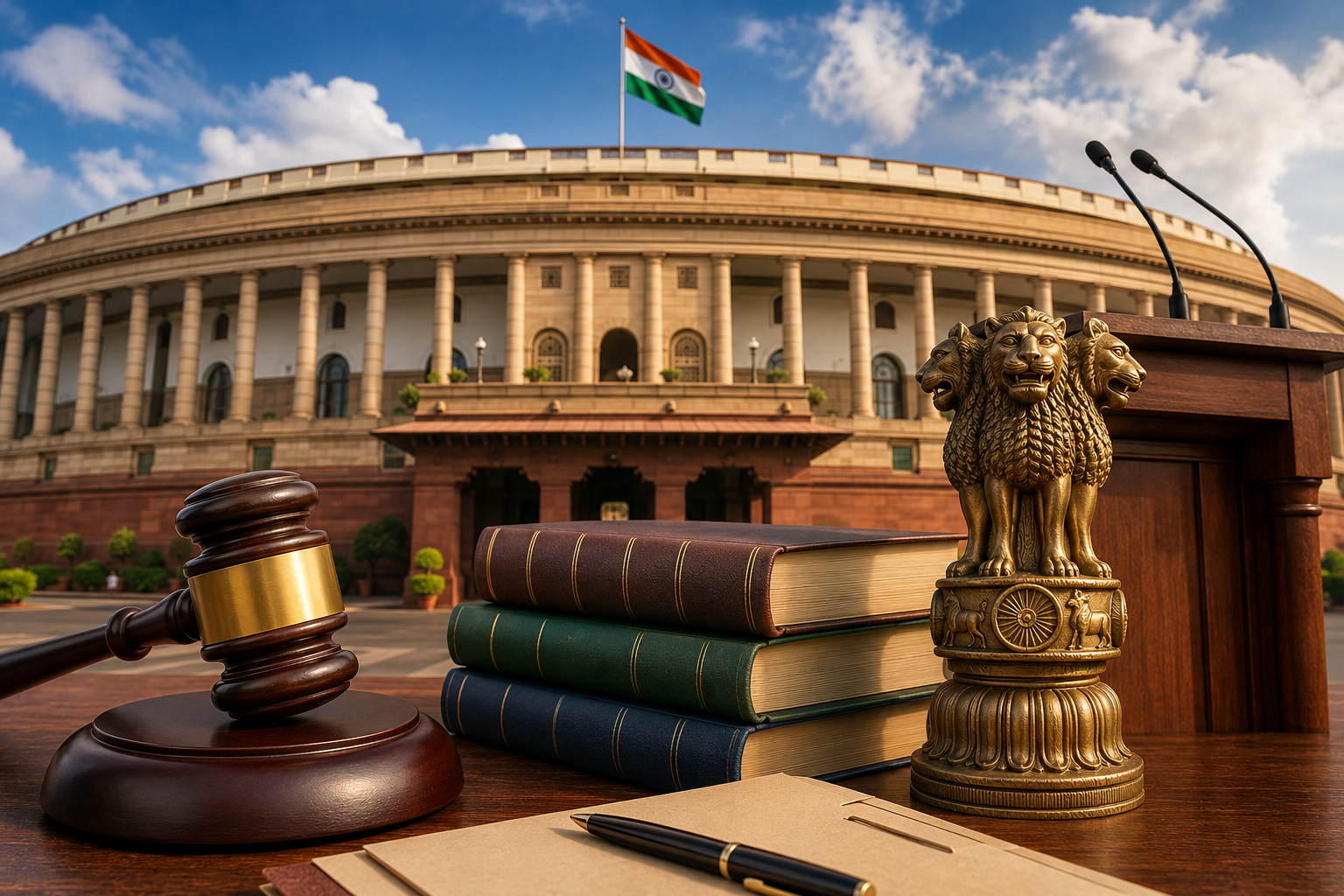
Government to Push Key Legislative Reforms While Opposition Plans to Raise NEET Leak, Ayodhya Donation Case and Other National Issues
The Monsoon Session of Parliament 2026 begins today, marking the start of nearly four weeks of legislative business, policy debates, and political confrontations that could shape the government's reform agenda for the remainder of the year. Scheduled to continue until August 13, the session is expected to witness the introduction of several important Bills, including legislation to expand the strength of the Supreme Court and amendments to the Prevention of Insults to National Honour Act.
The session also comes at a politically significant time, with the government aiming to advance judicial and governance reforms, while Opposition parties prepare to corner the Centre over issues ranging from the NEET-UG 2026 paper leak to the alleged Ayodhya Ram Temple donation embezzlement case, inflation, unemployment, and other public concerns.
For investors, businesses, and policy observers, the Monsoon Session will be closely watched for announcements that may influence India's economic and regulatory landscape.
Supreme Court Judges Amendment Bill Takes Centre Stage
Among the government's top legislative priorities is the Supreme Court (Number of Judges) Amendment Bill, 2026, which will be introduced in the Lok Sabha.
The proposed legislation seeks to increase the sanctioned strength of judges in the Supreme Court from 33 to 37, replacing the ordinance promulgated earlier this year.
The move aims to address the mounting backlog of pending cases by expanding the Court's judicial capacity. With millions of cases awaiting disposal across India's judicial system, the government believes increasing the number of judges will improve efficiency and reduce delays in the administration of justice.
Legal experts note that while expanding judicial strength is a positive step, complementary reforms such as faster appointments, improved court infrastructure, and digital modernization will also be necessary to deliver long-term improvements.
Amendment to National Honour Law Likely to Spark Debate
Another major legislative proposal expected during the session is an amendment to the Prevention of Insults to National Honour Act, 1971, to be introduced in the Rajya Sabha by Union Home Minister Amit Shah.
The proposed amendment seeks to classify any deliberate obstruction, disruption, or insult to the national song "Vande Mataram" as a punishable offence.
Supporters argue that the amendment reinforces respect for national symbols and strengthens national identity, while Opposition parties are expected to closely examine the constitutional and legal implications of the proposed legislation.
The Bill is likely to become one of the most debated issues during the session.
Lok Sabha to Begin with Obituary References and Question Hour
Proceedings in the Lok Sabha will begin with obituary references to former Members of Parliament and distinguished public figures who recently passed away.
Following the tributes, Members of Parliament will participate in the regular Question Hour, where ministers will answer questions on governance, public welfare, and government policies.
Several ministries, including Finance, Parliamentary Affairs, and Environment, are also scheduled to lay official papers before the House.
The opening day's agenda further includes ministerial statements, legislative business, and discussions under Rule 377.
Important Parliamentary Committee Appointments
Apart from legislative business, Parliament will also consider several procedural motions relating to parliamentary committees.
Key proposals include:
-
Appointment of members to the Joint Committee on Offices of Profit.
-
Election of a Rajya Sabha representative to the National Cadet Corps (NCC) Central Advisory Committee.
-
Appointment of new members to the Joint Parliamentary Committee examining the Constitution (129th Amendment) Bill and the Union Territories Laws (Amendment) Bill.
These committees play an important role in scrutinizing legislation and providing detailed recommendations before Bills receive final approval.
Opposition Gears Up for Aggressive Monsoon Session
Opposition parties have indicated that they intend to make the Monsoon Session highly eventful by raising several politically sensitive issues.
NEET-UG 2026 Paper Leak
The alleged irregularities surrounding the NEET-UG examination are expected to become one of the biggest issues in Parliament.
Opposition leaders have demanded a detailed discussion on the matter, arguing that the examination controversy has affected the careers of thousands of students.
Several notices seeking suspension of regular business have already been submitted.
Ayodhya Ram Temple Donation Allegations
Another issue expected to dominate discussions is the alleged embezzlement of donations collected for the Ram Temple in Ayodhya.
Opposition MPs are expected to demand a detailed investigation and clarification from the government regarding the reported financial irregularities.
The issue is likely to trigger sharp exchanges between the Treasury benches and the Opposition.
Additional Issues Likely to Be Raised
Apart from these headline issues, Opposition parties are also expected to raise:
-
Inflation and rising cost of living.
-
Employment generation.
-
Farmers' concerns.
-
Internal security.
-
Education reforms.
-
Federal relations between the Centre and States.
-
Economic slowdown concerns.
-
Social welfare programmes.
These subjects are expected to shape the political discourse throughout the session.
New Political Party to Make Parliamentary Debut
The Monsoon Session will also witness the first parliamentary appearance of the Nationalist Citizens Party of India (NCPI).
The newly formed party emerged after a group of former Trinamool Congress Members of Parliament merged into a separate political formation aligned with the National Democratic Alliance (NDA).
Its arrival could influence parliamentary arithmetic and coalition politics during the session.
Government's Broader Reform Agenda
Beyond the Bills already listed, the government is expected to focus on a wider legislative agenda aimed at improving governance and institutional efficiency.
Key priority areas include:
-
Judicial reforms.
-
Administrative modernization.
-
Constitutional amendments.
-
National security.
-
Public sector governance.
-
Infrastructure development.
-
Regulatory reforms.
Several pending Bills from previous sessions may also be considered for discussion and passage.
Why This Session Matters for Investors
Parliamentary sessions often influence financial markets, particularly when major economic or regulatory reforms are under consideration.
Investors will closely monitor developments relating to:
-
Economic policy announcements.
-
Taxation reforms.
-
Infrastructure spending.
-
Financial sector regulations.
-
Public sector reforms.
-
Digital governance initiatives.
-
Judicial reforms affecting the business environment.
Legislative progress on these fronts could influence market sentiment and investment decisions over the coming months.
Possibility of Frequent Disruptions
Given the politically charged atmosphere, frequent disruptions cannot be ruled out.
Previous Monsoon Sessions have often witnessed repeated adjournments due to heated exchanges between the government and Opposition.
Analysts expect intense debates over politically sensitive issues to dominate proceedings, although the government is likely to push for smooth passage of priority legislation.
Key Bills and Discussions to Watch
Some of the most closely watched legislative items during this session include:
-
Supreme Court (Number of Judges) Amendment Bill, 2026.
-
Prevention of Insults to National Honour (Amendment) Bill.
-
Income Tax-related legislative measures.
-
Constitutional Amendment Bills.
-
Parliamentary committee reports.
-
Discussions on national education and governance issues.
The outcome of these deliberations may have long-term implications for India's legal, administrative, and economic framework.
View
Although Parliament is primarily a legislative institution, its decisions often have far-reaching implications for businesses, financial markets, and investor confidence. Policy reforms, judicial strengthening, constitutional amendments, and discussions on economic governance can shape the regulatory environment and influence long-term investment sentiment.
Market participants will therefore monitor the Monsoon Session not only for political developments but also for announcements relating to taxation, infrastructure, financial sector reforms, public expenditure, and institutional governance. A productive session that advances key legislation could strengthen confidence in India's reform agenda, while prolonged disruptions may delay important policy initiatives and create short-term uncertainty for markets.