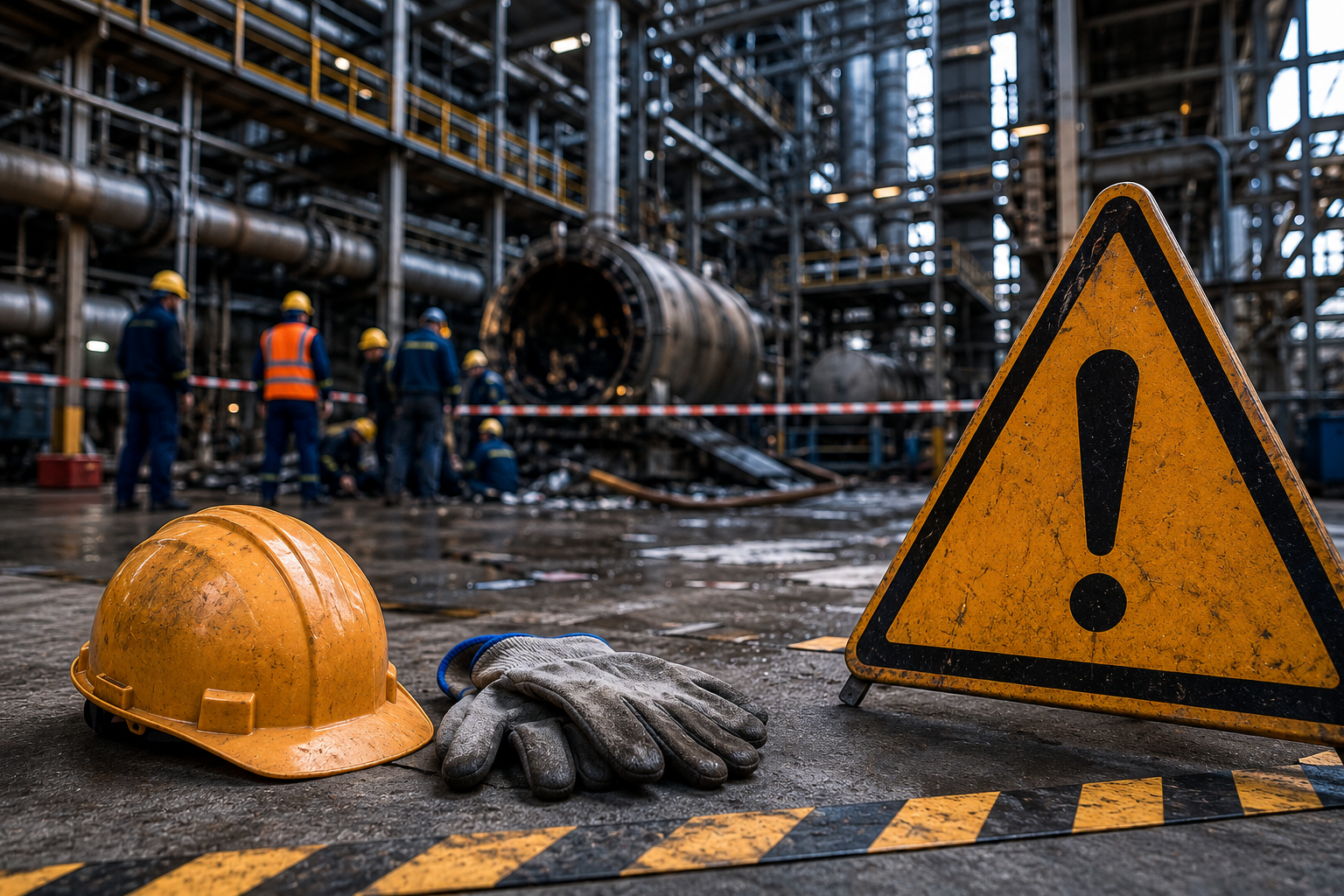
Government Defends Enforcement Measures While Assembly Debate Highlights Need for Stronger Workplace Safety and Industrial Compliance
Industrial safety has become a major topic of discussion in Chhattisgarh after the state government informed the Legislative Assembly that 196 workers lost their lives in industrial accidents between January 2025 and May 2026. The data has sparked a renewed debate over workplace safety, regulatory enforcement, and corporate accountability as industrial activity continues to expand across the state.
The issue was raised during a discussion in the Assembly, where legislators expressed concern over repeated industrial mishaps involving boiler explosions, gas leaks, structural failures, and machinery-related accidents. They alleged that inadequate enforcement of safety standards and delayed inspections were contributing to recurring workplace fatalities.
Responding to these concerns, the state government maintained that industrial safety regulations are being implemented under the Factories Act, regular inspections are being conducted, and legal action is initiated whenever violations are detected. Officials also highlighted the steps being taken to strengthen workplace safety and improve compliance across industrial establishments.
The discussion comes at a time when Chhattisgarh is witnessing rapid industrial expansion across sectors such as steel, power generation, mining, cement, engineering, and manufacturing, making occupational safety an increasingly important policy priority.
Industrial Accidents Continue to Claim Lives
According to information presented in the Assembly, the state recorded:
-
122 worker fatalities during 2025
-
74 worker deaths between January and May 2026
This brings the total number of industrial accident-related deaths to 196 within a span of 17 months.
The fatalities occurred across various industrial sectors, reflecting the complex safety challenges associated with heavy industries and manufacturing operations.
Although the government disputed claims that accident numbers are rising due to regulatory negligence, the figures have intensified calls for stronger preventive measures.
Several Major Industrial Incidents Triggered Concern
The Assembly discussion referred to multiple high-profile industrial accidents reported over the past year.
Among the most serious incidents was the boiler explosion at a power plant in Sakti district, which resulted in 25 worker deaths and left several others injured.
Other reported accidents included:
-
Boiler explosions
-
Gas leak incidents
-
Structural collapses
-
Lift failures
-
Equipment malfunctions
-
Accidents at steel manufacturing units
-
Processing plant mishaps
These incidents have highlighted the risks faced by workers in hazardous industrial environments and reinforced the need for continuous monitoring of workplace safety.
Government Rejects Allegations of Weak Safety Enforcement
Responding to criticism, the state government denied allegations that industrial accidents were increasing because of poor enforcement of safety regulations.
Officials stated that the Labour Department continuously monitors compliance under the Factories Act and conducts inspections of industrial units across the state.
According to the government:
-
Safety inspections are carried out regularly.
-
Hazardous industries undergo mandatory audits.
-
Violations result in criminal proceedings.
-
Operations may be suspended following serious accidents.
-
Corrective actions are implemented immediately after investigations.
Authorities emphasized that industrial safety remains a priority despite the recent accidents.
Investigation into Boiler Explosion
The government informed the Assembly that technical investigations into the Sakti district boiler explosion concluded that the accident resulted from puffing inside the boiler furnace.
Following the incident:
-
Boiler operations were immediately suspended.
-
Criminal proceedings were initiated against the factory management.
-
Technical inspections were carried out.
-
Injured workers received medical treatment.
The government maintained that appropriate legal action was taken without delay.
Inspection Drive Intensified
To demonstrate its enforcement efforts, the Labour Department presented inspection statistics covering the past two years.
Inspection Performance During 2025
-
964 factory inspections conducted
-
299 criminal cases registered
-
₹4.60 crore in penalties imposed
Up to June 2026
-
484 inspections completed
-
134 criminal cases filed
-
₹1.77 crore in penalties
These figures indicate continued regulatory oversight across industrial establishments.
Officials argued that enforcement actions clearly demonstrate that workplace safety violations are being addressed through legal channels.
Mandatory Safety Audits for Hazardous Industries
The government highlighted that highly hazardous industrial units are subject to mandatory safety audits.
Current safety requirements include:
External Safety Audit
Highly hazardous industries must undergo independent external audits every two years.
Internal Safety Review
Annual internal safety assessments are conducted to identify operational risks.
The audits cover areas such as:
-
Boiler safety
-
Machinery maintenance
-
Fire protection systems
-
Emergency response preparedness
-
Chemical handling procedures
-
Occupational health standards
Regular audits are intended to reduce accident risks and improve operational safety.
Importance of Safety Culture
Industry experts note that compliance alone cannot eliminate workplace accidents.
Developing a strong safety culture requires continuous attention to:
-
Employee training
-
Equipment maintenance
-
Hazard identification
-
Emergency preparedness
-
Leadership accountability
-
Regular safety drills
-
Risk assessment
A proactive approach to safety often results in lower accident rates and improved productivity.
Economic Impact of Industrial Accidents
Industrial accidents have significant financial implications beyond the immediate human cost.
Major accidents can lead to:
-
Production shutdowns
-
Compensation payments
-
Legal liabilities
-
Insurance claims
-
Regulatory penalties
-
Project delays
-
Loss of investor confidence
For companies operating in capital-intensive industries, maintaining high safety standards has become both a regulatory requirement and a business necessity.
ESG Standards Gain Importance
Environmental, Social, and Governance (ESG) factors are becoming increasingly important for investors evaluating industrial companies.
Workplace safety now forms an essential component of ESG assessments.
Companies demonstrating:
-
Strong safety records
-
Transparent reporting
-
Effective governance
-
Employee welfare
-
Regulatory compliance
are generally viewed more favourably by institutional investors.
As ESG investing gains momentum globally, occupational safety is likely to receive greater attention from both regulators and shareholders.
Industrial Growth Must Be Balanced with Worker Welfare
Chhattisgarh remains one of India's important industrial states, supported by abundant mineral resources and significant investments in:
-
Steel manufacturing
-
Power generation
-
Mining
-
Cement
-
Engineering
-
Metal processing
As industrial capacity expands, ensuring safe working conditions becomes increasingly important for sustainable economic growth.
Balancing industrial development with worker protection will remain a critical challenge for policymakers and industry leaders.
Technology Can Improve Industrial Safety
Modern technologies are increasingly helping industries reduce workplace risks.
Companies are investing in:
-
AI-based predictive maintenance
-
Industrial automation
-
Smart sensors
-
Real-time monitoring systems
-
Digital safety audits
-
Wearable safety devices
-
Remote inspection technologies
These innovations can identify equipment failures before accidents occur, reducing operational risks and improving worker safety.
Market Outlook
India's manufacturing sector continues to benefit from government initiatives such as Make in India, Production Linked Incentive (PLI) schemes, and infrastructure development. However, sustainable industrial growth increasingly depends on maintaining high standards of occupational safety and regulatory compliance.
For investors, companies with robust safety management systems, strong governance practices, and responsible ESG policies are expected to attract greater institutional interest. At the same time, regulators are likely to intensify oversight of hazardous industries, encouraging higher investments in safety infrastructure, automation, and workforce training.
Investor Takeaway
The disclosure of 196 industrial fatalities within 17 months underscores the importance of strengthening workplace safety as India's industrial sector continues to expand. While the Chhattisgarh government maintains that inspections, safety audits, and legal action are being carried out regularly, the recent incidents highlight the need for continuous improvement in industrial risk management.
For businesses, investing in safety is no longer simply a compliance requirement—it has become an essential component of operational excellence, corporate governance, and long-term value creation. Companies that prioritize worker safety, adopt modern technologies, and maintain strong regulatory compliance are likely to be better positioned for sustainable growth while earning greater confidence from investors, employees, and stakeholders alike.