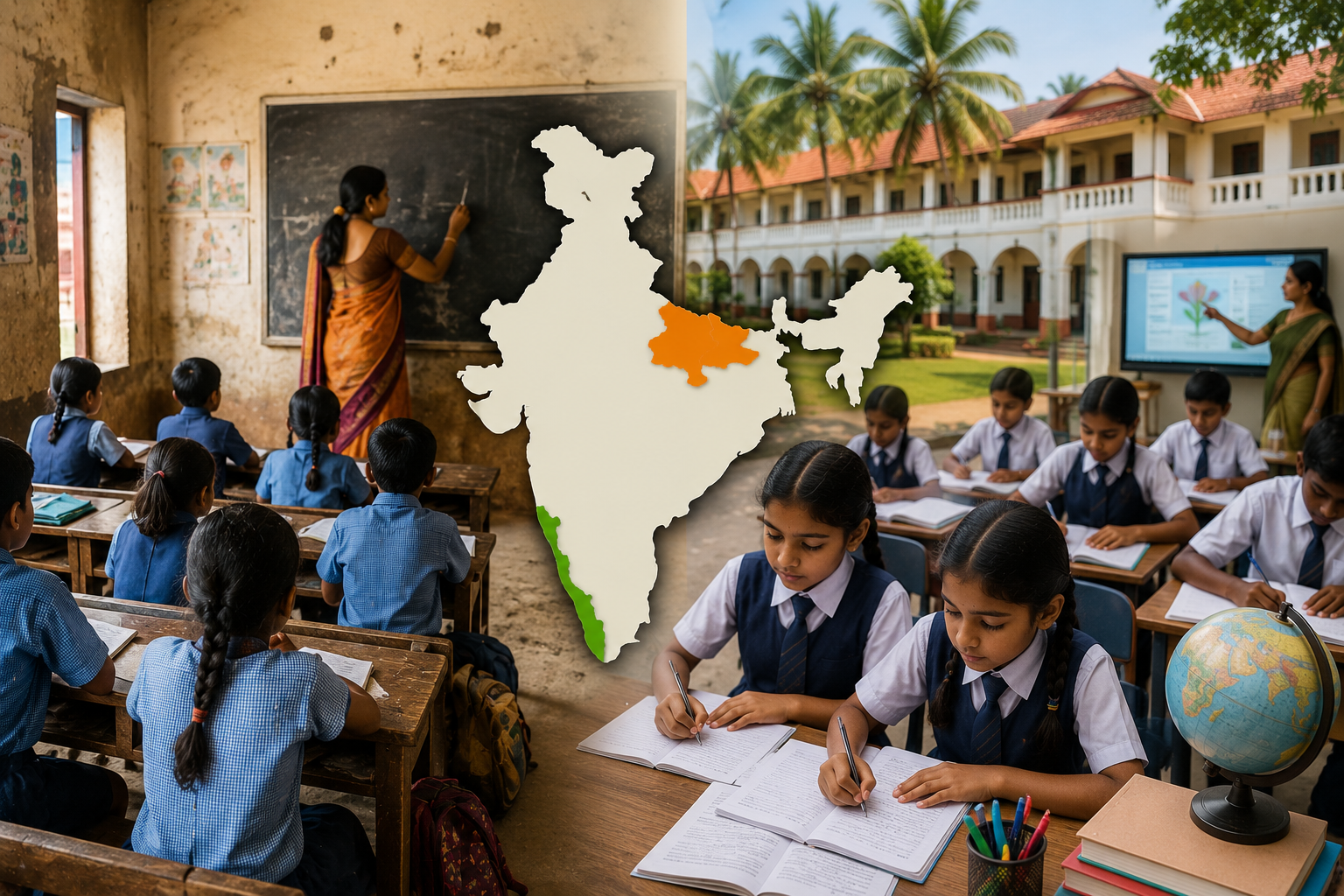
Latest UDISE+ Data Highlights Improvements in Teacher Retention and Lower Dropout Rates, While Enrolment Gap Continues to Challenge Bihar
India's school education landscape is witnessing gradual transformation, with Bihar making notable progress in improving key education indicators. According to the latest data from the Unified District Information System for Education Plus (UDISE+), the state has narrowed the gap with Kerala in areas such as teacher retention and student dropout rates. However, Bihar continues to face significant challenges in achieving universal school enrolment, an area where Kerala has maintained leadership for decades.
The findings reflect a more balanced picture of India's education system. While Kerala continues to lead with one of the country's strongest public education models, Bihar's improving performance demonstrates that sustained policy interventions and investment in education are beginning to yield measurable results.
India Operates One of the World's Largest School Systems
India has one of the largest education ecosystems globally, serving millions of children across urban and rural regions.
According to UDISE+ data, the country has:
-
More than 1.47 million schools
-
Around 10.3 million teachers
-
Nearly 247.2 million students
Managing such a vast education network requires coordinated efforts between the central and state governments, particularly in areas such as infrastructure, teacher training, digital learning, and student welfare.
Within this enormous system, states like Kerala and Bihar offer two contrasting models of educational development.
Kerala Continues to Set the Standard
Kerala has consistently remained India's top-performing state in education.
With a literacy rate of approximately 95.3%, the state has achieved near-universal school enrolment and high educational attainment through decades of consistent investment in public education.
Several factors have contributed to Kerala's success:
-
Strong public schooling
-
High female literacy
-
Effective teacher training
-
Better healthcare and nutrition
-
Community participation
-
Early childhood education
-
High social awareness
These structural strengths continue to translate into better educational outcomes and human development indicators.
Bihar's Education Story Is Gradually Changing
Although Bihar remains behind Kerala in several education indicators, the latest data shows encouraging improvements.
The state's literacy rate has risen to approximately 74.3%, reflecting gradual progress over the past several years.
Government initiatives focused on expanding access to schools, improving infrastructure, recruiting teachers, and encouraging enrolment have started delivering measurable improvements.
While Bihar still faces considerable challenges, the pace of progress indicates that the state's education system is moving in the right direction.
Teacher Retention Shows Significant Improvement
One of the most encouraging trends emerging from recent education data is Bihar's improvement in teacher retention.
Teacher stability plays a vital role in ensuring continuity in classroom learning and improving student outcomes.
Higher teacher retention contributes to:
-
Better classroom engagement
-
Improved academic performance
-
Reduced teacher vacancies
-
Stronger school administration
-
Higher learning continuity
Reducing teacher shortages is especially important in rural and underserved regions where access to quality education remains limited.
Dropout Rates Continue to Decline
Another positive development is Bihar's success in reducing school dropout rates.
Lower dropout rates indicate that more students are staying in school and progressing through the education system.
Several government initiatives have contributed to this improvement, including:
-
Mid-Day Meal Scheme
-
Free textbooks and uniforms
-
Bicycle schemes
-
Scholarship programmes
-
Girls' education initiatives
-
Improved school infrastructure
Reducing dropout rates has long-term benefits for literacy, employability, and economic development.
School Enrolment Remains Bihar's Biggest Challenge
Despite progress in student retention, Bihar continues to lag behind Kerala in school enrolment.
The latest data suggests that while children already enrolled are increasingly remaining in school, ensuring that every eligible child enters the education system remains a major challenge.
Several socio-economic factors continue to affect enrolment:
-
Poverty
-
Child labour
-
Seasonal migration
-
Rural accessibility
-
Social inequality
-
Limited parental awareness
Addressing these barriers will be critical if Bihar aims to achieve educational outcomes comparable with leading states.
Infrastructure Gap Still Needs Attention
School infrastructure remains another important area requiring sustained investment.
Although Bihar has expanded its school network considerably, many institutions continue to require improvements in:
-
Classroom facilities
-
Science laboratories
-
Libraries
-
Digital learning infrastructure
-
Electricity
-
Drinking water
-
Functional toilets
-
Internet connectivity
Modern educational infrastructure has become increasingly important as technology assumes a greater role in classroom learning.
Learning Outcomes Are the Next Frontier
Beyond enrolment and attendance, policymakers are increasingly focusing on improving learning quality.
Educational experts believe that future reforms should prioritize:
-
Foundational literacy
-
Numeracy skills
-
Teacher training
-
Curriculum modernization
-
Student assessments
-
Digital education
-
Skill-based learning
Ensuring that students acquire meaningful learning outcomes is now considered as important as expanding access to education.
Kerala's Success Offers Valuable Lessons
Kerala's education model demonstrates the long-term benefits of sustained public investment and policy continuity.
The state's success has been built through:
-
Consistent education spending
-
Strong local governance
-
Community involvement
-
High female participation
-
Inclusive education policies
-
Focus on public health and nutrition
Many education experts believe these principles can serve as useful references for states working to improve educational outcomes.
Education Drives Economic Growth
Improving school education has implications far beyond literacy.
Higher educational attainment contributes to:
-
Better employment opportunities
-
Increased productivity
-
Higher household incomes
-
Improved healthcare awareness
-
Financial inclusion
-
Women's empowerment
-
Stronger economic development
States that consistently invest in education often experience higher levels of social and economic progress over the long term.
NEP 2020 Expected to Accelerate Reforms
The implementation of the National Education Policy (NEP) 2020 is expected to further strengthen school education across India.
The policy emphasizes:
-
Universal access to education
-
Foundational literacy and numeracy
-
Early childhood education
-
Teacher development
-
Digital learning
-
Multidisciplinary education
-
Improved learning outcomes
For states like Bihar, successful implementation of these reforms could significantly accelerate educational progress over the coming decade.
Road Ahead for Bihar
Education experts believe Bihar has demonstrated that sustained policy interventions can deliver meaningful improvements.
However, achieving parity with leading states like Kerala will require continued focus on:
-
Universal school enrolment
-
Quality teacher recruitment
-
Infrastructure modernization
-
Learning outcomes
-
Digital classrooms
-
Community participation
-
Rural education access
Maintaining policy consistency and increasing public investment will remain crucial for long-term success.
Market & Economic Perspective
Education remains one of the most important long-term investments for any economy.
A better-educated workforce enhances productivity, attracts investment, supports innovation, and strengthens economic competitiveness.
As India's demographic dividend continues to grow, improvements in school education will play a central role in shaping the country's future labour force and economic expansion.
States capable of improving educational outcomes are likely to benefit from stronger employment generation, higher income levels, and greater industrial development over the coming decades.
Outlook
The latest UDISE+ data presents a more nuanced picture of India's education landscape. While Kerala continues to lead with its mature and highly effective public education system, Bihar's improvements in teacher retention and declining dropout rates indicate that meaningful progress is underway.
The widening enrolment gap, however, underscores the work that remains to be done. Expanding access to education, improving school infrastructure, enhancing learning quality, and ensuring that every child enters and completes school will determine how quickly Bihar can close the gap with India's leading education performers. If current reforms continue and are backed by sustained investment, Bihar could emerge as one of the country's most improved education systems in the years ahead.