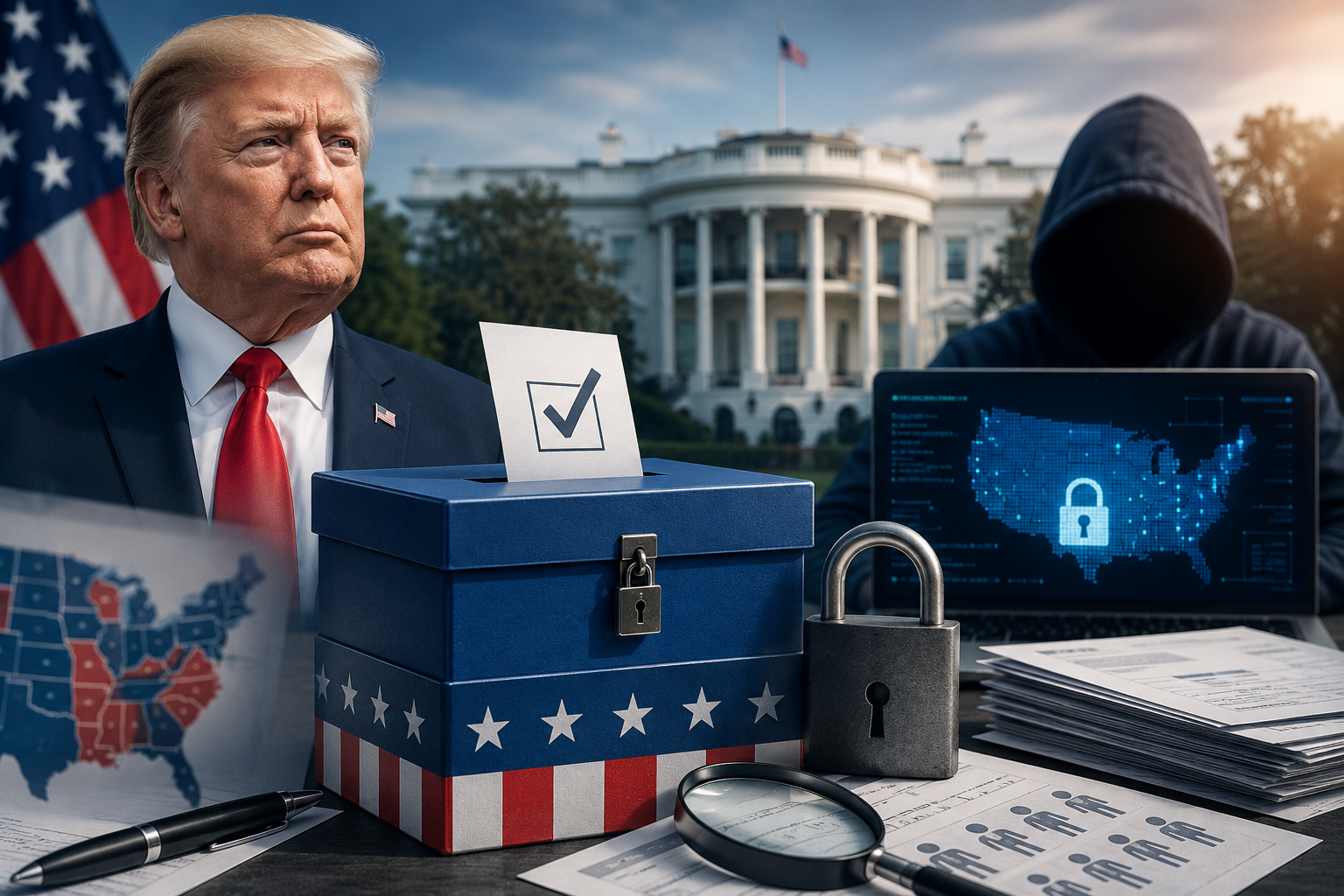
Newly Declassified Intelligence Reports Highlight Cybersecurity Concerns as President Seeks Sweeping Electoral Reforms
As the United States moves closer to the upcoming midterm elections, President Donald Trump has once again placed election integrity at the center of national debate. Speaking from the East Room of the White House, Trump described the country's election system as "broken" and vulnerable to cyber threats, voter fraud, and administrative weaknesses. He also announced the release of newly declassified intelligence documents that, according to his administration, outline potential security risks to America's election infrastructure.
The President said the release of these documents is intended to improve transparency and encourage stronger safeguards rather than undermine public confidence in the democratic process. His remarks have reignited discussions on election security, cybersecurity, and voting reforms across the political spectrum.
Trump Highlights Cybersecurity Risks to Election Infrastructure
During his address, Trump cited intelligence assessments covering the period from January 2020 to June 2026. According to the reports, centralized election-related systems—including voter registration databases, electronic poll books, election management software, and official election websites—remain attractive targets for cyberattacks by foreign adversaries.
Trump stated that countries such as Russia, China, Iran, and North Korea, along with sophisticated non-state cyber groups, possess the technical capability to target digital election infrastructure. While he did not present evidence of successful manipulation of election outcomes, he argued that the vulnerabilities themselves justify urgent reforms and stronger cybersecurity measures.
He emphasized that protecting election infrastructure is as important as protecting other critical national assets such as power grids, financial systems, and communication networks.
Concerns Over Voter Rolls and Identification Requirements
Another major focus of Trump's speech was voter registration accuracy. He alleged that outdated voter rolls continue to contain records of deceased individuals and non-citizens, arguing that maintaining accurate voter databases is essential for election credibility.
The President also criticized states that allow voting without requiring government-issued identification or proof of citizenship. According to Trump, uniform voter verification standards across all states would reduce the possibility of fraudulent registrations and improve public trust in election outcomes.
Election officials in several states have maintained that voter fraud remains rare and that multiple verification procedures already exist to safeguard elections. However, Trump's remarks are expected to intensify ongoing policy debates over voter identification laws.
Mail-In Voting Again Comes Under Scrutiny
Trump reiterated his longstanding opposition to widespread mail-in voting, arguing that postal ballots create opportunities for administrative errors and increase the complexity of election oversight.
He called for stricter controls over absentee ballots and advocated greater emphasis on in-person voting with verified identification. The President also questioned the security of electronic voting machines and ballot-counting systems, urging authorities to adopt more secure technologies and strengthen independent audits.
The administration maintains that improving election procedures now would help prevent future disputes over electoral outcomes.
Declassified Intelligence Forms Basis of Reform Push
According to Trump, the newly released intelligence documents include assessments on foreign efforts to access US voter information, vulnerabilities within election infrastructure, and intelligence related to alleged attempts by hostile actors to influence election processes.
He argued that making these findings public would enable policymakers, cybersecurity experts, and election administrators to address potential weaknesses before future national elections.
"Our purpose is not to weaken confidence in elections but to strengthen that confidence by correcting vulnerabilities," Trump said during the address.
The intelligence reports are expected to be reviewed by lawmakers and relevant oversight committees in the coming weeks.
Brief Remarks on US Foreign Policy
Although election security dominated the speech, Trump briefly commented on ongoing US military operations involving Iran. He stated that the United States was making significant progress and expressed confidence that Americans would soon see the results of current military efforts.
He also reiterated his support for maintaining a strong national defense while emphasizing that military action is always a last resort.
Political and Economic Implications
Trump's renewed focus on election integrity is likely to become a major political issue ahead of the midterm elections. The debate may influence legislative discussions on cybersecurity funding, election administration, voter identification requirements, and federal oversight of voting systems.
For investors, the issue could also have broader implications. Increased attention to election security may lead to higher government spending on cybersecurity technologies, digital infrastructure protection, and secure identity verification systems. Companies operating in cybersecurity, cloud security, digital authentication, and election technology could remain in focus if federal agencies introduce new procurement programs or security initiatives.
Outlook
The release of the declassified intelligence reports is expected to fuel further debate over the balance between election accessibility and security. While supporters view Trump's proposals as necessary steps to strengthen public confidence in elections, critics argue that existing safeguards are robust and continue to challenge many of his claims regarding past elections.
With the midterm elections approaching, election security is likely to remain one of the most closely watched political issues in the United States, shaping both policy discussions and public discourse in the months ahead.