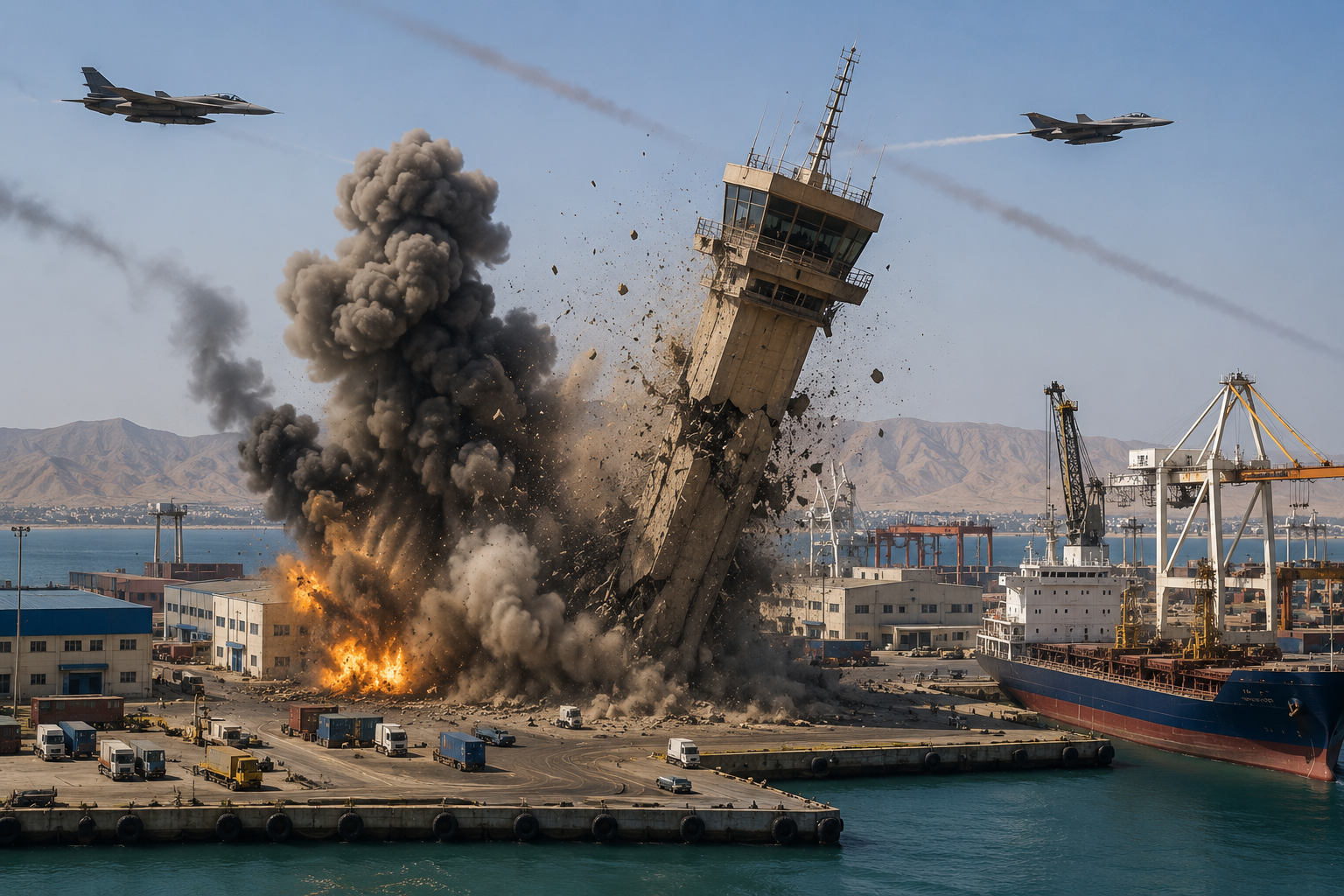
Fresh strikes on strategic Gulf of Oman port raise concerns over regional trade, shipping security and the potential impact on global energy markets
Tensions in the Middle East intensified further on Friday after fresh US airstrikes reportedly damaged a surveillance tower at Iran's Chabahar Port, one of the country's most strategically important maritime gateways. The latest attack marks another escalation in the ongoing military confrontation between the United States and Iran, with growing concerns that continued hostilities could disrupt regional trade routes, increase shipping risks and add fresh volatility to global commodity markets.
Visuals circulating on social media appeared to show the collapse of a surveillance tower overlooking the port. The images were later shared publicly by US Defence Secretary Pete Hegseth, adding credibility to reports that key infrastructure at the port had been damaged during the latest round of military operations.
Iranian state media acknowledged that Chabahar had been targeted in a third consecutive round of US airstrikes, although officials initially did not confirm the reported collapse of the surveillance tower. Authorities described the structure as part of the port's commercial traffic monitoring system.
Chabahar: A Strategic Maritime Gateway
Located along the Gulf of Oman, Chabahar Port occupies a strategically important position outside the Strait of Hormuz and serves as one of Iran's most significant commercial ports.
The deep-water port acts as a critical logistics hub connecting:
-
Iran
-
Afghanistan
-
Central Asia
-
South Asia
-
International shipping routes across the Arabian Sea
Unlike many Iranian ports situated inside the Strait of Hormuz, Chabahar provides direct access to the open ocean, making it strategically valuable for both commercial trade and regional connectivity.
For Afghanistan in particular, Chabahar serves as an alternative trade corridor that reduces dependence on Pakistani ports for imports and exports.
Surveillance Tower Reportedly Destroyed
According to reports, the latest airstrikes targeted a surveillance tower overlooking Chabahar Port.
Iranian officials stated that the tower was primarily used to monitor commercial shipping traffic entering and leaving the harbour.
However, security analysts note that many of Iran's strategic ports are also utilised by the Islamic Revolutionary Guard Corps (IRGC), which maintains operational facilities across several coastal locations.
The reported destruction of the surveillance tower could temporarily reduce maritime monitoring capabilities and complicate port security operations until infrastructure is restored.
US Intensifies Military Pressure
The latest attack forms part of an expanding series of military operations targeting strategic infrastructure within Iran.
Recent US strikes have focused on:
-
Port facilities
-
Logistics hubs
-
Military infrastructure
-
Surveillance systems
-
Supply chain networks
The objective appears to be weakening Iran's operational capabilities while increasing pressure on strategic assets believed to support military logistics and regional operations.
Although US officials have not provided detailed operational assessments, the latest strike signals a continued willingness to target infrastructure beyond conventional military installations.
Iran Faces Growing Infrastructure Challenges
Repeated attacks on transportation and logistics infrastructure could present additional operational challenges for Iran.
Besides their commercial importance, major ports such as Chabahar play a crucial role in:
-
Import and export activities
-
Fuel transportation
-
Industrial supplies
-
Maritime logistics
-
Strategic naval operations
Any sustained disruption to these facilities may affect both domestic economic activity and regional trade flows.
Iranian authorities have not yet disclosed the extent of operational damage at the port or whether commercial shipping activities have been affected.
Shipping Industry Watches Closely
The latest strike has once again drawn attention to maritime security across the Gulf region.
Shipping companies are expected to closely monitor developments as continued military activity increases operational risks for vessels operating in nearby waters.
Potential consequences include:
-
Higher marine insurance premiums
-
Additional security measures
-
Longer shipping routes
-
Increased freight costs
-
Delays in cargo movement
Even if commercial operations continue normally, heightened geopolitical uncertainty could influence shipping decisions across the region.
Impact on Global Energy Markets
Although Chabahar itself is not a major crude oil export terminal, escalating military tensions around Iran continue to influence global energy markets.
Investors remain concerned that any widening of the conflict could eventually affect:
-
Gulf shipping lanes
-
Energy infrastructure
-
Oil exports
-
LNG shipments
-
Regional supply chains
These concerns have already contributed to elevated crude oil prices in recent weeks as traders price in geopolitical risk premiums.
If military operations intensify further, analysts believe energy markets could experience additional volatility.
Safe-Haven Assets Gain Attention
Periods of heightened geopolitical uncertainty typically encourage investors to seek defensive assets.
As tensions continue to rise, market participants are expected to closely monitor movements in:
-
Gold prices
-
US Treasury bonds
-
Safe-haven currencies
-
Defence sector stocks
-
Energy companies
Commodity markets are also likely to remain sensitive to any developments affecting transportation routes across the Middle East.
Broader Regional Implications
The continued exchange of military strikes raises concerns that the conflict could gradually expand beyond isolated attacks.
Neighbouring countries and international trading partners are watching developments closely as prolonged instability could affect:
-
Regional investment
-
Cross-border trade
-
Infrastructure projects
-
Maritime commerce
-
Diplomatic relations
The international community continues to urge restraint while monitoring the evolving security situation.
Why Chabahar Matters Beyond Iran
Chabahar occupies a unique position within regional trade networks.
The port has historically been viewed as an important gateway for improving connectivity between India, Iran, Afghanistan and Central Asia through multimodal transport corridors.
Its strategic location outside the Strait of Hormuz has also enhanced its importance as an alternative maritime route for commercial trade.
Any disruption to operations could therefore have implications extending beyond Iran's domestic economy.
Market Outlook
Financial markets are likely to remain highly sensitive to geopolitical developments in the Middle East over the coming weeks.
While equity markets have so far demonstrated resilience, sustained military escalation could increase volatility across global asset classes.
Investors will closely monitor:
-
Additional military operations
-
Official statements from Washington and Tehran
-
Shipping activity near key Gulf ports
-
Crude oil price movements
-
Global risk sentiment
For now, the reported damage at Chabahar Port serves as another reminder of the growing geopolitical risks confronting global markets. Although the immediate operational impact remains uncertain, continued attacks on strategic infrastructure have the potential to influence international trade, energy prices and investor confidence.
If tensions continue to escalate, geopolitical developments are likely to remain one of the most significant drivers of market sentiment alongside corporate earnings, inflation data and central bank policy decisions.