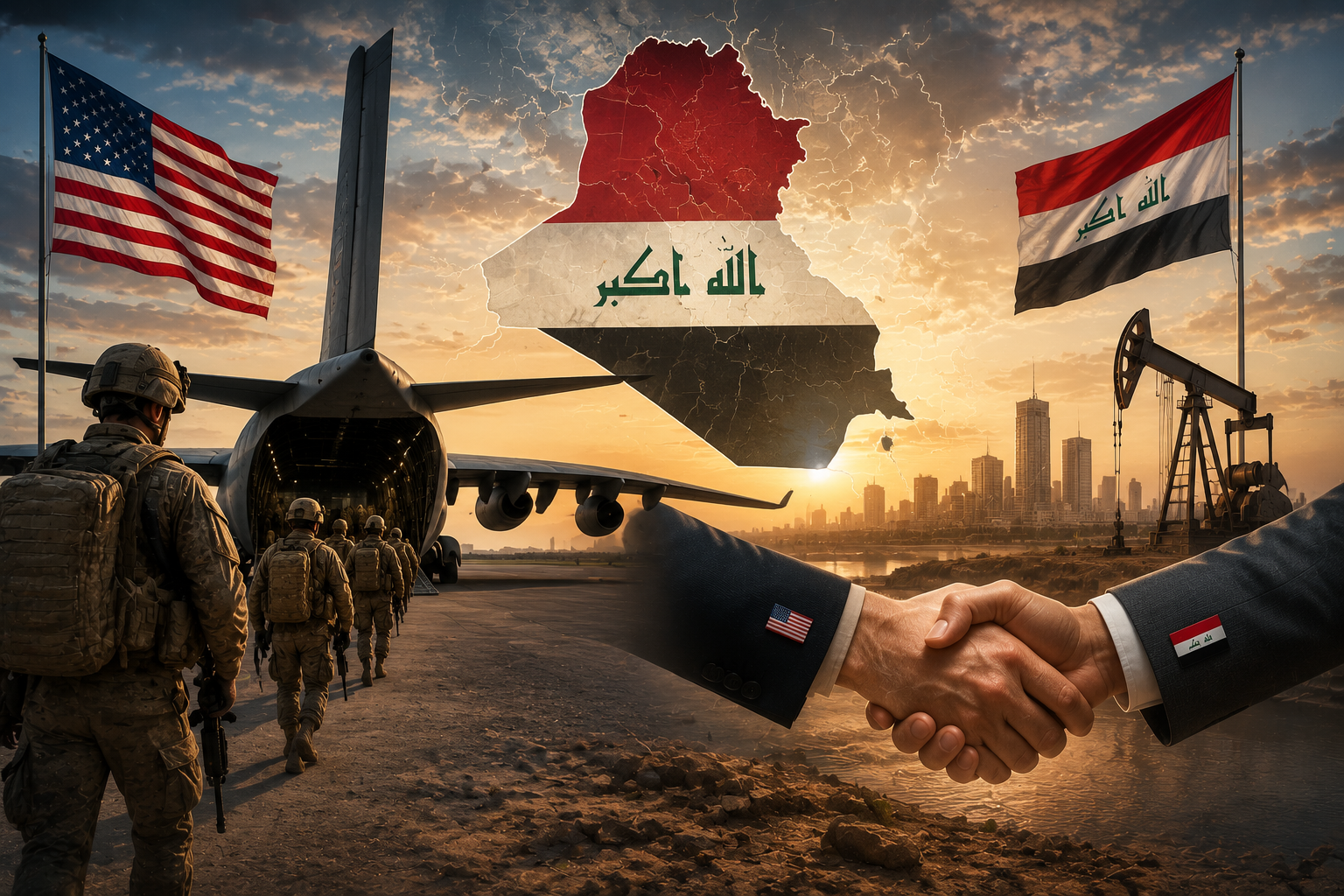
Trump and Iraqi Prime Minister Confirm Withdrawal Timeline; Energy, Trade and Business Cooperation Expected to Shape New US-Iraq Relationship
The United States is set to end its military presence in Iraq by the end of September, closing a chapter that began with the 2003 US invasion and evolved through years of counterinsurgency operations, the fight against the Islamic State (ISIS), and security cooperation with Iraqi forces.
US President Donald Trump and Iraqi Prime Minister Ali al-Zaidi confirmed that American forces will leave Iraq by September 30, 2026, marking the end of a 23-year military engagement.
The withdrawal represents a major transformation in US-Iraq relations, with both nations expected to shift their focus from military cooperation toward economic partnerships, energy investments and commercial engagement.
Trump Announces End of US Military Presence in Iraq
During a meeting at the White House, President Donald Trump said the United States no longer believes a large military deployment in Iraq is necessary.
Trump highlighted the changing relationship between the two countries, noting that Iraq has developed stronger economic connections, particularly with international energy companies.
He stated that:
-
The US will continue supporting Iraq if required
-
Military presence is no longer considered necessary
-
Economic cooperation will become a bigger part of bilateral relations
The announcement signals a new phase in Washington’s approach toward Iraq.
Iraq Confirms American Troops to Exit by September 30
Iraqi Prime Minister Ali al-Zaidi confirmed the withdrawal schedule, stating that:
“US forces will be out of Iraq” by September 30.
However, he clarified that American businesses and companies would continue to operate in Iraq.
The future relationship is expected to focus more on:
-
Oil and energy investments
-
Infrastructure development
-
Trade cooperation
-
Private sector partnerships
The transition indicates that economic engagement will replace military deployment as a central pillar of US-Iraq relations.
Pentagon Reaffirms Existing Withdrawal Agreement
The Pentagon said the withdrawal follows a 2024 agreement between Washington and Baghdad to conclude the US-led military mission against ISIS.
The agreement was designed to gradually transfer security responsibilities to Iraqi forces while reducing the presence of international troops.
Since the agreement:
-
Many US troops have already departed
-
Remaining personnel have been reduced
-
The mission has shifted toward advisory and training roles
The final withdrawal will complete the transition.
A 23-Year Journey: From Iraq Invasion to Counter-Terrorism Mission
The US military presence in Iraq began in March 2003 when American forces launched an invasion to remove Saddam Hussein’s government.
The operation began with a large-scale bombing campaign, followed by ground operations that resulted in the capture of Baghdad.
The invasion was based on claims that Iraq possessed weapons of mass destruction. However, those weapons were never discovered.
The war significantly changed Iraq’s political and security environment and led to years of US involvement.
US Troop Deployment Reached Historic Levels in 2007
During the peak of counterinsurgency operations, the US significantly increased its military presence in Iraq.
In 2007:
More than 170,000 American troops were deployed
The surge aimed to:
-
Stabilise conflict areas
-
Support Iraqi security forces
-
Reduce insurgent activity
-
Protect key infrastructure
Over time, troop numbers declined as Iraqi forces gained greater responsibility.
First Major US Withdrawal Completed in 2011
The Obama administration negotiated a major reduction in US military involvement.
In December 2011:
-
American combat troops officially departed Iraq
-
A smaller group remained for security assistance
The remaining US personnel focused mainly on:
-
Military coordination
-
Embassy security
-
Defence cooperation
However, regional instability later brought American forces back into Iraq.
ISIS Expansion Brought US Forces Back in 2014
The rise of the Islamic State group dramatically changed Iraq’s security situation.
In 2014, ISIS captured large territories across Iraq and Syria, creating a major international security challenge.
The Iraqi government requested support from the US and coalition partners.
American forces returned to assist with:
-
Training Iraqi military units
-
Intelligence sharing
-
Counter-terrorism operations
-
Rebuilding security capabilities
End of ISIS Territorial Control Reduced Military Requirement
After ISIS lost control over major territories, coalition combat operations officially ended in 2021.
However, the US continued maintaining a smaller presence.
At the time, approximately:
2,500 US troops were stationed in Iraq
Their responsibilities included:
-
Advising Iraqi forces
-
Training security personnel
-
Supporting counter-ISIS operations
The 2024 agreement accelerated the reduction of these forces.
New Era of US-Iraq Relations: Focus on Business and Energy
The withdrawal marks a strategic shift in bilateral relations.
Both countries are expected to focus on economic opportunities, especially in sectors such as:
Energy Sector
Iraq is one of the world’s major oil producers, creating opportunities for:
-
Oil exploration
-
Energy infrastructure
-
Technology partnerships
Private Investment
Future cooperation may expand into:
-
Construction
-
Technology
-
Industrial development
-
Infrastructure projects
Trade Relations
Greater commercial engagement could become a key component of the post-military relationship.
Impact on Global Oil Markets
Iraq’s importance in global energy markets makes the withdrawal significant for investors.
The country is a major oil producer and any improvement in stability could support:
-
Higher foreign investment
-
Increased production capacity
-
Better energy infrastructure
However, markets will continue monitoring:
-
Domestic political stability
-
Regional conflicts
-
OPEC production policies
Geopolitical Impact: Middle East Balance Could Shift
The US withdrawal could influence the broader geopolitical environment.
Iran’s Influence in Iraq
Iraq remains strategically important due to its location between Iran and the Arab Gulf region.
The reduction of US military presence could affect regional power dynamics.
Security Responsibility Moves to Iraqi Forces
A key question for investors and policymakers is whether Iraqi security forces can independently maintain stability.
The success of the transition depends on:
-
Military readiness
-
Political stability
-
Counter-terrorism capabilities
Potential Role of Other Global Powers
As US military involvement decreases, other countries may seek greater economic and strategic engagement with Iraq.
This could reshape regional alliances and investment patterns.
What Investors Should Watch After US Withdrawal
Positive Developments
✅ Reduced military tensions
✅ Increased economic cooperation
✅ Energy investment opportunities
✅ Greater regional trade potential
Potential Risks
⚠️ Resurgence of extremist groups
⚠️ Regional power competition
⚠️ Political instability
⚠️ Oil supply disruptions
Smart Investment Global Outlook
The planned withdrawal of US forces from Iraq represents a major geopolitical milestone, ending one of Washington’s longest overseas military commitments.
The next phase of US-Iraq relations is expected to focus on economic cooperation, energy investment and commercial partnerships rather than military operations.
For global markets, the key focus will be whether the transition creates greater stability in a region that remains critical for energy supplies.
Smart Investment Insight: The Iraq withdrawal could reshape Middle East dynamics and create new economic opportunities, but investors should closely monitor regional stability, oil markets and geopolitical developments as the transition unfolds.