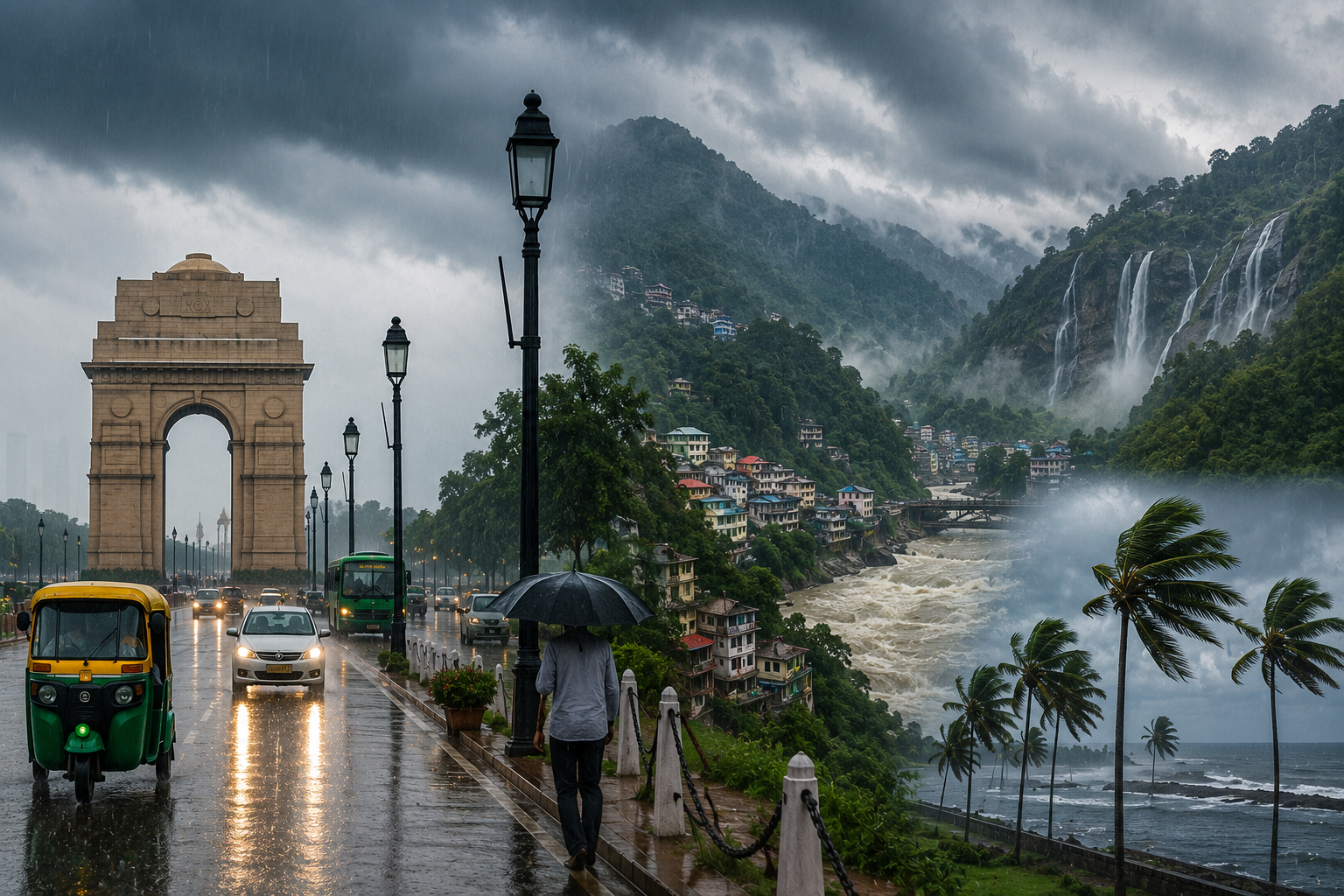
National Capital to Witness Cloudy and Humid Weather; Heavy Rainfall Alert Issued for Himalayan States, Eastern India and Northeast
The southwest monsoon continues to maintain its momentum across India, with the India Meteorological Department (IMD) forecasting another week of widespread rainfall over several parts of the country. While the national capital is expected to remain under partly cloudy skies with humid conditions, heavy to very heavy rainfall is likely across the Himalayan region, eastern India and the Northeast, raising concerns over flooding, landslides and transport disruptions.
The latest weather bulletin indicates that rainfall activity will remain above normal in several regions, benefiting agricultural operations while also posing challenges for infrastructure, travel and disaster management. At the same time, isolated parts of southern India are expected to experience heatwave-like conditions despite the ongoing monsoon season.
Delhi Likely to Stay Warm and Humid
Residents of Delhi are unlikely to receive significant rainfall over the next few days despite increasing cloud cover.
According to the IMD, the capital will witness partly to generally cloudy skies, with maximum temperatures expected to remain between 37°C and 39°C, while minimum temperatures are likely to stay around 28°C.
The combination of high temperatures and elevated humidity is expected to make weather conditions uncomfortable, particularly during afternoon hours. Although isolated light showers cannot be ruled out, no major rainfall event has been forecast for the city in the immediate future.
Meteorologists believe that the monsoon trough remains positioned away from Delhi, limiting the possibility of widespread precipitation.
Air Quality Deteriorates Despite Monsoon Conditions
Even during the monsoon season, Delhi's air quality has shown signs of deterioration.
The city's Air Quality Index (AQI) recently slipped into the 'Poor' category, reflecting the combined impact of high humidity, stagnant atmospheric conditions and local pollution sources.
Typically, continuous rainfall helps improve air quality by washing suspended pollutants out of the atmosphere. However, with limited rainfall expected over Delhi, pollution levels may remain elevated until stronger monsoon activity reaches the region.
Health experts advise individuals suffering from asthma, respiratory illnesses and cardiovascular diseases to minimise prolonged outdoor exposure during periods of poor air quality.
Heavy Rainfall to Lash Himalayan States
While Delhi experiences relatively dry weather, northern India's hill states are expected to witness an active phase of the southwest monsoon.
The IMD has forecast widespread rainfall across Uttarakhand between July 15 and July 19, with several districts likely to receive heavy to very heavy showers.
Similar weather conditions are expected across:
-
Himachal Pradesh
-
Jammu & Kashmir
-
Western Uttar Pradesh
Continuous rainfall in these regions may increase the likelihood of:
-
Landslides
-
Flash floods
-
River swelling
-
Road closures
-
Travel disruptions
Authorities have advised tourists and pilgrims travelling to hill stations and religious destinations to remain updated with local weather advisories.
Eastern India Braces for Another Wet Spell
The eastern region is expected to remain under the influence of active monsoon systems.
Heavy rainfall has been forecast over:
-
Odisha
-
Bihar
-
Jharkhand
-
Gangetic West Bengal
-
Sub-Himalayan West Bengal
-
Sikkim
Several low-lying districts may experience waterlogging and localised flooding if rainfall remains persistent.
From an agricultural perspective, the continued rainfall is expected to support paddy transplantation and improve soil moisture levels across major farming belts.
However, excessive rainfall could temporarily affect transportation, logistics and harvesting operations in certain districts.
Northeast Continues to Receive Intense Monsoon Showers
The Northeast is likely to remain one of the most rain-affected regions during the coming week.
States expected to receive widespread rainfall include:
-
Arunachal Pradesh
-
Assam
-
Meghalaya
-
Nagaland
-
Manipur
-
Mizoram
-
Tripura
The IMD has warned that isolated locations may receive very heavy rainfall, increasing the possibility of flash floods and landslides, particularly in hilly terrain.
Local administrations have been advised to maintain preparedness for emergency response operations wherever necessary.
Rainfall Activity Expands Across Central and Western India
Central India is also expected to witness regular monsoon showers over the coming days.
States likely to receive intermittent rainfall include:
-
Madhya Pradesh
-
Chhattisgarh
-
Vidarbha
Meanwhile, western India is expected to see strengthening monsoon activity later this week.
The IMD expects rainfall to become more widespread across:
-
Gujarat
-
Maharashtra
-
Konkan
-
Goa
Improved rainfall distribution is expected to support reservoir replenishment, strengthen water availability and provide a positive boost to agricultural activity across these regions.
South India to Experience Mixed Weather Conditions
Weather conditions across southern India are expected to remain varied.
Scattered rainfall has been forecast over:
-
Karnataka
-
Kerala
-
Telangana
-
Tamil Nadu
-
Andhra Pradesh
The intensity of rainfall is expected to increase over Kerala, Coastal Karnataka and Lakshadweep during the latter part of the week as monsoon activity strengthens.
However, some inland regions may continue to experience patchy rainfall and high humidity.
Heatwave Conditions Continue in Parts of Andhra Pradesh
Despite active monsoon conditions across much of India, isolated pockets of southern India remain vulnerable to heatwave conditions.
The IMD has issued warnings for:
-
Coastal Andhra Pradesh
-
Yanam
during July 14 and 15.
Hot and humid weather is also expected across:
-
Rayalaseema
-
Odisha
-
Parts of Tamil Nadu
-
Puducherry
-
Karaikal
The combination of high humidity and elevated temperatures increases the risk of heat stress and dehydration, particularly for outdoor workers and vulnerable populations.
Residents have been advised to remain hydrated and avoid prolonged exposure to direct sunlight during peak afternoon hours.
Monsoon Progress Remains Crucial for the Economy
The southwest monsoon plays a critical role in India's economic performance by supporting agricultural production, reservoir levels and rural demand.
A normal and well-distributed monsoon generally contributes to:
-
Higher agricultural output
-
Better rural consumption
-
Stable food inflation
-
Improved groundwater recharge
-
Increased hydroelectric power generation
However, excessive rainfall concentrated in specific regions can also disrupt transportation networks, damage crops and temporarily affect supply chains.
Therefore, both rainfall quantity and geographical distribution remain equally important for sustaining economic growth.
Sectors Likely to Be Impacted
Weather developments over the coming weeks could influence several sectors of the Indian economy.
Positive Impact
-
Fertilisers
-
Agrochemicals
-
Irrigation equipment
-
FMCG companies with strong rural exposure
-
Tractor and farm equipment manufacturers
-
Hydropower generation
Potential Risks
-
Infrastructure projects
-
Construction companies
-
Transportation and logistics
-
Insurance claims
-
Tourism in hill states
Investors often monitor monsoon progress closely because rainfall patterns can significantly influence rural income, inflation and corporate earnings.
What to Watch Over the Next Week
Meteorologists will closely monitor:
-
Movement of the monsoon trough
-
Formation of low-pressure systems over the Bay of Bengal
-
Rainfall distribution across central India
-
Flood risks in Himalayan and northeastern states
-
Temperature trends in southern India
Any fresh weather systems developing over the Bay of Bengal could alter rainfall patterns across several parts of the country during the second half of July.