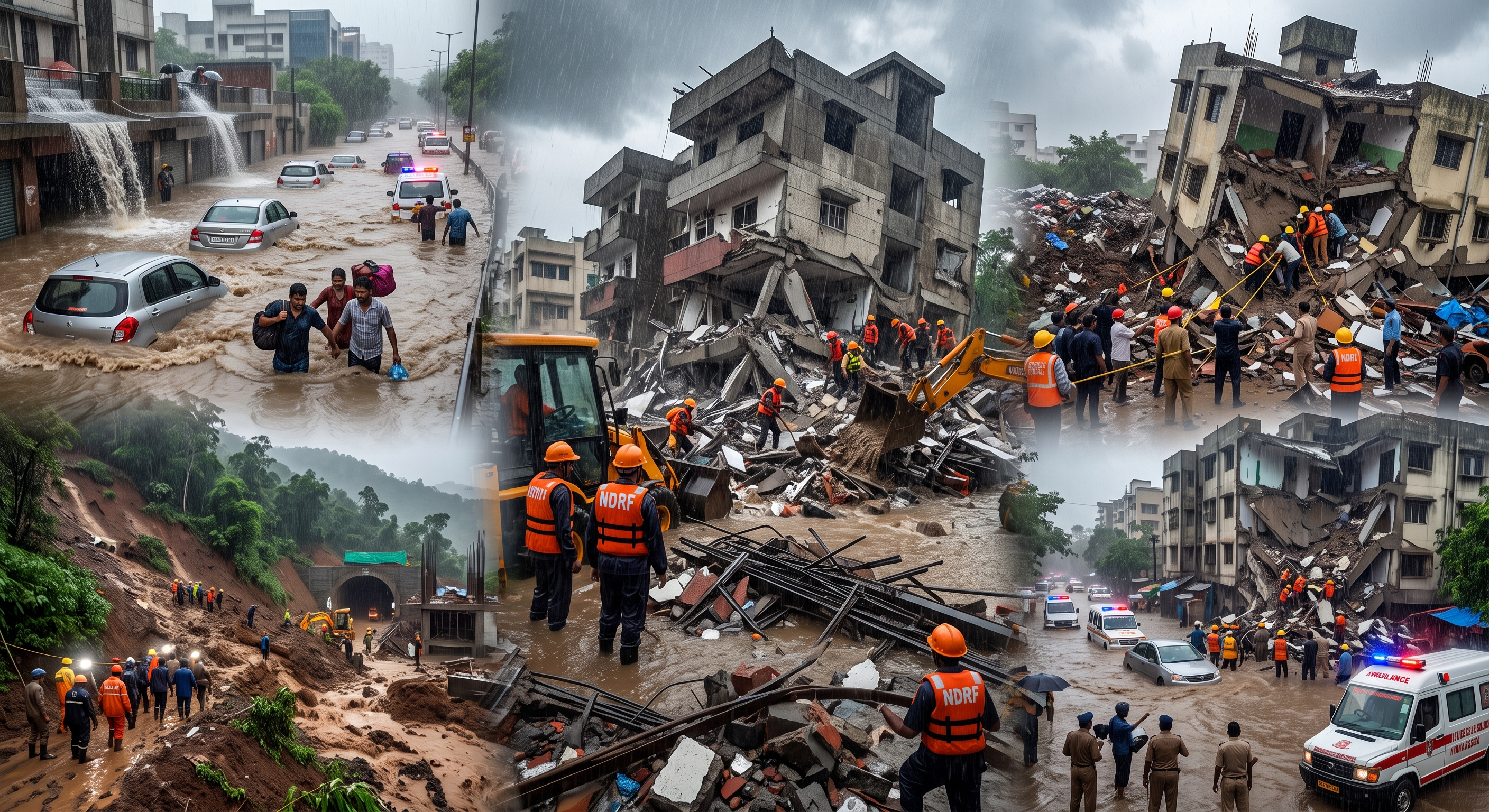
Delhi, Maharashtra, Gujarat and Kerala Face Severe Weather Impact as IMD Issues Multiple Rain Alerts; Rescue Operations Continue
Heavy monsoon rains continued to disrupt normal life across several parts of India, causing flash floods, waterlogging, building collapses and transportation disruptions. From Delhi and Maharashtra to Gujarat and Kerala, intense rainfall activity has created challenging conditions for residents and administration authorities.
The India Meteorological Department (IMD) has issued multiple weather alerts, warning of continued heavy rainfall, thunderstorms and lightning in several regions. Authorities are closely monitoring vulnerable areas as rescue and relief operations continue.
Delhi Rainfall: Orange Alert Issued After Building Collapse
The national capital witnessed heavy rainfall for the second consecutive day, leading to waterlogging, traffic congestion and structural damage in several areas.
The IMD issued an orange alert for Delhi along with neighbouring regions including Gurugram and Faridabad, warning of intense rain spells accompanied by thunderstorms and lightning. A yellow alert was issued for areas including Noida and Ghaziabad.
In Delhi’s Rohini area, a four-storey under-construction building collapsed following heavy rainfall. One person lost their life, while four others were rescued from the debris.
Authorities fear that several more people may still be trapped under the collapsed structure. Rescue teams continued search operations using specialised equipment to locate survivors.
The incident has raised concerns over construction safety, particularly during extreme weather conditions when weak structures become vulnerable to collapse.
Gurugram Faces Severe Waterlogging, Traffic Chaos
Heavy rainfall created major difficulties for commuters in Gurugram, with several roads submerged under water.
Traffic movement was severely affected on important routes, including sections near the Delhi-Jaipur Highway service lane, Narsinghpur, Basai, Kadipur and Sohna Road.
Several vehicles reportedly broke down due to waterlogging, leaving commuters stranded for hours.
Authorities deployed teams to manage traffic flow and clear waterlogged areas, while residents were advised to avoid unnecessary travel during intense rainfall periods.
Maharashtra Rain Emergency: Building Collapse in Pimpri-Chinchwad
Maharashtra witnessed heavy rainfall activity, with several districts facing weather-related challenges.
In Pimpri-Chinchwad, a three-storey building collapsed after a large mound of waste fell onto the structure near a waste-to-energy plant.
The collapse trapped several residents inside the building, prompting immediate rescue operations.
Disaster response teams successfully rescued multiple people, while search operations continued to ensure no one remained trapped under the debris.
The IMD issued red alerts for extremely heavy rainfall in regions including Nashik, Palghar, Raigad, Pune and Satara.
Mumbai Rains Ease, But Alerts Remain in Place
Rain intensity reduced in Mumbai; however, weather authorities continued to maintain caution due to the possibility of further heavy showers.
An orange alert was issued for Mumbai suburban areas and Thane as the city remained vulnerable to waterlogging and transport disruptions.
Mumbai’s civic authorities continued monitoring drainage systems and low-lying areas to prevent major flooding incidents.
Kerala’s Wayanad Continues Search Operations
In Kerala’s Wayanad district, rescue teams continued operations after a rain-triggered landslide incident at a tunnel project site.
A mound of excavated soil collapsed due to saturated ground conditions caused by continuous rainfall.
Search operations remained underway for missing workers as emergency teams worked in difficult terrain and challenging weather conditions.
The region has witnessed repeated monsoon-related challenges due to its hilly geography and vulnerability to landslides.
Gujarat Rainfall Impact: Surat Reports Multiple Deaths
Heavy rainfall also affected Gujarat, with Surat witnessing intense showers and rain-related incidents.
Officials reported that several people lost their lives in weather-related incidents over the past few days in the district.
Local authorities increased monitoring in flood-prone areas and continued relief operations to assist affected residents.
Urban flooding, road disruptions and water accumulation remained key concerns in several parts of the state.
Centre Reviews Situation, Assures Support to States
Union Home Minister Amit Shah spoke with chief ministers of Kerala, Maharashtra, Gujarat and Jammu & Kashmir to review the situation caused by heavy rainfall.
The Centre assured state governments of all possible assistance, including support from disaster response agencies.
The discussions focused on rainfall-related incidents, including landslides in Kerala, flash floods in Jammu and widespread disruptions in Maharashtra and Gujarat.
Monsoon Outlook: More Rain Expected in Several Regions
Weather experts believe active monsoon conditions are likely to continue across several parts of India.
The combination of moisture-laden winds, local weather systems and favourable atmospheric conditions is expected to result in further rainfall activity.
Authorities have advised citizens to:
-
Avoid unnecessary travel during heavy rainfall
-
Stay away from flood-prone areas
-
Follow official weather advisories
-
Remain alert in areas vulnerable to landslides and flooding
Conclusion: Extreme Weather Highlights Need for Better Preparedness
The ongoing monsoon spell has once again highlighted the challenges faced by Indian cities and states during periods of extreme rainfall.
While monsoon rains remain crucial for agriculture and water resources, intense rainfall events are increasing pressure on urban infrastructure, drainage systems and disaster management networks.
With more rainfall expected in several regions, coordination between central and state agencies will remain critical to minimise damage and ensure public safety.