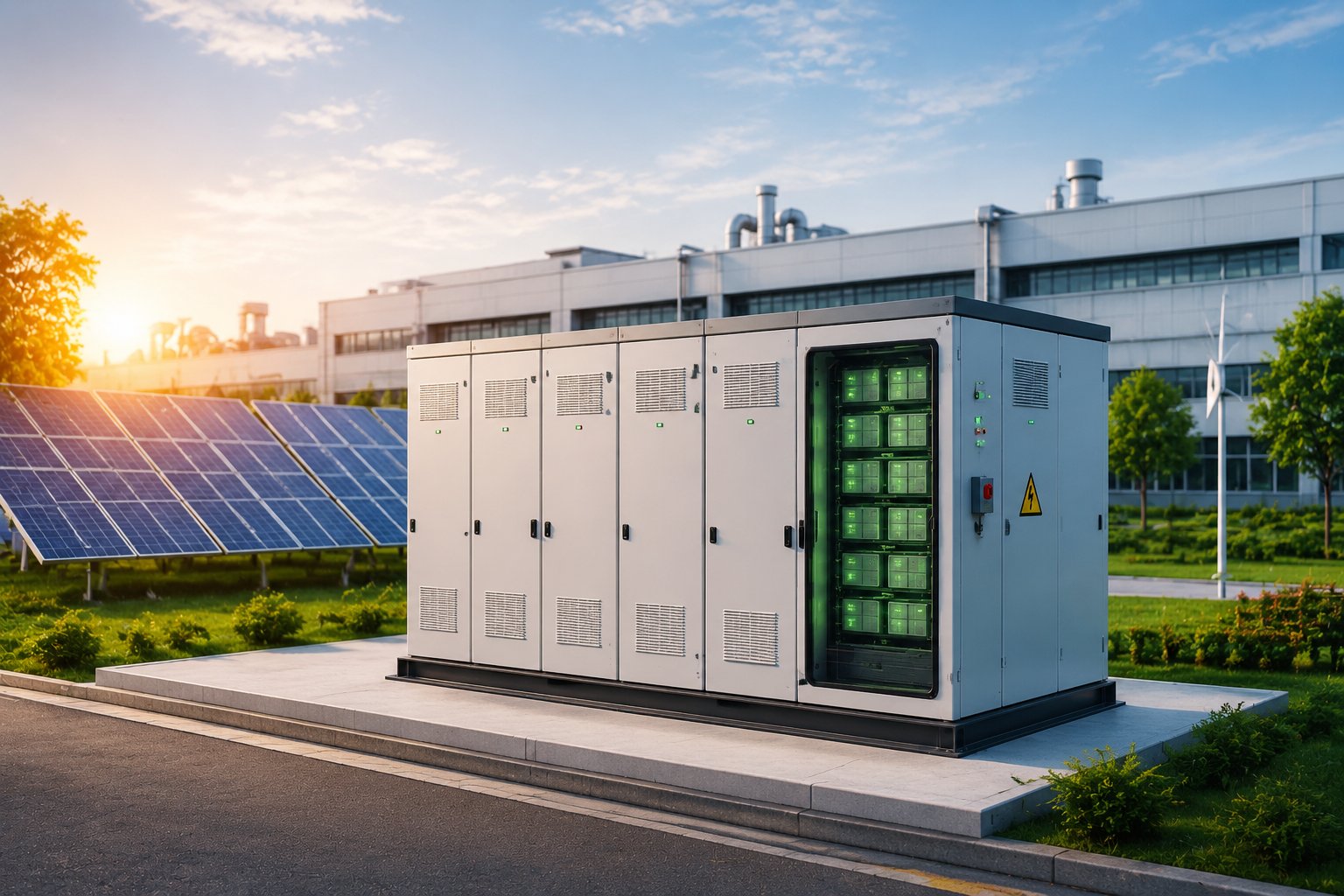
India’s largest passenger vehicle maker deploys energy storage technology to optimise solar power usage and reduce carbon emissions
Maruti Suzuki India Limited has commissioned a 1 MWh Battery Energy Storage System (BESS) at its Kharkhoda manufacturing facility in Haryana, strengthening its focus on renewable energy integration and sustainable manufacturing practices.
The pilot project has been integrated into the plant’s internal electricity distribution network and is aimed at improving the utilisation of renewable energy generated at the facility.
The move comes as automobile manufacturers increasingly invest in clean energy solutions to reduce operational emissions, improve energy efficiency and build resilient manufacturing ecosystems.
Battery Storage System to Solve Renewable Energy Utilisation Challenge
Maruti Suzuki had commissioned a 20 MWp solar power project at the Kharkhoda facility in 2025 as part of its renewable energy initiatives.
While the solar installation helped increase the share of clean energy in manufacturing operations, the company faced a challenge during periods when electricity demand was low, especially during plant holidays.
During such periods, excess solar generation could not be fully utilised due to limited consumption requirements.
The newly installed Battery Energy Storage System addresses this issue by storing surplus electricity generated during low-demand periods and supplying the stored energy when required.
This enables better utilisation of renewable energy while reducing dependence on conventional power sources.
How BESS Technology Supports Sustainable Manufacturing
Battery Energy Storage Systems are becoming an important component of modern industrial energy management.
The system installed at the Kharkhoda plant will help Maruti Suzuki:
-
Store excess solar power for future use
-
Improve energy availability during peak demand periods
-
Reduce renewable energy wastage
-
Enhance internal power management
-
Support grid stability
By combining solar generation with battery storage, manufacturing facilities can create a more reliable and efficient clean energy ecosystem.
Maruti Suzuki Targets Lower Scope 1 and Scope 2 Emissions
Sustainability has become a key priority for the automotive sector as companies work towards reducing greenhouse gas emissions across their operations.
According to Maruti Suzuki, the newly installed BESS system has a lifecycle of approximately 15 years and is expected to reduce nearly 54 tonnes of CO₂ emissions annually.
Hisashi Takeuchi said that the introduction of BESS at the Kharkhoda facility is part of the company’s continued efforts towards developing self-reliant energy systems.
The company is focusing on reducing Scope 1 and Scope 2 emissions, which include direct emissions from operations and indirect emissions from purchased energy.
Green Energy Investments Gain Momentum Across Auto Industry
India’s automobile industry is witnessing a rapid shift towards sustainable manufacturing as companies prepare for stricter environmental standards and changing consumer expectations.
Automakers are increasingly investing in:
-
Solar power installations
-
Battery storage technologies
-
Energy-efficient production systems
-
Water conservation initiatives
-
Waste reduction programmes
The integration of renewable energy with storage solutions is expected to become a major trend as industries look to reduce dependence on traditional energy sources.
Kharkhoda Plant Plays Important Role in Maruti Suzuki’s Growth Strategy
The Kharkhoda manufacturing facility represents a significant expansion initiative for Maruti Suzuki as the company prepares to increase production capacity and meet rising demand for passenger vehicles.
With production volumes expected to grow in the coming years, energy consumption at manufacturing facilities is also likely to increase.
However, the company has stated that its sustainability objective is not limited to reducing emissions per vehicle produced. It aims to reduce overall carbon emissions from manufacturing operations despite higher production levels.
Energy Storage Could Become Key Driver for Industrial Decarbonisation
The adoption of BESS technology highlights the increasing role of energy storage in India’s clean energy transition.
Renewable sources such as solar power are dependent on weather conditions and time availability. Battery storage helps overcome this limitation by allowing industries to store electricity when generation is high and use it when demand increases.
For large manufacturing companies, such solutions can provide:
-
Better energy cost management
-
Greater renewable energy adoption
-
Improved operational reliability
-
Reduced environmental impact
Outlook: Sustainable Manufacturing to Shape Future Automotive Growth
Maruti Suzuki’s latest investment in battery storage infrastructure reflects the broader transformation taking place in India’s manufacturing sector.
As companies expand production capacity, balancing growth with environmental responsibility will become increasingly important.
The deployment of renewable energy and storage technologies could play a crucial role in helping industries achieve long-term sustainability targets while maintaining operational efficiency.
SEO Meta Title:
Maruti Suzuki Commissions 1 MWh Battery Storage System at Kharkhoda Plant
SEO Meta Description:
Maruti Suzuki installs a 1 MWh Battery Energy Storage System at its Kharkhoda plant in Haryana to improve solar energy utilisation, reduce emissions and support green manufacturing.