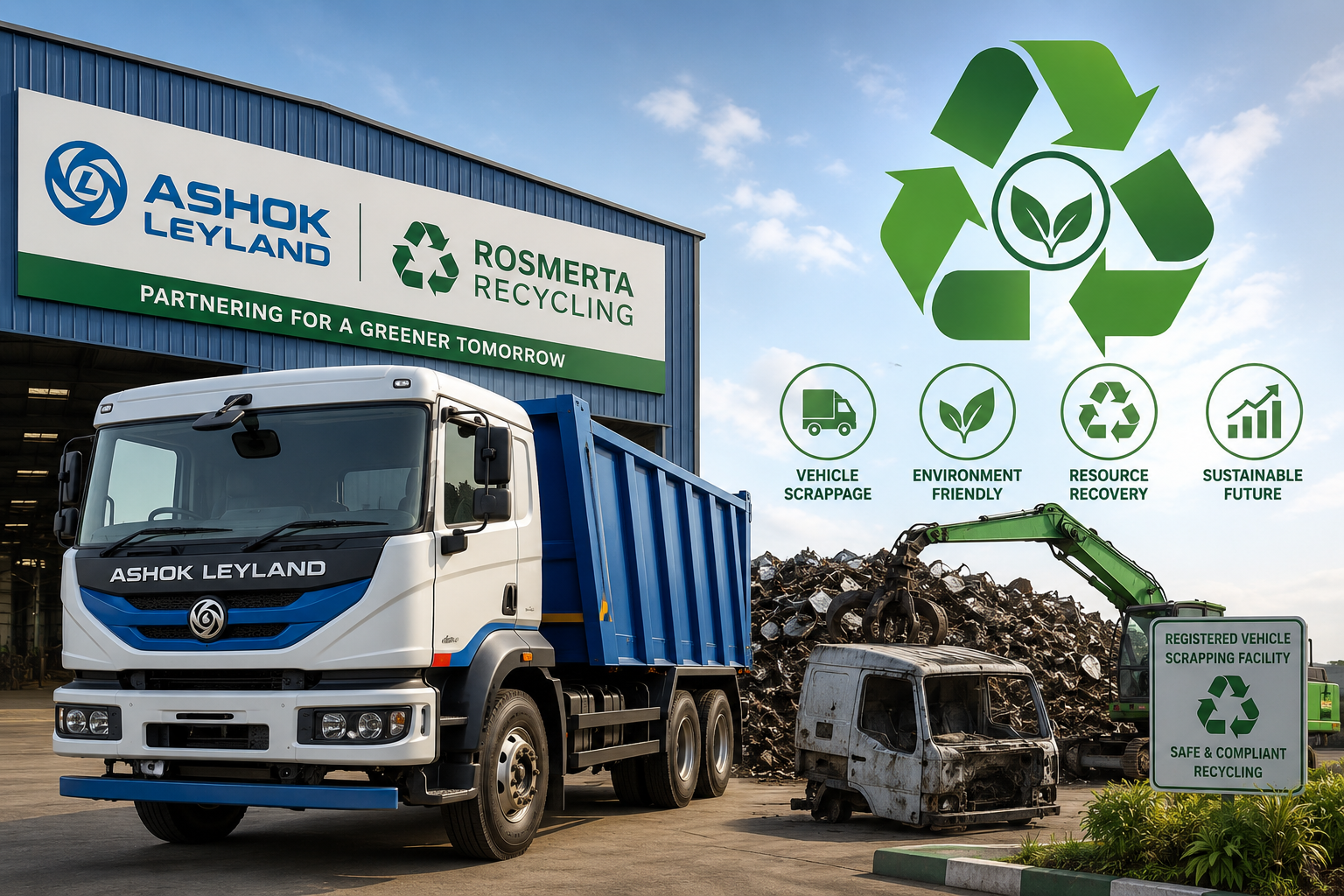
Strategic alliance aims to simplify end-of-life vehicle disposal, encourage fleet modernisation, and support the government's green mobility and circular economy initiatives
Commercial vehicle manufacturer Ashok Leyland has announced a strategic partnership with Rosmerta Recycling to create a streamlined and customer-friendly scrappage ecosystem for commercial vehicles across India. The collaboration is designed to make the disposal of old and polluting vehicles easier while encouraging fleet owners to upgrade to cleaner, safer, and more fuel-efficient commercial vehicles.
The initiative aligns with the Government of India's Vehicle Scrappage Policy and voluntary vehicle modernisation programme, both of which aim to reduce vehicular pollution, improve road safety, and promote sustainable transportation by replacing ageing vehicles with modern alternatives.
By combining Ashok Leyland's nationwide dealership network with Rosmerta Recycling's authorised scrappage infrastructure, the partnership is expected to accelerate organised vehicle recycling while supporting India's transition towards a greener transport sector.
Comprehensive Scrappage Services Through Dealer Network
As part of the collaboration, Ashok Leyland customers will be able to access authorised vehicle scrappage facilities directly through the company's extensive dealer network spread across the country.
The integrated service will provide an end-to-end solution, including:
-
Evaluation of old commercial vehicles
-
Access to Registered Vehicle Scrapping Facilities (RVSFs)
-
Vehicle dismantling through approved recycling centres
-
Assistance with deregistration procedures
-
Support for statutory documentation and compliance requirements
The objective is to remove operational hurdles that often discourage vehicle owners from scrapping ageing commercial vehicles.
Rosmerta Recycling Brings Certified Recycling Expertise
Gurugram-based Rosmerta Recycling operates a network of Registered Vehicle Scrapping Facilities (RVSFs) across multiple states.
These facilities are authorised to scientifically dismantle end-of-life vehicles while ensuring compliance with environmental regulations and government standards.
The recycling process focuses on:
-
Safe disposal of hazardous materials
-
Maximum recovery of recyclable metals and components
-
Responsible waste management
-
Environmentally sustainable dismantling practices
Such facilities play an important role in building India's organised vehicle recycling industry while supporting the country's circular economy objectives.
Supporting the Government's Vehicle Modernisation Programme
The partnership is closely aligned with the Central Government's voluntary vehicle modernisation initiative, which encourages owners of older commercial vehicles to replace them with cleaner, technologically advanced models.
The programme has multiple objectives:
-
Reducing air pollution
-
Improving fuel efficiency
-
Enhancing road safety
-
Lowering maintenance costs
-
Promoting adoption of vehicles meeting the latest emission standards
With India's commercial vehicle fleet ageing rapidly, policymakers believe organised scrappage will play a key role in reducing the environmental impact of road transport.
Complementing the Naya Safar Scheme
The collaboration also complements the recently announced Naya Safar Scheme, which aims to reduce transport-related emissions, particularly in the Delhi-NCR region.
The scheme promotes the replacement of older diesel-powered commercial vehicles with cleaner alternatives equipped with modern engines that comply with stricter emission norms.
Industry observers believe that combining government incentives with manufacturer-backed scrappage programmes could significantly accelerate fleet renewal across India.
Customer Benefits Extend Beyond Vehicle Disposal
The partnership has been designed not only to facilitate vehicle recycling but also to provide tangible financial incentives to customers.
Commercial vehicle owners will benefit from:
Attractive Scrappage Incentives
-
Competitive valuation for end-of-life vehicles
-
OEM-linked discounts on the purchase of new Ashok Leyland commercial vehicles
-
Waiver of road tax and registration charges wherever applicable under government policies
-
Faster documentation and deregistration support
-
Transparent and hassle-free scrappage process
These benefits are expected to reduce the total cost of replacing ageing vehicles while encouraging greater participation in organised scrappage programmes.
Addressing India's Ageing Commercial Vehicle Fleet
India has one of the largest commercial vehicle populations globally, with a significant number of trucks and buses operating well beyond their economic life.
Older commercial vehicles typically face several challenges:
-
Higher fuel consumption
-
Frequent maintenance requirements
-
Increased emissions
-
Lower operational efficiency
-
Reduced driver and passenger safety
Replacing these vehicles with modern BS-VI compliant commercial vehicles can significantly improve fleet productivity while lowering operating costs over the long term.
Environmental Benefits of Organised Vehicle Recycling
Proper vehicle scrappage contributes significantly to environmental sustainability.
Authorised recycling facilities recover valuable materials such as:
-
Steel
-
Aluminium
-
Copper
-
Plastic
-
Rubber
-
Glass
These recovered materials can be reused in manufacturing, reducing dependence on virgin raw materials, lowering energy consumption, and decreasing industrial carbon emissions.
In addition, safe disposal of oils, batteries, and hazardous components prevents environmental contamination.
Commercial Vehicle Replacement Could Boost Industry Growth
Industry analysts believe the government's fleet replacement initiatives could create multiple growth opportunities for the commercial vehicle industry.
Higher scrappage rates are expected to:
-
Increase demand for new trucks and buses
-
Improve fleet productivity
-
Accelerate adoption of cleaner technologies
-
Support growth in organised recycling
-
Strengthen domestic manufacturing
As infrastructure spending and logistics demand continue to grow, replacement demand could become an important driver of commercial vehicle sales over the next few years.
Ashok Leyland Strengthens Sustainability Focus
The partnership reflects Ashok Leyland's broader strategy of integrating sustainability into its business operations.
In addition to developing cleaner vehicles, the company is increasingly focusing on:
-
Resource efficiency
-
Circular economy initiatives
-
Responsible recycling
-
Lower lifecycle emissions
-
Environment-friendly mobility solutions
Such initiatives support the company's long-term environmental, social, and governance (ESG) objectives while strengthening customer engagement.
Growing Importance of the Circular Economy
Vehicle recycling has emerged as a crucial component of India's circular economy strategy.
Instead of allowing ageing vehicles to remain on roads or be dismantled through informal channels, organised recycling ensures that valuable resources are recovered safely and efficiently.
The development of a nationwide scrappage ecosystem is expected to:
-
Reduce industrial waste
-
Improve recycling efficiency
-
Generate employment
-
Support sustainable manufacturing
-
Enhance resource conservation
As India's automotive sector expands, organised recycling will become increasingly important in balancing economic growth with environmental responsibility.
Industry Outlook
India's commercial vehicle sector is entering a transformative phase driven by stricter emission regulations, rising infrastructure investments, increasing logistics demand, and government-backed fleet modernisation programmes. Organised vehicle scrappage is expected to emerge as a major pillar supporting this transition.
The partnership between Ashok Leyland and Rosmerta Recycling represents an important step toward building a transparent, efficient, and environmentally responsible vehicle recycling ecosystem. By simplifying scrappage procedures, offering financial incentives, and promoting sustainable mobility, the collaboration is likely to encourage faster replacement of ageing commercial vehicles while contributing to cleaner transportation, improved road safety, and the long-term growth of India's commercial vehicle industry.