DMK seeks restrictions on public statements and interactions by Tamil Nadu Chief Minister Vijay, Minister Aadhav Arjuna and other accused, citing concerns over the integrity of the ongoing investigation
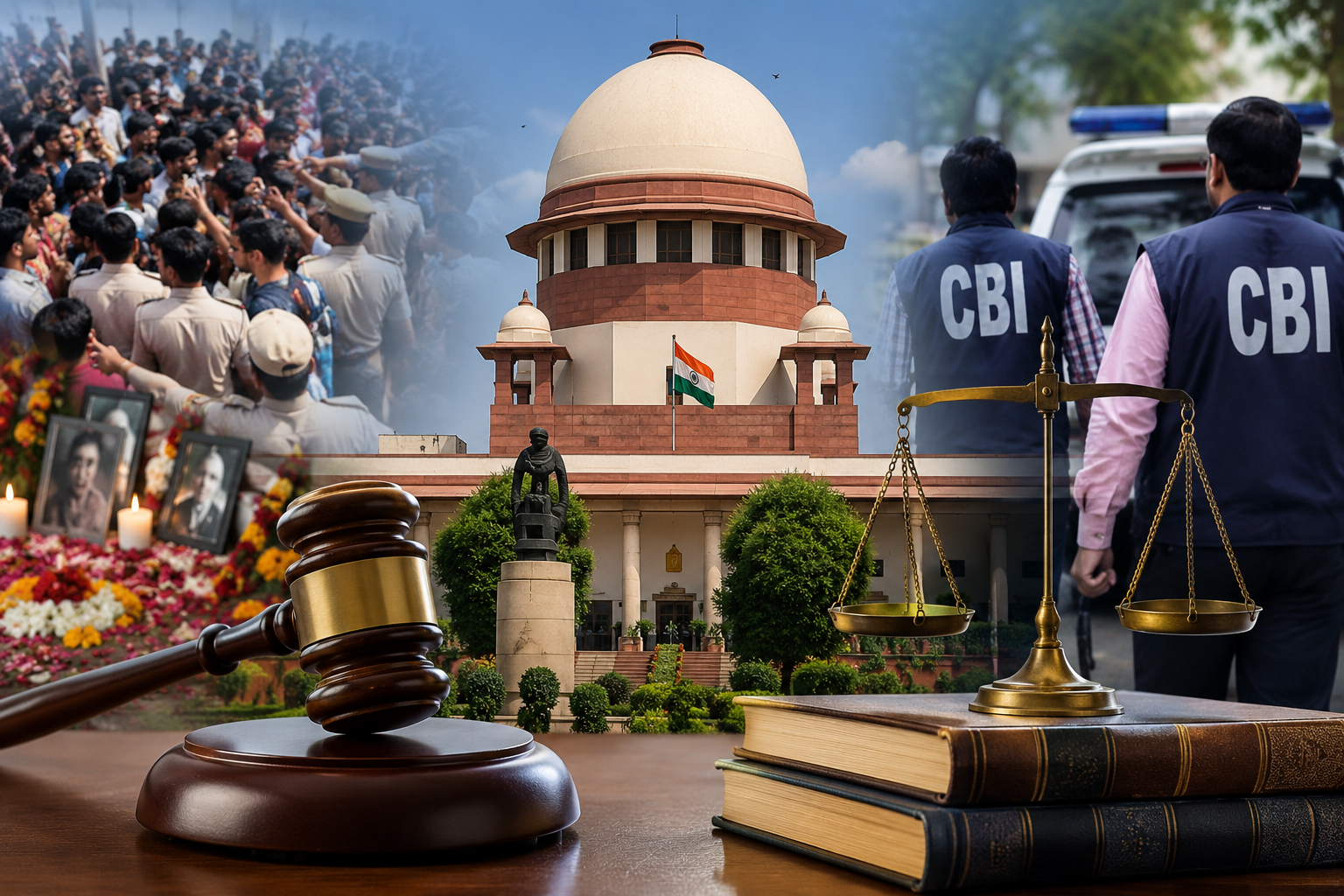
The Supreme Court is scheduled to hear on July 7 a fresh application alleging attempts to influence witnesses in the ongoing Central Bureau of Investigation (CBI) probe into the Karur stampede, a tragedy that claimed 41 lives last year. The plea, filed by DMK Secretary R.S. Bharati, seeks judicial intervention to ensure that the investigation proceeds without external influence and that witnesses remain free from any pressure during the course of the probe.
The application also requests the apex court to restrain Tamil Nadu Chief Minister C. Joseph Vijay, Minister Aadhav Arjuna, and other individuals named in the case from making public statements or interacting with victims' families in a manner that could potentially affect the investigation.
The matter assumes significance as the CBI probe is already being monitored by a Supreme Court-appointed supervisory committee, reflecting the judiciary's emphasis on maintaining the fairness and credibility of the investigation.
Supreme Court Grants Urgent Listing
The matter came up before a Bench comprising Justices Ahsanuddin Amanullah and Sheel Nagu during a partial working day.
Senior Advocate Huzefa Ahmadi, appearing on behalf of petitioner R.S. Bharati, urged the Court to hear the application urgently, arguing that certain developments on the ground warranted immediate judicial attention.
After hearing the request, the Bench agreed to list the matter for hearing on Tuesday, July 7, stating, "We will have it tomorrow."
The hearing is expected to examine whether any interim directions are necessary to safeguard the integrity of the ongoing CBI investigation.
Petitioner Alleges Witnesses Are Being Influenced
At the heart of the application is the allegation that certain ministers in the present Tamil Nadu government are attempting to influence witnesses connected with the Karur stampede investigation.
According to the petitioner, these alleged actions could compromise the independence of the CBI probe and create apprehensions regarding the fairness of the investigation.
The plea states that the petitioner possesses material that, according to him, demonstrates attempts to influence witnesses and is prepared to place it before the Court.
While these allegations are yet to be examined judicially, the petitioner has argued that preventive directions are necessary until the investigation reaches a more advanced stage.
Restrictions Sought on Political Leaders
The application requests the Supreme Court to issue directions restraining:
-
Chief Minister C. Joseph Vijay
-
Minister Aadhav Arjuna
-
Other accused individuals
from making public comments regarding the Karur stampede while the CBI investigation is underway.
The petitioner argues that statements made by politically influential individuals could influence witnesses or create perceptions that may undermine public confidence in the impartiality of the investigation.
The plea also seeks regulation of meetings between political leaders and families of the victims until the investigation is completed.
Concerns Over Proposed Visit to Karur
One of the key issues highlighted in the application is the Chief Minister's proposed visit to Karur on July 10.
According to reports referred to in the petition, the Chief Minister is expected to distribute government orders, compassionate appointments, financial assistance, and other relief measures to families affected by the tragedy.
The petitioner contends that direct interaction between government representatives and families connected to the case during an active investigation may raise concerns regarding witness independence and the overall credibility of the investigative process.
The plea does not challenge the relief measures themselves but seeks judicial guidance on how such interactions should be conducted while the investigation remains pending.
Statements by Minister Also Under Scrutiny
The application also refers to a recent public statement allegedly made by TVK MLA Aadhav Arjuna concerning the Karur incident.
According to the petition, the MLA reportedly stated that there remained "a score to settle" over the tragedy and accused the previous DMK government of responsibility for the deaths through police action.
The petitioner argues that such remarks could potentially influence witnesses or interfere with the ongoing investigation.
Accordingly, the application requests the Supreme Court to direct the CBI to examine the statements and, if necessary, initiate appropriate action.
Background: The Karur Stampede
The Karur stampede occurred during a major political gathering last year and resulted in the deaths of 41 people, while several others sustained injuries.
The incident triggered nationwide concern regarding crowd management, event planning, and public safety at large political gatherings.
According to police officials:
-
The event witnessed approximately 27,000 attendees
-
Authorities had expected a crowd of around 10,000
-
A reported delay of nearly seven hours in the arrival of the principal political leader contributed to crowd congestion before the stampede occurred
The tragedy prompted demands from multiple quarters for an independent investigation.
Supreme Court Ordered CBI Investigation
Recognising the seriousness of the incident, the Supreme Court transferred the investigation to the Central Bureau of Investigation on October 13 last year.
The Court observed that the scale of the tragedy had "shaken the national conscience" and required an investigation that inspired public confidence.
Along with ordering the CBI probe, the Court also:
-
Suspended the Tamil Nadu government's decision to constitute a Special Investigation Team (SIT)
-
Stayed the functioning of a one-member commission of inquiry appointed by the state government
-
Directed the Tamil Nadu government to provide complete cooperation to the CBI
These directions were intended to ensure a transparent and independent investigation into the incident.
Judicial Oversight Through Supervisory Committee
To strengthen accountability, the Supreme Court also established a three-member supervisory committee headed by former Supreme Court judge Justice Ajay Rastogi.
The committee has been entrusted with monitoring the progress of the CBI investigation and ensuring that the probe remains impartial and comprehensive.
Judicial monitoring of such investigations is relatively uncommon and generally reserved for cases involving exceptional public importance or concerns regarding investigative independence.
Legal Questions Before the Court
The July 7 hearing is expected to focus on several important legal issues, including:
-
Whether political leaders connected with a case should refrain from making public comments during an ongoing criminal investigation.
-
Whether meetings between public officials and victims' families could affect witness testimony or the perception of investigative independence.
-
Whether the statements cited in the petition warrant examination by the CBI.
-
Whether interim safeguards are necessary to protect the fairness of the investigation.
The Court's observations may provide broader guidance on maintaining the integrity of investigations in politically sensitive cases.
Broader Implications for High-Profile Investigations
Legal experts note that the outcome of the hearing could have implications beyond the Karur stampede case.
If the Supreme Court issues detailed guidelines regarding public statements, witness interactions, or political engagement during ongoing investigations, such directions could influence the handling of future high-profile criminal cases involving public officials and political parties.
The case also highlights the judiciary's continuing emphasis on balancing democratic political activity with the need to protect the independence of criminal investigations.
Outlook
The Supreme Court's hearing on July 7 is expected to be closely watched, given the sensitivity of the Karur stampede case and the allegations raised in the latest application. While the claims of witness influence remain to be tested before the Court, the proceedings could play a crucial role in determining the safeguards necessary to preserve the integrity of the CBI investigation.
With judicial oversight already in place and public attention focused on accountability for the tragedy that claimed 41 lives, the Court's decision may set an important precedent on the conduct of political leaders, witness protection, and investigative fairness in cases of significant public interest.