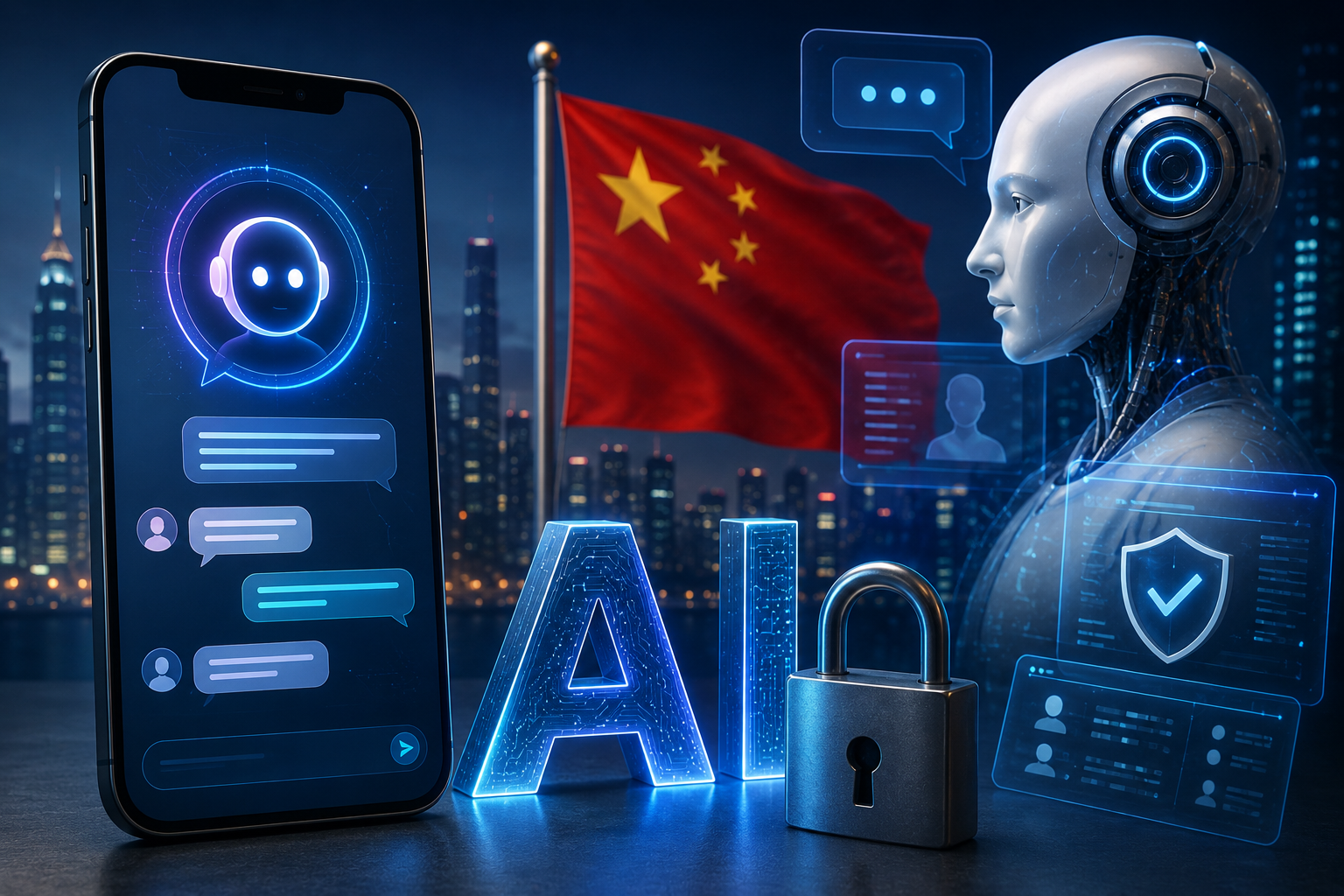
New regulations set to take effect on July 15 will impose stricter rules on emotionally interactive AI, reshaping chatbot services and the future of consumer AI in China
China's technology giants are rapidly modifying their artificial intelligence services as the country prepares to implement sweeping new regulations aimed at controlling emotionally interactive AI systems. ByteDance, Alibaba Group Holding, and several other major technology companies have begun removing or restricting AI companion features from their chatbot platforms ahead of new government rules that will take effect in mid-July.
The move marks a significant turning point for China's rapidly expanding AI industry, where companies have aggressively competed by offering increasingly human-like virtual companions capable of engaging users in emotional conversations. Regulators now believe such technologies require stricter oversight to prevent psychological harm, particularly among children and vulnerable users.
The latest regulatory framework also demonstrates Beijing's determination to balance AI innovation with user protection, making China one of the first major economies to specifically regulate emotionally intelligent AI systems.
Leading AI Platforms Begin Removing Companion Features
Among the first companies to respond is ByteDance, whose flagship AI chatbot Doubao has emerged as one of China's most widely used generative AI applications.
The company has informed users that the feature allowing them to create customised AI personalities and virtual companions will be discontinued from July 15. Users have been encouraged to migrate to a separate application dedicated to AI companionship.
Alibaba's Qwen platform has issued similar notifications, while Tencent's Yuanbao and several other AI chatbot providers are also reportedly scaling back personalised AI companion services.
The coordinated changes across multiple platforms suggest the industry is preparing for strict enforcement rather than waiting for regulatory action.
Why Beijing Is Tightening AI Regulations
China's new rules are being introduced by the Cyberspace Administration of China (CAC) following growing concerns over the emotional influence of advanced AI chatbots.
Unlike conventional AI assistants that answer factual questions or perform productivity tasks, companion AI applications are designed to simulate empathy, affection and long-term emotional relationships.
Regulators fear that prolonged interactions with highly realistic AI personalities could encourage excessive emotional dependence, weaken real-world social relationships and expose young users to psychological risks.
Authorities have therefore decided that stronger safeguards are necessary before these technologies become even more deeply integrated into daily life.
What the New Rules Require
The upcoming regulations introduce a comprehensive framework governing human-like AI interactions.
Among the major requirements are:
-
AI platforms must not encourage emotional addiction or unhealthy dependence.
-
Chatbots should not generate content capable of triggering extreme emotional responses, particularly among minors.
-
Companies must implement stronger protections for children using conversational AI.
-
Sensitive conversations between users and AI systems cannot be freely reused for future model training.
-
AI-generated personalities must operate within clearly defined ethical boundaries.
The framework represents one of the world's most detailed attempts to regulate emotional interactions between humans and artificial intelligence.
Growing Popularity of AI Companions
Over the past two years, AI companion services have become one of the fastest-growing segments within China's generative AI ecosystem.
Users have increasingly created virtual personalities such as:
-
Digital boyfriends and girlfriends
-
AI friends and companions
-
Celebrity-inspired AI characters
-
Fictional role-playing partners
-
Mental wellness companions
-
Lifestyle coaches and motivational assistants
Many users spend hours interacting with these digital personalities, leading regulators to question whether AI could gradually replace aspects of human interaction.
Global Concerns Mirror China's Approach
China's regulatory crackdown comes as governments worldwide begin examining the broader societal impact of emotionally intelligent AI.
Several international technology companies developing conversational AI have faced increasing scrutiny regarding the potential psychological effects of highly human-like chatbots.
Legal disputes involving AI platforms in Western countries have highlighted concerns ranging from emotional manipulation to excessive user dependency, prompting policymakers to consider stronger safeguards.
Although regulatory approaches differ across countries, the debate reflects a growing global consensus that conversational AI requires careful oversight beyond traditional data privacy and cybersecurity regulations.
Shift Toward Responsible AI Development
The new regulations are expected to influence how Chinese AI companies design future products.
Rather than focusing on emotionally engaging virtual companions, companies may increasingly prioritise applications in:
-
Enterprise productivity
-
Education
-
Healthcare support
-
Financial services
-
Customer service automation
-
Industrial AI solutions
Industry experts believe this transition could accelerate the commercialisation of practical AI applications while reducing regulatory uncertainty.
Impact Extends Beyond Software
China's concerns over artificial intimacy are no longer limited to chatbot applications.
Authorities and industry bodies have also begun discussing ethical standards for companion robots and humanoid machines as robotics companies accelerate commercial production.
With AI-powered household robots expected to become increasingly common over the next decade, regulators are seeking to establish governance frameworks before widespread adoption occurs.
This indicates China's AI strategy is evolving toward comprehensive oversight covering both digital and physical AI systems.
Implications for Technology Companies
The new regulations could significantly reshape competition within China's AI sector.
Companies will likely need to invest more heavily in:
-
AI safety systems
-
Content moderation technologies
-
User protection mechanisms
-
Privacy safeguards
-
Compliance monitoring
-
Ethical AI development frameworks
While these additional compliance requirements may increase operational costs, they could also improve long-term public trust in AI technologies.
Technology firms capable of balancing innovation with regulatory compliance are expected to maintain stronger competitive positions in the evolving AI landscape.
What Investors Should Watch
Investors tracking China's technology sector should monitor several developments over the coming months:
-
User engagement trends following feature removals
-
Growth of enterprise AI services
-
Regulatory compliance costs
-
Expansion of productivity-focused AI products
-
Monetisation strategies beyond consumer chatbots
-
Future policy announcements affecting generative AI
-
Adoption of AI services across business sectors
Although stricter regulations could temporarily slow consumer AI growth, they may also create a healthier and more sustainable long-term ecosystem for AI innovation.
Key Highlights
| Particulars | Details |
|---|---|
| Companies Affected | ByteDance, Alibaba, Tencent and other AI platforms |
| Major AI Platforms | Doubao, Qwen, Yuanbao |
| New Rules Effective | July 15, 2026 |
| Primary Objective | Regulate emotionally interactive AI |
| Key Restrictions | AI companions, emotional dependency, protection of minors, conversation data usage |
| Regulatory Authority | Cyberspace Administration of China |
| Broader Focus | Ethical AI development and responsible innovation |