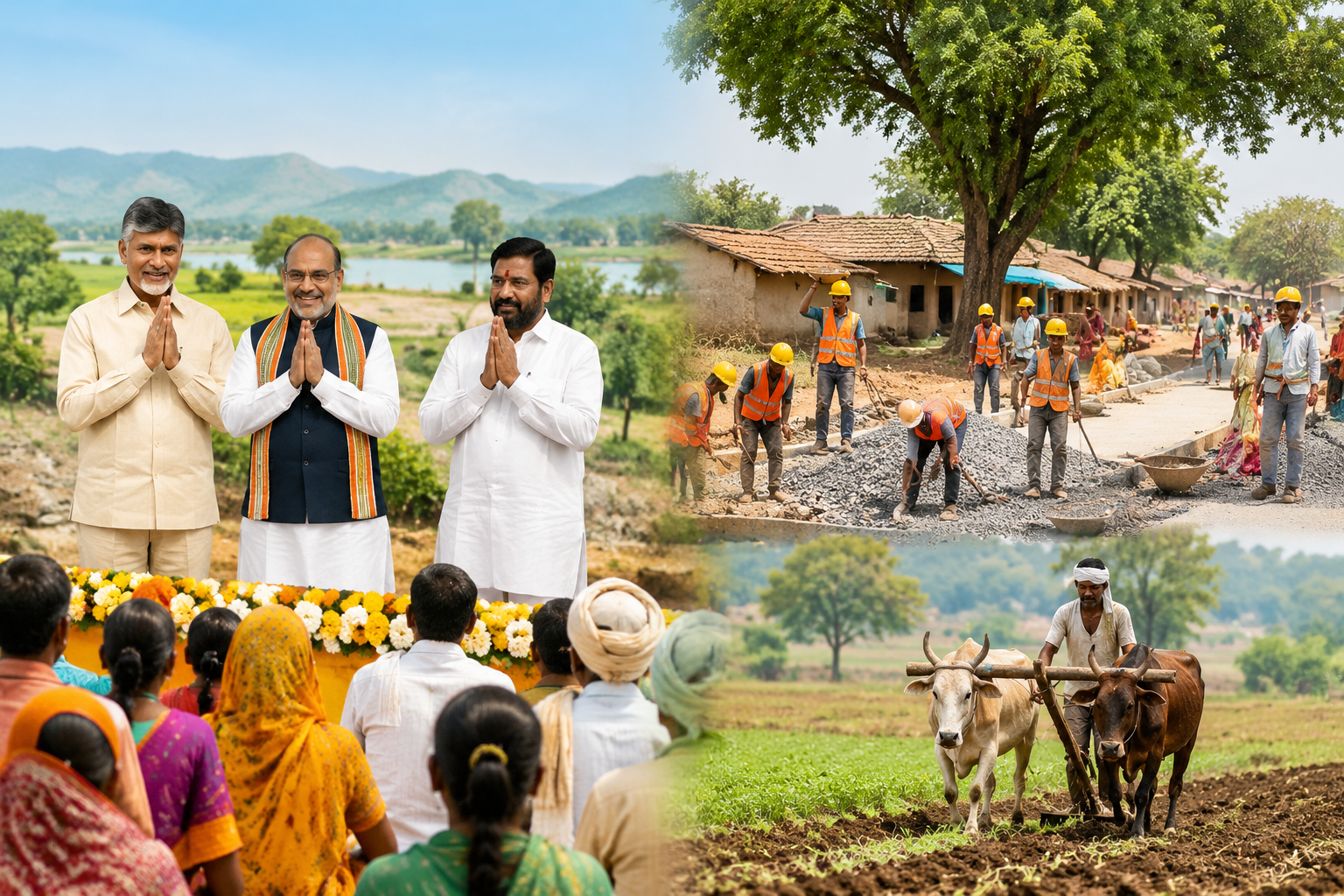
Chandrababu Naidu and Shivraj Singh Chouhan Launch Landmark Rural Livelihood Mission in Tirupati District
In a significant step toward enhancing rural employment and livelihood security, Andhra Pradesh Chief Minister N. Chandrababu Naidu and Union Agriculture Minister Shivraj Singh Chouhan jointly launched the Viksit Bharat – Guarantee for Rozgar and Ajeevika Mission (Gramin), or VB G-RAM-G, in Mukkavaripalle village of Tirupati district on Thursday.
The launch comes a day after the VB G-RAM-G Act, 2025 came into force across India, introducing a statutory guarantee of 125 days of wage employment annually for eligible rural households. The initiative is expected to strengthen rural incomes, improve livelihood opportunities, and accelerate grassroots economic development.
Andhra Pradesh Among First States to Implement the Scheme
The programme was inaugurated in the presence of Deputy Chief Minister Pawan Kalyan, senior state officials, local representatives, and villagers. By commencing implementation immediately after the legislation became effective, Andhra Pradesh has emerged as one of the early adopters of the Centre's flagship rural employment initiative.
According to an official statement, the programme was launched in Obulavaripalle Mandal under the Railway Koduru Assembly constituency, reflecting the state's emphasis on delivering welfare schemes directly to rural communities.
What is the VB G-RAM-G Scheme?
The Viksit Bharat – Guarantee for Rozgar and Ajeevika Mission (Gramin) is designed to provide employment security while creating productive rural assets. Unlike temporary relief measures, the scheme aims to generate sustainable livelihoods through public works and community development projects.
Eligible rural households will receive a legal entitlement to 125 days of guaranteed wage employment every financial year. The programme seeks to improve income stability while strengthening rural infrastructure and promoting inclusive economic growth.
Key Objectives of the Programme
The new mission has been introduced with several long-term development goals, including:
- Enhancing income security for rural households.
- Creating durable community assets such as roads, irrigation facilities, and water conservation structures.
- Supporting sustainable livelihood opportunities in villages.
- Reducing seasonal migration by generating employment within rural areas.
- Strengthening local economies through increased wage-based consumption.
The government expects the initiative to complement existing rural development and agricultural programmes, creating a multiplier effect across the rural economy.
Potential Economic and Investment Impact
Large-scale rural employment programmes often lead to higher disposable incomes, boosting consumption across India's villages. Increased rural spending could benefit sectors such as:
- Fast-moving consumer goods (FMCG)
- Agricultural equipment and farm inputs
- Rural-focused banking and financial services
- Construction materials and infrastructure companies
- Consumer durables and affordable housing
Companies with strong rural market exposure may witness improved demand if the programme achieves widespread implementation.
Centre and State Collaboration
The successful rollout of the scheme will depend on close coordination between the Union and state governments. Local administrations, panchayats, and implementing agencies are expected to play a crucial role in identifying eligible beneficiaries, executing development projects, and ensuring transparency in wage payments.
Authorities are also expected to leverage digital monitoring systems to improve accountability and track project execution in real time.
Challenges Ahead
While the scheme has been welcomed as a major rural welfare initiative, experts note that timely fund allocation, efficient project planning, transparent beneficiary identification, and effective monitoring will be essential for achieving its intended objectives.
Ensuring prompt wage payments and maintaining the quality of public assets created under the programme will also be critical for its long-term success.
Outlook
The launch of the VB G-RAM-G Scheme marks a new chapter in India's rural employment strategy, combining livelihood security with infrastructure development. As implementation expands across states, policymakers, economists, and investors will closely monitor its impact on rural incomes, consumption trends, employment generation, and overall economic growth.
If executed effectively, the initiative could become a significant driver of rural prosperity while supporting India's broader vision of inclusive and sustainable economic development.