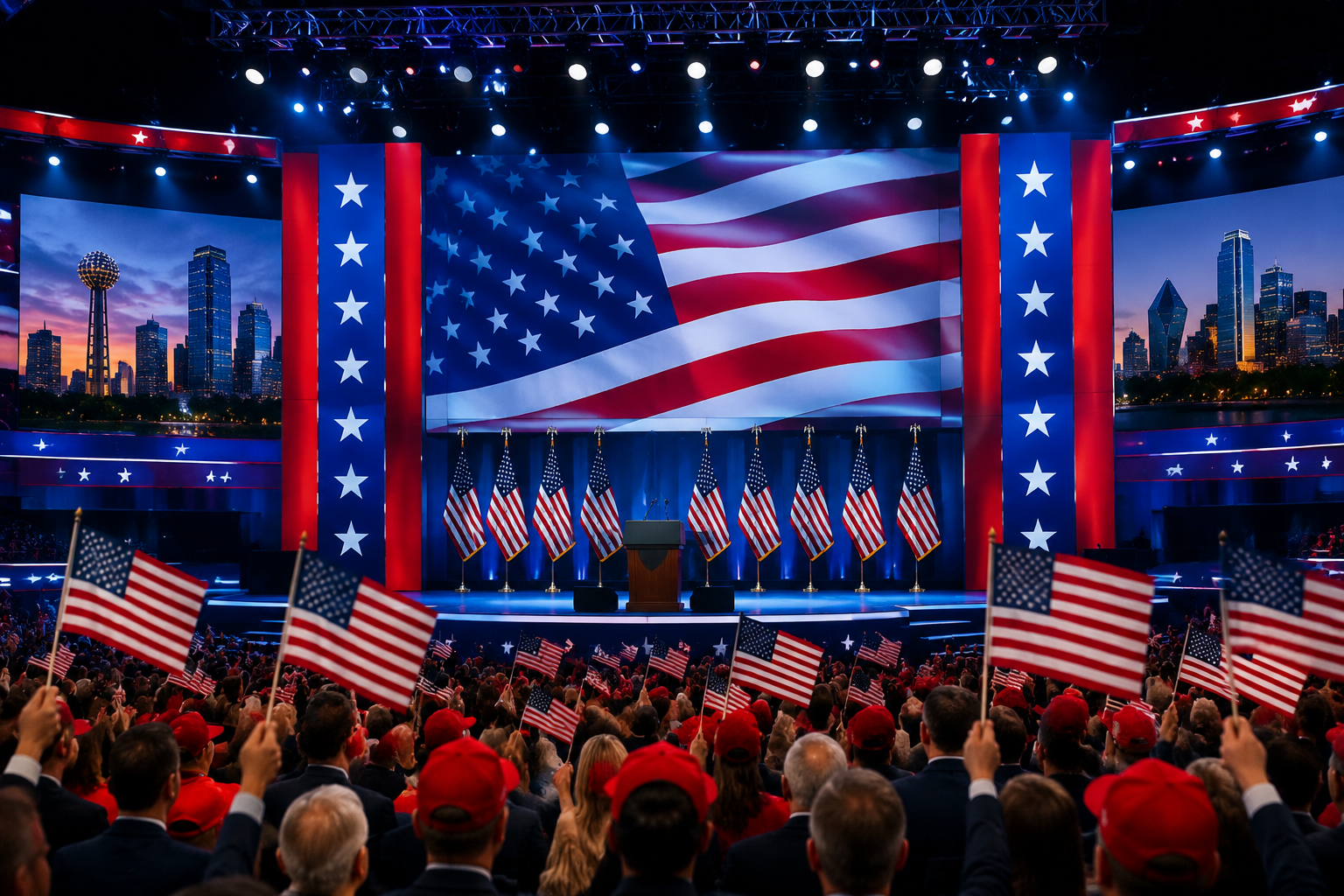
Dallas to host the two-day event in September as Republicans seek to energize voters, defend narrow congressional majorities and reinforce the party's legislative agenda before the midterm polls.
US President Donald Trump has announced that the Republican Party will organize its first-ever national convention ahead of a midterm election, marking a significant shift from the traditional practice of holding large-scale party conventions only during presidential election years.
The convention is scheduled to take place in Dallas, Texas, on September 9 and 10, and is expected to serve as a nationwide platform for Republican candidates, party leaders and grassroots supporters ahead of the high-stakes 2026 US midterm elections.
The initiative reflects the Republican Party's determination to maintain momentum following the 2024 presidential election and retain control of Congress at a time when political competition is expected to intensify across key battleground states.
A Historic Move in American Politics
National conventions have long been associated with presidential election campaigns, where political parties officially nominate their candidates and present their policy agenda.
The Republican Party's decision to hold a convention specifically for the midterm elections represents an unprecedented campaign strategy aimed at increasing voter engagement during a non-presidential election year.
Political observers believe the event could become a blueprint for future midterm campaigns if it successfully boosts voter participation and strengthens party unity.
The convention is expected to feature speeches from senior Republican leaders, policy discussions, campaign strategy sessions and extensive outreach to party workers and volunteers.
Midterm Elections Carry Enormous Political Significance
The 2026 midterm elections are widely viewed as one of the most important political contests of President Trump's second term.
Republicans currently hold slender majorities in both the House of Representatives and the Senate, making every competitive race critical.
If Democrats succeed in gaining control of either chamber, they would have the ability to:
-
Block major legislative proposals.
-
Increase oversight of the administration.
-
Launch congressional investigations.
-
Influence federal spending priorities.
-
Shape the confirmation process for senior government appointments.
As a result, both political parties are expected to invest heavily in campaigning throughout the election cycle.
Trump Aims to Keep Republican Base Energized
Unlike presidential elections, midterm contests often experience lower voter turnout.
Without the president's name appearing on the ballot, political parties typically face greater challenges in motivating supporters to vote.
The proposed convention seeks to address this challenge by highlighting Republican achievements since the 2024 election and reinforcing the party's policy priorities.
The event is expected to focus on:
-
Economic growth.
-
Tax reforms.
-
Border security.
-
National security.
-
Energy policy.
-
Manufacturing and job creation.
-
Government efficiency.
Republican strategists hope that showcasing these issues will strengthen voter enthusiasm heading into the November elections.
Why Dallas Was Selected
The choice of Dallas carries both political and strategic importance.
Texas remains one of the Republican Party's strongest electoral bases while simultaneously hosting one of the country's most closely watched Senate contests.
Holding the convention in Texas allows party leaders to:
-
Increase visibility in a major Republican state.
-
Support statewide candidates.
-
Mobilize volunteers.
-
Attract extensive national media coverage.
-
Generate fundraising opportunities.
The convention is also expected to provide a significant economic boost to Dallas through increased tourism, hospitality and event-related spending.
Spotlight on the Texas Senate Race
One of the biggest political battles of the 2026 election cycle will take place in Texas.
Republican nominee Ken Paxton, the state's Attorney General, is contesting the Senate seat after defeating longtime Senator John Cornyn in the Republican primary.
Paxton will face Democratic nominee James Talarico, making the race one of the most competitive and closely monitored Senate elections in the country.
By hosting the convention in Dallas, Republican leaders hope to strengthen campaign momentum and improve voter engagement ahead of the contest.
Redistricting Remains a Key Campaign Issue
The convention is also expected to highlight the Republican Party's broader electoral strategy, including congressional redistricting efforts.
Texas has played a central role in recent redistricting initiatives designed to reshape congressional districts ahead of the elections.
Supporters argue the process ensures fair representation based on population changes, while critics continue to debate its political implications.
Redistricting is expected to remain an important topic throughout the campaign season as both parties seek to maximize their electoral prospects.
Republican National Committee Lays the Foundation
The Republican National Committee (RNC) began preparing for the midterm convention earlier this year by approving procedural changes that permit the party to organize a national convention outside the traditional presidential election cycle.
The rule changes provide greater organizational flexibility and reflect the party's efforts to modernize its campaign structure in response to an increasingly competitive political environment.
The September convention will be the first major test of this revised strategy.
Democrats Pursue a Different Campaign Approach
While Democratic leaders reportedly explored the possibility of organizing a similar nationwide gathering, the proposal was ultimately set aside.
Instead, Democrats are expected to concentrate on:
-
Targeted campaigning in swing districts.
-
Digital voter outreach.
-
Grassroots organizing.
-
Candidate-focused fundraising.
-
State-level campaign events.
Political analysts expect both parties to intensify campaigning as the election season approaches.
Economic Impact of the Convention
Apart from its political significance, the Dallas convention is expected to deliver a substantial boost to the local economy.
Major political events typically generate increased demand across several sectors, including:
-
Hotels and accommodation.
-
Airlines and transportation.
-
Restaurants and catering.
-
Event management services.
-
Security and logistics.
-
Media and broadcasting.
Thousands of delegates, campaign workers, journalists and visitors are expected to attend the two-day event, supporting local businesses and tourism.
Investors Watching Policy Signals
Although the convention is primarily a political event, financial markets often monitor such gatherings for indications of future economic policy.
Investors will closely watch for announcements related to:
-
Taxation.
-
Fiscal policy.
-
Infrastructure spending.
-
Trade and tariffs.
-
Energy policy.
-
Manufacturing incentives.
-
Financial regulation.
Any detailed policy proposals unveiled during the convention could influence market sentiment across sectors including infrastructure, defence, energy, banking and manufacturing.
What to Watch Before September
As preparations continue, political observers will focus on several developments that could shape the convention's impact:
-
Campaign fundraising trends.
-
Polling in key congressional districts.
-
Senate race dynamics in battleground states.
-
Party messaging and policy priorities.
-
Voter enthusiasm and grassroots mobilization.
-
Economic indicators influencing public opinion.
These factors will help determine whether the convention succeeds in building momentum ahead of the November elections.
Outlook
The decision to hold a national Republican convention ahead of the midterm elections represents a notable innovation in American political campaigning. With control of Congress hanging in the balance, the event is expected to play a central role in shaping the Republican Party's electoral strategy while highlighting its legislative priorities for the remainder of President Trump's term.
Whether the convention translates into stronger voter turnout and improved electoral performance will become clear as the campaign season unfolds, but its influence on political discourse and policy messaging is likely to be significant.